

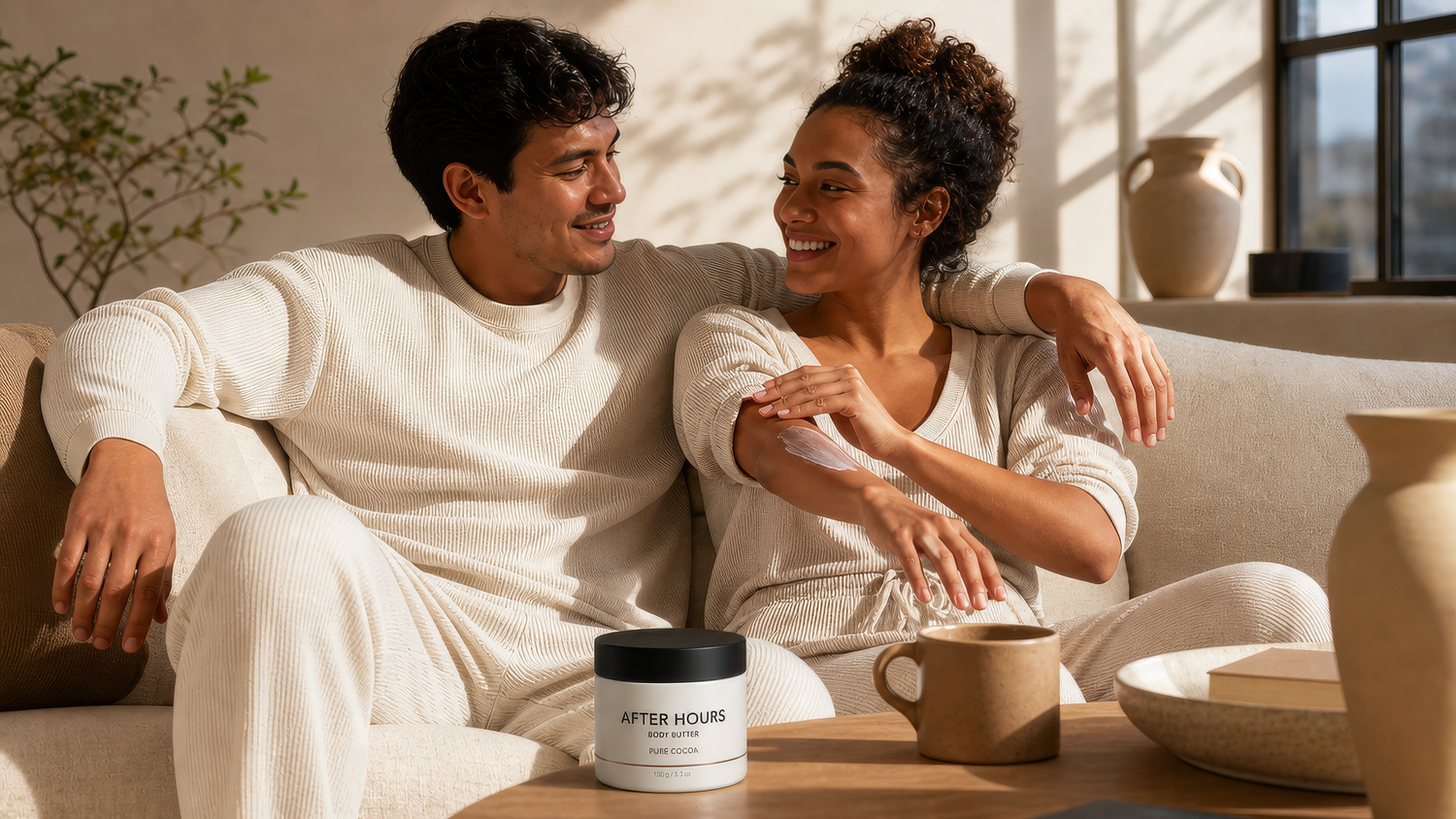

The best postpartum body care moisturizer is a fragrance-free, lipid-rich cream or body butter built around ceramides, glycerin, and hyaluronic acid. These ingredients replace what postpartum hormones strip away: barrier lipids and surface hydration. That combination matters more than any single “miracle” active.
Our own After Hours Body Butter was formulated with this exact skin state in mind. It’s vegan, free from harsh chemicals, and built around natural emollients that sit well on skin that’s suddenly more reactive than it used to be.
A few things to check before you buy anything, including from us:
- Patch test any new product on your inner forearm for 24 hours first.
- If you notice spreading redness, oozing, or a rash that won’t settle, speak to a GP or midwife rather than layering on more product.
- If you’re breastfeeding, choose fragrance-free formulas and avoid applying anything active near the nipple area.
Key Takeaways
Postpartum skin needs barrier-repairing, fragrance-free moisturisers applied consistently on damp skin, not aggressive treatment or a long list of actives.
| Point | Details |
|---|---|
| Pick barrier-repair ingredients | Look for ceramides, glycerin, and hyaluronic acid over trend ingredients or long lists. |
| Apply on damp skin | Moisturiser locks in more water straight after a shower than on dry skin later. |
| Avoid retinoids and strong fragrance | Skip retinoids, high-dose essential oils, and benzoyl peroxide while breastfeeding. |
| Watch for warning signs | Spreading redness, oozing, or fever alongside a rash needs a GP, not more cream. |
| Choose a matched formula | After Hours Body Butter offers vegan, fragrance-free formulas built for reactive postpartum skin. |
Table of Contents
- Why postpartum skin care moisturizer needs matter so much right now
- Choosing a postnatal body moisturizer: ingredients to seek and avoid
- Building a quick postpartum body-care routine that survives newborn chaos
- Stretch marks and skin firmness: what moisturizer can and can’t do
- Why After Hours Body Butter fits postpartum skin specifically
- What actually matters most in a postpartum skin routine
- Getting started with After Hours Body Butter
- Sources
Why postpartum skin care moisturizer needs matter so much right now
Your skin isn’t imagining it. Oestrogen and progesterone drop sharply after birth, and both hormones play a direct role in keeping skin plump and moisture-retentive. When they fall, the skin barrier loses efficiency, water escapes faster than it should, and dryness sets in even in women who never had dry skin before.
Stretch marks form for a related but separate reason: the skin has been mechanically stretched over months, and the collagen and elastin fibres underneath have been reorganised, sometimes torn at a microscopic level. That’s a structural change, not just a surface one, which is part of why creams alone can soften but rarely erase them.
Sensitivity climbs too. Postnatal eczema flares are common, and stress is a recognised trigger for eczema and itch, which makes the first few sleep-deprived months a particularly likely window for flare-ups. Frequent hand-washing, whether from nappy changes or general newborn hygiene, strips natural oils further and can worsen irritant dermatitis on top of everything else.
One in three postpartum women report noticeable skin changes in the months after birth, according to dermatological review data on postpartum barrier function, with dryness and altered pigmentation among the most frequently cited complaints.
Most of this settles with the right care. But watch for signs that need a clinician rather than a cream: intense or spreading redness, oozing, fever alongside a rash, or pain that’s getting worse rather than better. Those aren’t “just postpartum skin” and shouldn’t be treated as such.
Choosing a postnatal body moisturizer: ingredients to seek and avoid
Not every “mum-safe” label on a shelf means the same thing. A genuinely useful postpartum formula does three jobs: it pulls in water, it rebuilds the barrier, and it calms inflammation. Look for these three categories on the ingredients list.
Hydrators draw moisture into the skin’s surface. Glycerin and hyaluronic acid are the most reliable, and low-concentration urea works well for genuinely rough patches like heels and elbows. These ingredients don’t add oil, they add water, which is why they layer well under a heavier cream.
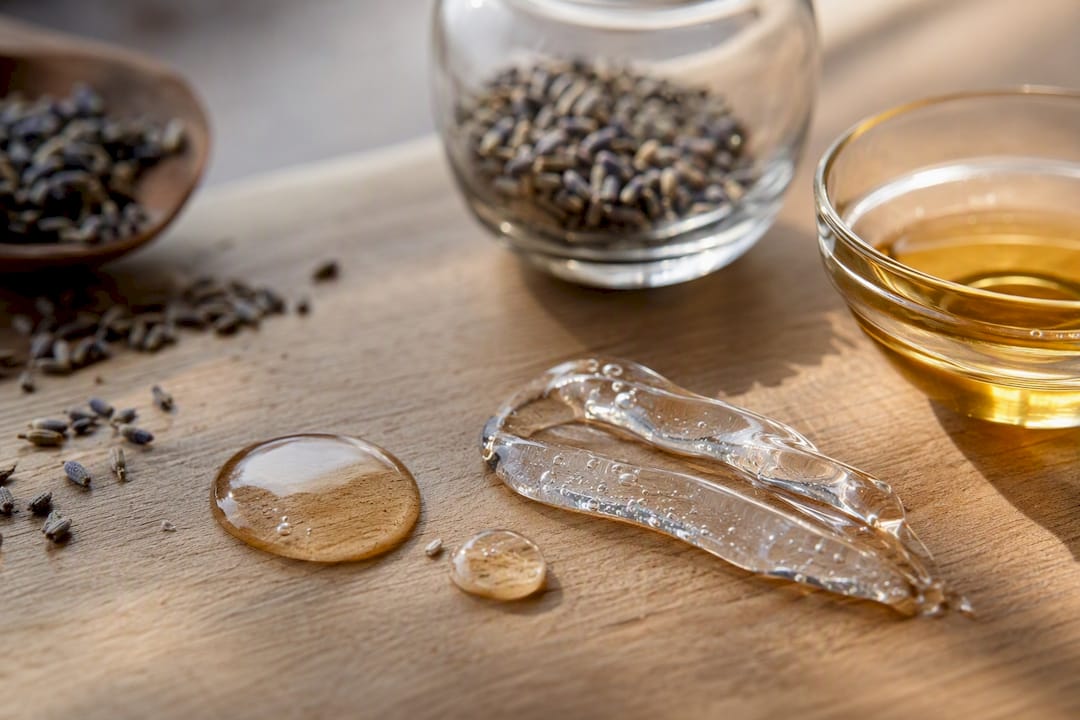
Barrier builders are what actually stop water escaping once it’s there. Ceramides are the standout here, since they’re identical to the lipids your skin naturally uses to hold its structure together, and restoring them directly improves comfort in postpartum skin. Shea butter and jojoba oil work as richer, more occlusive companions, particularly useful on drier zones like the abdomen and thighs.
Soothers calm the itch and redness that so often accompany postpartum dryness. Niacinamide, panthenol, and colloidal oatmeal all reduce inflammation without adding fragrance or irritation risk.
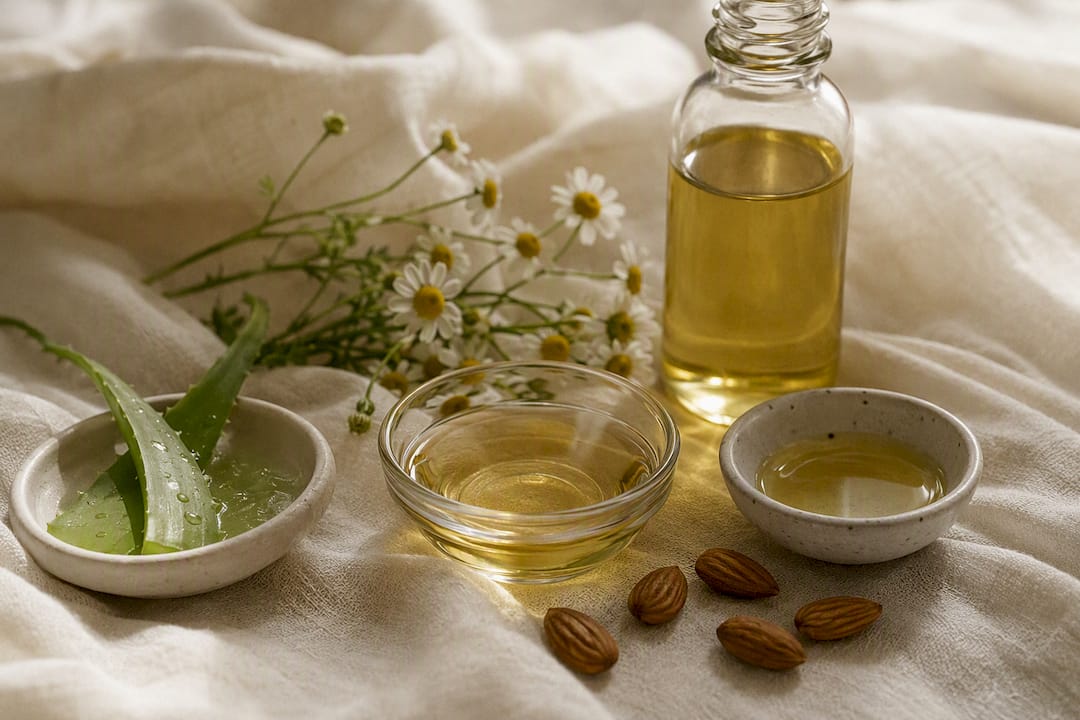
What to leave on the shelf while pregnant, postpartum, or breastfeeding: retinoids, which are widely advised against during this window; high-dose essential oil blends, which are a common cause of contact irritation; and benzoyl peroxide, which carries absorption concerns worth discussing with a GP first. Prenatal exposure to certain phthalates has also been linked to preterm birth risk, which is a strong argument for minimal-ingredient, low-phthalate personal care products generally.
A quick checklist before you buy:
- Fragrance-free, not just “lightly scented”
- Dermatologically tested, ideally with the results stated plainly
- Short ingredient list rather than a long one padded with fillers
Pro Tip: If a product markets itself as “breastfeeding-safe” but doesn’t list ingredients on the product page, treat that as a red flag rather than reassurance. Always cross-check the actual list.
Building a quick postpartum body-care routine that survives newborn chaos
The best routine is the one you can actually finish in ninety seconds with a baby on your hip. Timing matters more than most people think: applying moisturiser to damp skin straight after a shower traps far more water than applying it to bone-dry skin later.
A workable rhythm looks like this:
- Morning (30 seconds): Pat skin damp, not dry, then smooth on a lightweight lotion to hands, arms, and neck before getting dressed.
- After every hand-wash: Reapply a small amount to hands, since frequent washing is a known driver of skin irritation in new mothers specifically.
- Evening (2 minutes): Apply a richer body butter to damp skin post-shower, focusing on the abdomen, thighs, and any areas that feel tight or itchy.
If you’re using both an oil and a butter, apply the thinner product first and let it sink in for a minute before the heavier layer goes on. That order stops the greasy, unabsorbed feel that puts people off body oils entirely.
For the abdomen and thighs, use slow circular strokes with the flat of your hand rather than fingertips alone. This isn’t purely cosmetic. Gentle massage supports circulation in tissue that’s still settling after birth. Our own guide on how to apply body butter covers the technique in more depth if you want the full version.
Stretch marks and skin firmness: what moisturizer can and can’t do
Here’s the honest answer: a rich moisturiser will make stretch marks more comfortable and less noticeable in texture, but no cream reliably prevents them or erases them outright. That’s not a marketing failure, it’s biology. Stretch marks form in the dermis, and topical products work mainly on the surface and upper layers.
That said, some actives have genuine, if modest, supporting evidence. Vitamin C and centella asiatica appear in small studies to support collagen quality and skin texture, though most of that research involves limited sample sizes and shouldn’t be read as a guarantee. Ceramide and glycerin-based creams, backed by editorial roundups of postpartum-safe products, are consistently recommended for comfort even where firmness claims are unproven.
Beyond the jar, a few things genuinely help:
- Gentle exercise once cleared by a midwife or GP, which supports skin elasticity through general circulation
- Consistent massage, which improves how a cream feels and performs even if it doesn’t change the marks structurally
- A dermatology referral if marks are causing distress, since in-clinic treatments exist that topical creams simply can’t replicate
Why After Hours Body Butter fits postpartum skin specifically
Afterhoursbodybutter was built around a simple premise: skin under stress, whether from acne, dryness, or major hormonal change, needs fewer ingredients done properly rather than a long list of actives layered on top of each other. Every formula is vegan, cruelty-free, and made without the harsh chemicals that tend to aggravate reactive postpartum skin.
The line is manufactured and packaged sustainably in the UK, which matters to a lot of new mothers thinking harder than ever about what enters the house and what touches their skin. Our guide on rich, nourishing butters explains why a butter format outperforms a thin lotion for genuinely dry, tight postpartum skin, and our fragrance-free range exists specifically for readers who don’t want to gamble on scent sensitivity.
Customers with sensitive skin and specific concerns like acne or persistent dryness report real improvements in texture and moisture retention after switching to a fat-soluble, vitamin-rich formula rather than a generic supermarket lotion.
A few honest gaps worth naming: we don’t currently publish independent clinical trial data on the range, and author-level dermatology credentials aren’t attached to this piece. What we do have is a formulation approach built specifically around sensitive and reactive skin, and customer feedback that consistently points to fewer flare-ups and better texture over time.
What actually matters most in a postpartum skin routine
Most postpartum skin-care advice overcomplicates a genuinely simple problem. The internet is full of ten-step routines, active-ingredient stacking, and treatment claims that assume a new mother has both the time and the skin tolerance for any of it. She rarely has either.
What the evidence actually supports is much narrower: replace barrier lipids, keep the ingredient list short, and apply consistently rather than perfectly. A single well-formulated body butter applied twice a day beats five products applied once a week out of guilt. That’s not a compromise position, it’s the more defensible one once you account for how postpartum skin actually behaves, hormonally more reactive and structurally still settling.
Where conventional advice falls short is in treating stretch marks and dryness as the same problem with the same fix. They aren’t. Dryness responds well to moisture and barrier repair. Stretch marks respond, modestly, to time and consistency, not to a specific cream promising erasure.
If you take one thing from this: prioritise the fragrance-free, ceramide-rich basics before you chase anything more exotic on the ingredients list.
— Darnell
Getting started with After Hours Body Butter
Everything covered here, fragrance-free formulas, ceramide-rich barrier repair, gentle enough for reactive postpartum skin, is exactly what Afterhoursbodybutter was formulated to deliver. Rather than piecing together a routine from three or four different brands, one well-matched body butter can cover the abdomen, thighs, and dry patches in a single step.
If you’re unsure which formula suits your skin, start small. Order a single product before committing to a bundle, patch test it on your forearm for 24 hours as with any new skincare, and introduce it gradually rather than all at once across your body. Our moisturiser effectiveness guide explains what to look for if you want to compare formulas properly before you buy.
Ready to try it? Head to the After Hours Body Butter shop to browse the range and find the formula that matches your skin’s current needs, sensitive, dry, or somewhere in between.
Sources
- Preterm birth more likely with exposure to phthalates
- Postpartum skin changes and barrier considerations (review)
- Stress and eczema - Eczema Society guidance
- Hand washing and skin irritation (AAD guidance)