


Proper hydration does help control acne, but it works as an adjunct, not a standalone cure. The role of hydration in acne control is clearest at the skin barrier level: a cross-sectional study found that dry facial skin was associated with ten-fold higher odds of moderate acne severity (OR=10.00, 95% CI 1.94–51.54). That is a striking correlation, and it points directly to the epidermal barrier as the mechanism worth addressing. Drinking more water matters mainly if your baseline intake is low. Topical barrier repair, using ceramide-rich, non-comedogenic moisturisers, tends to make a more reliable difference.
Where to start:
- Check your baseline fluid intake. If you are consistently under-hydrated, modest increases can measurably improve skin hydration.
- Add a barrier-repair moisturiser. Look for ceramides, glycerin, or hyaluronic acid, and confirm the label says non-comedogenic.
- Keep acne treatments balanced. Drying treatments such as benzoyl peroxide raise transepidermal water loss (TEWL); pairing them with a moisturiser reduces irritation and improves adherence.
Table of Contents
- How hydration affects acne at the biological level
- What the research actually shows about drinking water vs topical care
- How to build a hydration-friendly routine for acne-prone skin
- Realistic timelines and daily hydration targets
- When hydration alone is not enough: signs to see a GP or dermatologist
- Evidence spotlight: what the key studies show
- Key takeaways
- Afterhoursbodybutter: hydration-first care for acne-prone skin
How hydration affects acne at the biological level
The epidermal barrier, specifically the stratum corneum, is the outermost layer of skin. Its job is to hold water in and keep irritants out. When that barrier is compromised, TEWL rises: water escapes the skin faster than it is replenished. TEWL is measured in g/m²/day and is one of the clearest objective markers of barrier health.
In acne patients, barrier disruption is measurable. A cross-sectional analytic study found that acne patients had significantly higher TEWL (13.16 vs 10.63 g/m²/day) and lower mean skin hydration (244.60 vs 222.60 µS, p=0.001) compared with controls. Acne treatments themselves can worsen these figures, which is why moisturiser use is not optional when you are on a drying regimen.
Dehydrated skin can also paradoxically increase sebum production. When the barrier is disrupted, sebaceous glands may compensate by producing more oil, which can then mix with dead skin cells and block pores. This is the opposite of what most people expect: stripping moisture away does not reduce oiliness; it can make it worse.
Inflammation and the skin microbiome add another layer. Cutibacterium acnes, the bacterium associated with acne, thrives in certain moisture conditions. A well-maintained barrier, supported by barrier lipids and non-comedogenic formulations, helps regulate the environment without creating conditions that favour bacterial overgrowth. Wound healing research also supports moisturisation: moist environments speed epithelialisation, which means hydrated acne lesions may resolve faster than dry ones.
| Barrier marker | Acne patients | Controls | Significance |
|---|---|---|---|
| TEWL (g/m²/day) | 13.16 | 10.63 | Statistically significant |
| Skin hydration (µS) | 244.60 | 222.60 | p=0.001 |
What the research actually shows about drinking water vs topical care
The evidence on oral fluid intake and acne is real but limited. Cross-sectional studies consistently show a correlation between lower facial skin hydration and greater acne severity. A Bali Medical Journal study reported a moderate negative correlation of r=−0.453 (p<0.001) between skin hydration and acne severity across an observational sample. Correlation, though, is not causation: these studies cannot confirm that drinking more water directly clears acne.
Increasing daily water intake can improve superficial and deep skin hydration, but only in people who were under-hydrated to begin with. For those already meeting adequate fluid targets, drinking more made little measurable difference to skin hydration in month-long clinical interventions.
The “detox” framing that circulates online is an oversimplification. Water supports kidney and liver function, which are the body’s actual filtration systems, but expert clinical commentary is clear that there is no direct evidence linking systemic “detoxification” via water intake to acne clearance. Drinking adequate water supports general skin physiology; it does not flush acne-causing factors out of pores.
Topical hydration works through a different mechanism entirely. Ceramide-containing moisturisers act directly on the stratum corneum, reducing TEWL and reinforcing barrier lipids. Clinical reviews recommend ceramide-containing cleansers and moisturisers specifically to reduce irritation from acne treatments and improve long-term adherence. That is a targeted, evidence-backed action, distinct from simply drinking more water.
One important methodological gap: there are very few randomised controlled trials (RCTs) directly testing drinking water as an acne treatment. Most evidence is cross-sectional or short-term observational. Treat the drinking-water advice as sensible general health guidance, not a clinically proven acne therapy.
How to build a hydration-friendly routine for acne-prone skin
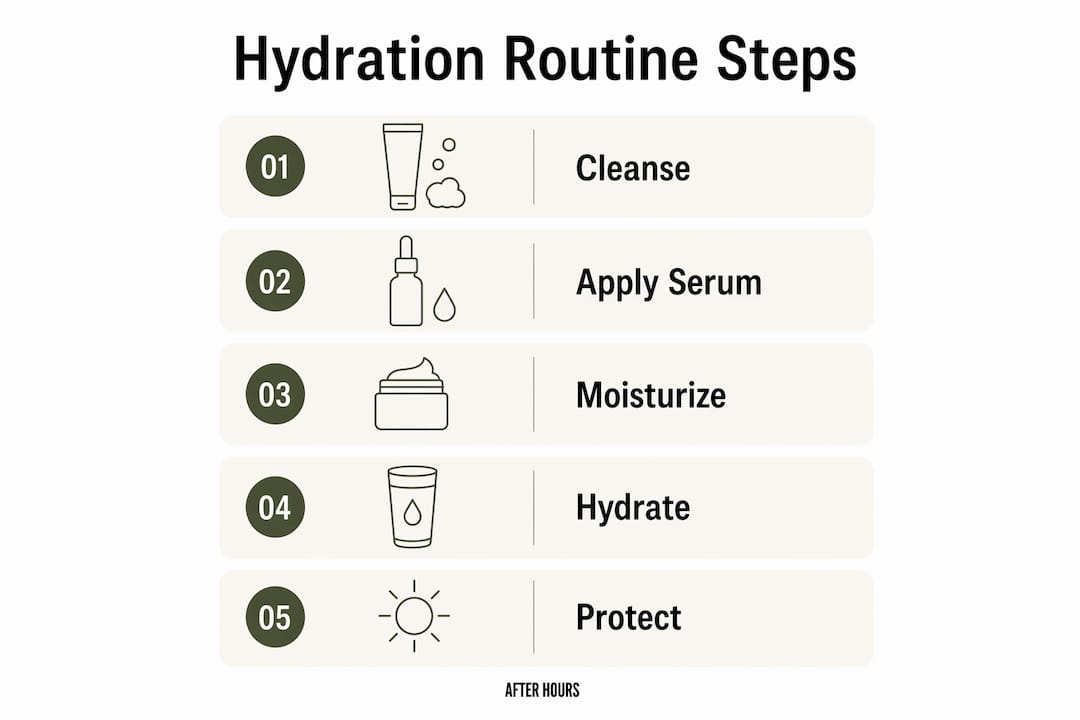
A practical routine for acne-prone skin follows a clear sequence: cleanser, targeted acne treatment, moisturiser, then sunscreen in the morning. The order matters because applying moisturiser after your acne treatment locks in actives and reduces the dryness and irritation that cause people to abandon their regimen.
Ingredient checklist for acne-prone skin:
- Humectants: glycerin and hyaluronic acid draw water into the stratum corneum without blocking pores. Both are well-tolerated on acne-prone skin. For a deeper look at how these work, the guide to natural humectants for deep hydration covers safe application on breakout-prone skin.
- Barrier lipids: ceramides, cholesterol, and fatty acids rebuild the stratum corneum’s structure. These are the ingredients that directly address elevated TEWL.
- Lightweight occlusives: petrolatum and dimethicone seal in moisture without the heavy, pore-blocking feel of plant butters used in large concentrations. Use sparingly on the face.
- Avoid: heavy fragrances, alcohol-heavy formulations, and thick occlusive layers on active breakout areas.
Managing side effects from benzoyl peroxide or retinoids is where barrier-support moisturisers earn their place. Both treatments raise TEWL and cause dryness. Applying a ceramide moisturiser after your treatment, rather than skipping it to “let skin breathe,” reduces peeling and redness without undermining the treatment’s efficacy. The moisturising and acne guide covers this pairing in practical detail.
Pro Tip: Introduce one new product at a time and patch test on the inner arm for 24 hours before applying to your face. This makes it straightforward to identify what caused a reaction if one occurs.
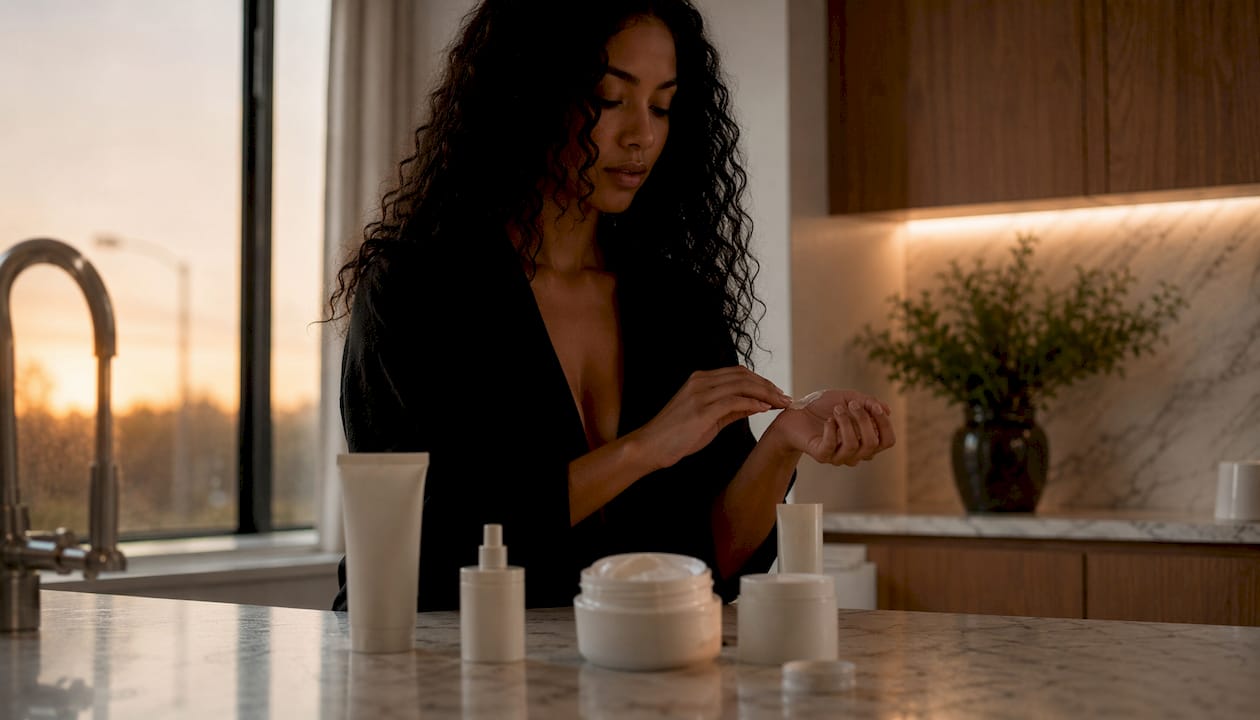
For product selection, prioritise labels that say “fragrance-free” and “non-comedogenic.” A hydrogel face mask can serve as a short-term hydrating adjunct when your barrier is particularly compromised, though it does not replace daily moisturiser use.
Realistic timelines and daily hydration targets
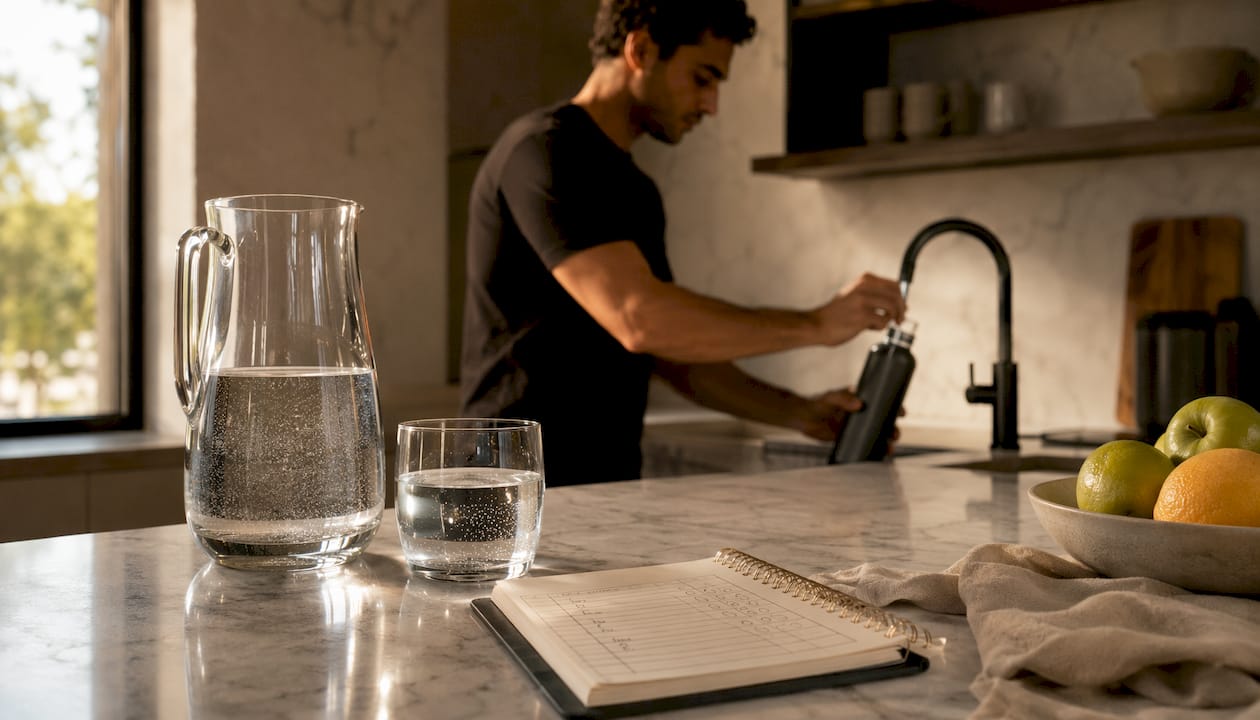
If your fluid intake is genuinely low, increasing it is worth doing. The NHS advises around 6–8 glasses of fluid per day as a general target for adults in the UK, though individual needs vary with activity level, climate, and health status. The key question is whether you are starting from a deficit: research shows that people with low baseline water consumption see measurable improvements in skin hydration after a month of increased intake, while those already adequately hydrated see little additional benefit.
Expect skin changes to take weeks to months, not days. Hydration supports lesion healing and reduces irritation from acne treatments, which means you are more likely to notice fewer flare-ups from dryness and better tolerance of actives than a dramatic reduction in new spots. Topical barrier repair tends to show results faster than dietary changes, often within two to four weeks of consistent use.
A few caveats. If you have a medical condition affecting fluid balance, such as kidney disease, or if you take diuretics, speak to your GP before significantly increasing your water intake. Personalised fluid targets for these situations are outside the scope of general skincare advice.
To monitor progress, photograph your skin in consistent lighting every two weeks. Track treatment side effects alongside hydration changes so you can separate what is improving from what is not. If your clinic offers TEWL or skin hydration conductance measurements, these give objective data to complement your own observations.
When hydration alone is not enough: signs to see a GP or dermatologist
Hydration and barrier repair are useful adjuncts, but they do not address the core drivers of acne: excess sebum, follicular hyperkeratinisation, bacterial colonisation, and inflammation. If your skin is not responding after a reasonable trial of moisturiser and basic skincare adjustments, that is a clear signal to seek clinical input.
Red flags that warrant a GP appointment:
- Nodules or cysts that are painful to touch or growing rapidly
- Scarring, including post-inflammatory hyperpigmentation that is not fading
- Acne causing significant distress, affecting sleep, confidence, or daily activities
- No improvement after 8–12 weeks of consistent topical care
- Sudden worsening without a clear trigger
At a GP appointment, ask specifically about a dermatology referral if your acne is moderate to severe or if scarring is present. Prescription options include topical retinoids, topical or oral antibiotics, combined oral contraceptives for hormonal acne, and, for severe cases, oral isotretinoin via a dermatologist. These are targeted therapies that address acne pathogenesis directly; hydration supports them but cannot replace them.
Some systemic conditions affect fluid balance and skin health. If you are uncertain whether a health condition is influencing your skin, mention it to your GP rather than adjusting your fluid intake independently.
Evidence spotlight: what the key studies show
The strongest cross-sectional data comes from a study of Indonesian university students, where lower facial skin hydration was independently associated with greater acne severity. Dry skin carried an odds ratio of 10.00 (95% CI 1.94–51.54) for moderate acne, with a Spearman correlation of ρ=−0.536 (p=0.001) and an AUC of 0.792, indicating reasonable discriminative ability. This is the strongest single-study figure linking facial hydration to acne severity currently available in the published literature.
A separate observational study reported a correlation of r=−0.453 (p<0.001) between skin hydration and acne severity, consistent with the direction of the Indonesian findings. Both studies are cross-sectional, which means they show association, not causation. Neither proves that improving hydration will reduce acne severity in a given individual.
| Study finding | Key figure | Study type |
|---|---|---|
| Dry skin and moderate acne odds | OR=10.00 (95% CI 1.94–51.54) | Cross-sectional |
| Hydration/acne severity correlation | r=−0.453, p<0.001 | Observational |
| TEWL in acne vs controls | 13.16 vs 10.63 g/m²/day | Cross-sectional analytic |
| Skin hydration in acne vs controls | 244.60 vs 222.60 µS (p=0.001) | Cross-sectional analytic |
The TEWL and hydration conductance data from the skin barrier study are particularly useful for clinical practice. They confirm that acne patients have objectively measurable barrier disruption, and that acne treatments can worsen it. This is the evidence base for ceramide-containing moisturisers as adjunctive care: they directly address the elevated TEWL that both the disease and its treatments produce.
For Fitzpatrick skin types III–V, the Indonesian cross-sectional data is especially relevant, as it was conducted in a population with darker skin tones and suggests that correcting low facial hydration may be a useful non-comedogenic adjunct in these groups. More inclusive research across skin types is still needed.
Key takeaways
Hydration supports acne control by repairing the epidermal barrier, reducing TEWL, and improving tolerance of acne treatments, but it does not address the core drivers of acne and works best alongside targeted therapy.
| Point | Details |
|---|---|
| Barrier repair over plain water | Ceramide-rich moisturisers reduce TEWL and irritation more reliably than increasing fluid intake alone. |
| Drinking water: baseline matters | Increased fluid intake improves skin hydration only in people starting from a low baseline. |
| TEWL is measurable | Acne patients show TEWL of 13.16 vs 10.63 g/m²/day in controls; acne treatments raise it further. |
| Timelines are weeks to months | Expect improved lesion healing and reduced treatment irritation, not rapid spot clearance. |
| Afterhoursbodybutter for barrier support | Afterhoursbodybutter’s vegan, cruelty-free formulations focus on hydration-first barrier care for acne-prone skin. |
The case for taking barrier hydration seriously
Most conversations about hydration and acne get stuck on the drinking-water question, which is the least interesting part of the evidence. The more useful insight is structural: acne patients have a measurably compromised skin barrier, and the treatments most commonly prescribed for acne make that worse. Benzoyl peroxide, retinoids, and topical antibiotics all raise TEWL to varying degrees. Skipping moisturiser to “avoid clogging pores” is the wrong response to that problem.
The ceramide evidence is not new, but it is underused in practice. Clinical reviews have recommended ceramide-containing adjunctive care for years, yet the default advice many people receive is still to keep skin as dry as possible. That approach tends to increase irritation, reduce adherence to treatment, and, based on the barrier data, may worsen the very conditions that drive acne.
Hydration is not a cure. The OR=10.00 figure is striking, but it comes from a cross-sectional study in a specific population. It tells you that dry skin and acne severity travel together; it does not tell you that moisturising will clear your skin. What it does tell you is that barrier health is worth taking seriously as part of a complete acne management plan, not as an afterthought.
Afterhoursbodybutter: hydration-first care for acne-prone skin
If the evidence in this article points anywhere practical, it points to barrier-focused daily moisturisation as a non-negotiable part of managing acne-prone skin. Afterhoursbodybutter’s range is built around exactly that: vegan, cruelty-free formulations made from natural ingredients, with a focus on fat-soluble vitamins and nutrients that nourish and support the skin barrier without harsh chemicals.
The formulations are designed for people with sensitive or acne-prone skin who need effective hydration without the comedogenic risk of heavier conventional products. Free UK delivery on orders over £30. Shop now, pay later with Klarna.
Visit Afterhoursbodybutter to see the full range and check ingredient lists for the ceramides and humectants covered in this article.
Further reading and useful sources
Clinical studies cited in this article:
- Lower Facial Skin Hydration Is Associated with Greater Acne Vulgaris Severity in Indonesian University Students — Cross-sectional study; source for OR=10.00 and Spearman ρ=−0.536 figures.
- Skin barrier parameters in acne vulgaris versus normal controls — Cross-sectional analytic study; source for TEWL and skin hydration conductance data.
- Effects of increased water intake on skin physiology (PMC) — Clinical review; source for baseline water intake and skin hydration findings.
- Lower facial skin hydration level increases acne vulgaris severity level — Bali Medical Journal — Observational study; source for r=−0.453 correlation figure.
- Insights into acne and the skin barrier: ceramide-containing skincare (Wiley) — Clinical review; source for ceramide adjunctive care recommendations.
Patient-facing and expert resources:
- Will staying hydrated help keep your skin clear? — Acne.org — Patient-facing review covering drinking water, lesion healing, and realistic expectations.
- How drinking water helps with acne — AdventHealth — Clinical commentary on the limits of “detox” claims and evidence-based fluid advice.
General reference:
- Water and the human body — USGS — Background on systemic hydration and body physiology.
This article is general information, not medical advice. For personalised guidance on acne treatment or fluid intake, consult your GP or a qualified dermatologist.