

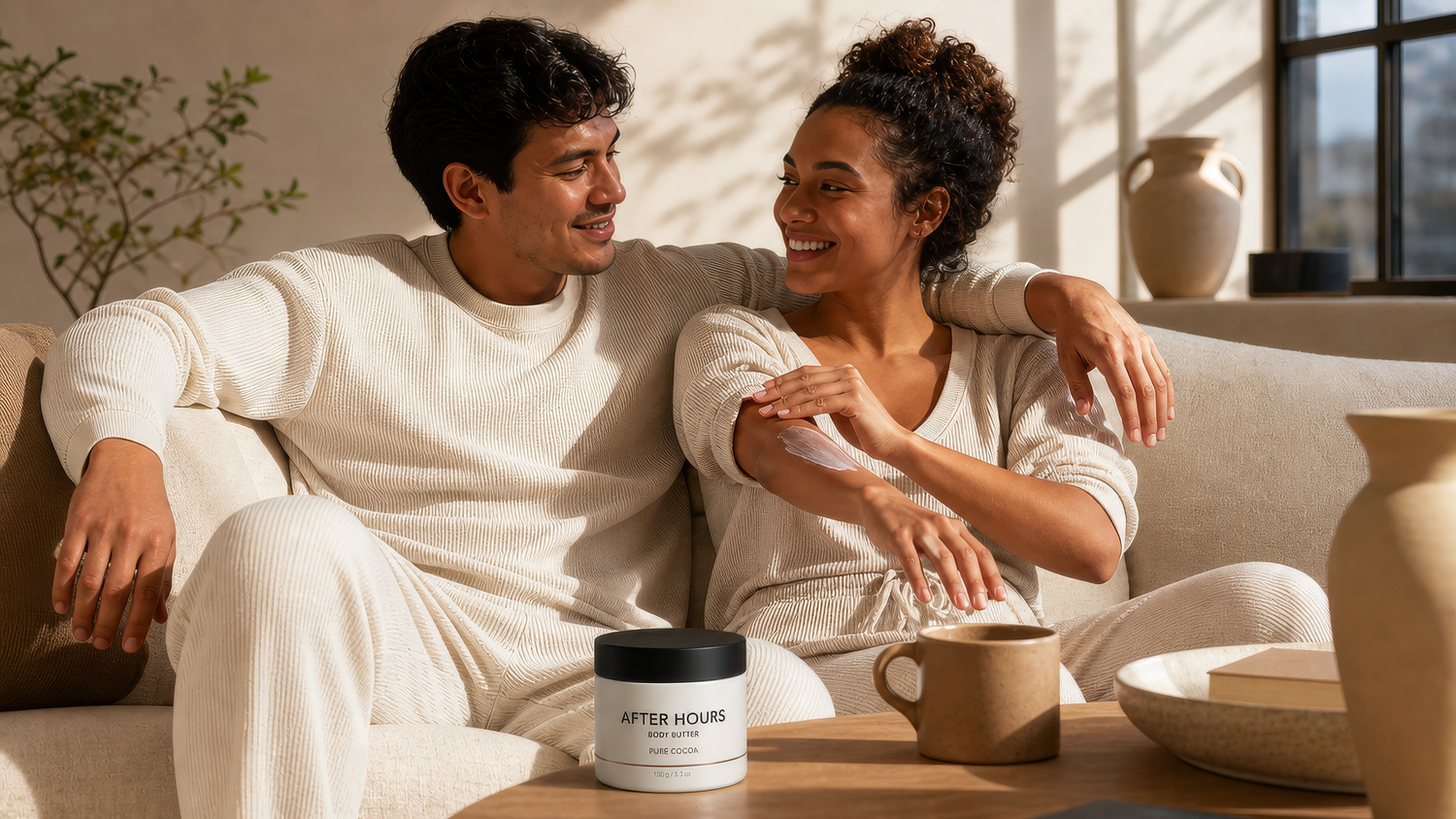

Your skin is defined by its barrier, and that barrier loses water every single hour of every day. This process, known in dermatology as transepidermal water loss (TEWL), accelerates with cold air, central heating, wind, and UV exposure. The reason why skin needs daily moisture is straightforward: without regular replenishment, the barrier weakens, cracks, and lets irritants in. Dermatologists recommend applying moisturiser twice daily, morning and night, to maintain barrier integrity. Skipping even a day allows TEWL to compound, leaving skin tight, reactive, and more prone to inflammation.
Why skin needs daily moisture: the barrier science
The skin barrier functions like a brick wall. The skin cells are the bricks, and lipids, including ceramides and fatty acids, act as the mortar holding everything together. When that lipid mortar cracks, water escapes freely and environmental irritants pass through. This is not a cosmetic problem. It is a structural one.

Moisturisers work by addressing this structure directly. Modern formulations have moved well beyond simple emollients. Biologically active moisturisers now mimic the skin’s own lipid composition, incorporating ceramides and fatty acids to actively repair barrier architecture rather than just coat the surface. That shift matters because coating alone does not fix the underlying damage.
Three categories of ingredient do the real work:
- Humectants (such as hyaluronic acid and glycerin) draw water from the deeper skin layers and the environment into the outer layer.
- Emollients (such as shea butter and plant oils) fill the gaps between skin cells, smoothing texture and reducing roughness.
- Occlusives (such as beeswax and plant-based butters) sit on top and slow water evaporation.
Balanced formulations that combine all three categories outperform single-ingredient products. A humectant alone can draw moisture to the surface and then let it evaporate straight off. An occlusive without a humectant traps whatever little water is already there. The combination locks hydration in at multiple levels.
Pro Tip: Apply your moisturiser within 60 seconds of stepping out of the shower, while your skin is still slightly damp. The residual water gives humectants something to bind to, making absorption noticeably more effective.
Dry skin vs dehydrated skin: why the difference matters
Dry skin and dehydrated skin are not the same condition, and treating one with the other’s solution produces poor results. Dry skin is a chronic condition caused by an oil deficiency. Dehydrated skin is a temporary state caused by a lack of water in the outer skin layer. You can have oily, dehydrated skin. You can have dry skin that is not dehydrated. Understanding which you have changes everything about which moisturiser you should reach for.
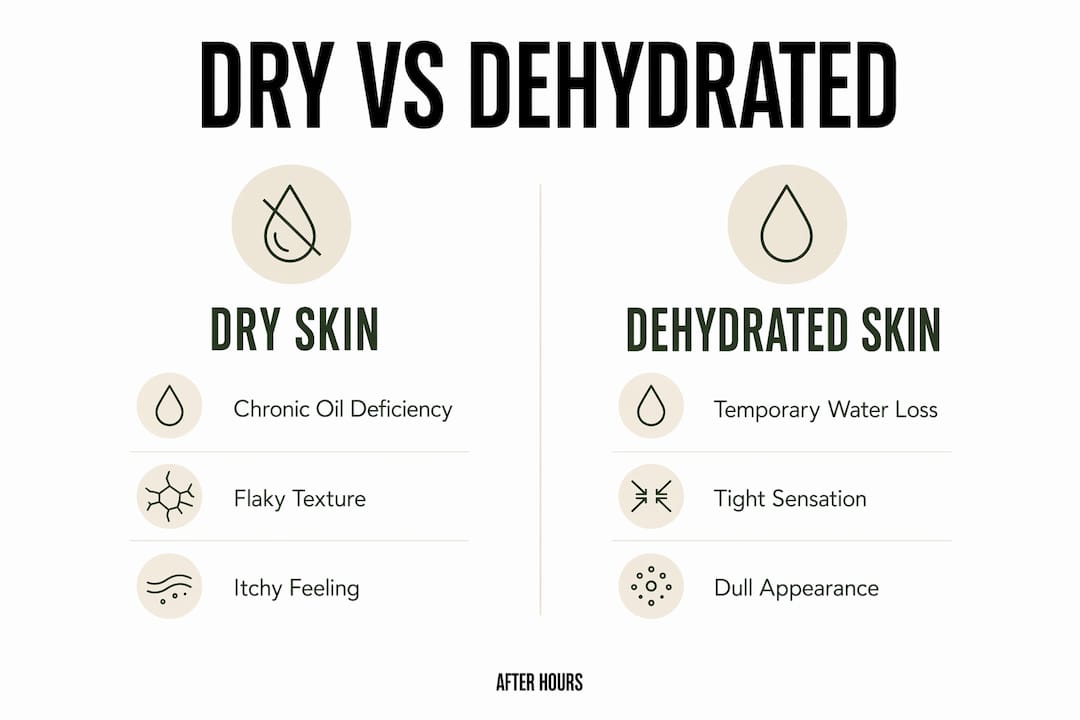
| Feature | Dry skin | Dehydrated skin |
|---|---|---|
| Cause | Chronic oil deficiency | Temporary water deficit |
| Skin types affected | Typically dry or normal | Any skin type, including oily |
| Key symptoms | Flaking, rough texture, tightness | Dullness, fine lines, tight feeling |
| Best ingredient focus | Emollients and occlusives | Humectants |
| Typical triggers | Genetics, ageing, cold weather | Diet, caffeine, air conditioning |
For dry skin, the priority is oil-rich ingredients that replace the missing lipids. Shea butter, plant oils, and ceramides are the workhorses here. For dehydrated skin, the priority is water-attracting humectants like hyaluronic acid and glycerin, followed by a light occlusive to seal them in.
Common triggers that push skin into dehydration include:
- Excessive caffeine or alcohol intake
- Air conditioning and central heating
- Harsh cleansers that strip natural oils
- Cold, windy weather without protective skincare
Identifying your skin’s actual condition, rather than guessing by feel alone, is the fastest way to stop wasting money on products that do not address the real problem.
Does drinking more water actually hydrate your skin?
Drinking water is good for your health, but it does not directly hydrate the skin’s outer layer. Oral hydration has limited visible effect on surface skin moisture compared to topical application. Water consumed internally is prioritised by the body for organ function. By the time it reaches the stratum corneum, the outermost skin layer, the effect is negligible.
The stratum corneum relies on its own system of natural moisturising factors (NMFs) and lipids to regulate water content. Moisturisers increase water content in the stratum corneum directly, smooth the skin surface by filling gaps between cells, and improve lipid absorption. No amount of water consumed orally replicates that targeted action.
Several environmental factors accelerate water loss from the skin surface, making topical care non-negotiable:
- Central heating reduces indoor humidity, pulling moisture from skin constantly
- UV exposure degrades the lipid barrier, speeding up TEWL
- Wind strips the skin’s surface moisture rapidly
- Hot showers dissolve the natural oils that slow evaporation
- Air conditioning creates dry air that draws moisture out of skin
Drinking enough water supports overall health and keeps skin from becoming severely dehydrated internally. Topical moisturising, applied consistently, is what actually maintains the skin’s surface condition.
How to build a daily moisturising routine that works
Consistency beats complexity every time. A simple routine applied twice daily produces better results than an elaborate one used sporadically. Applying moisturiser on damp skin and layering products in the correct order are the two habits that make the biggest practical difference.
The correct layering order for a daily routine is:
- Cleanser. Use a gentle, pH-balanced formula that does not strip natural oils.
- Serum. Apply any targeted treatment, such as a vitamin C or niacinamide serum, to clean skin.
- Moisturiser. Apply while skin is still slightly damp from the serum or a light mist.
- SPF (morning only). Apply a broad-spectrum sunscreen as the final step in your morning routine.
At night, skip the SPF and consider a richer moisturiser or body butter. Skin repair cycles are most active during sleep, making the evening application the most productive of the two.
Pro Tip: If you find your moisturiser pills or sits on top of the skin, you are likely applying it too quickly after a thick serum. Wait 30 seconds for the serum to absorb before applying your moisturiser.
Expect to wait two to four weeks of consistent use before judging whether a moisturiser is working. Skin cell turnover takes time. Switching products every few days prevents you from ever seeing real results.
Common moisturising mistakes that damage your skin
The most frequent moisturising mistake is over-cleansing. Excessive cleansing and over-exfoliation weaken the skin barrier, increasing moisture loss even when you moisturise consistently. Applying a good moisturiser on top of a damaged barrier is like filling a bucket with a hole in it.
Other common errors include:
- Skipping the night application. Skin repair is most active overnight. Missing the evening moisturiser means missing the window when your skin is most receptive to barrier repair.
- Using the wrong formulation for your skin type. A heavy, oil-rich butter on oily dehydrated skin can block pores. A light water-based gel on chronically dry skin will not provide enough lipid support.
- Applying too much product. More product does not mean more hydration. A thin, even layer absorbs better than a thick one that sits on the surface.
- Expecting instant results. Consistent daily moisturiser use resolves issues like chronic irritation and inflammation over weeks, not days.
Moisturiser is a foundational skincare tool, not an optional extra. Treating it as a quick fix rather than a daily health habit is the root cause of most disappointing results.
Key takeaways
Daily moisturising is the single most effective habit for maintaining the skin barrier, preventing transepidermal water loss, and reducing long-term skin problems.
| Point | Details |
|---|---|
| Barrier repair is the priority | Moisturisers fix the lipid structure of the skin barrier, not just the surface feel. |
| Apply twice daily, on damp skin | Morning and evening application on slightly damp skin maximises absorption and barrier support. |
| Match the formula to the condition | Dry skin needs oil-rich emollients; dehydrated skin needs humectants first. |
| Topical care outperforms oral hydration | Drinking water does not directly hydrate the stratum corneum; topical moisturisers do. |
| Consistency over complexity | Two to four weeks of daily use is the minimum timeframe to judge a moisturiser’s effectiveness. |
Why I think most people are overcomplicating their skincare
People arrive with ten-step routines and skin that is worse than when they started. That pattern is more common than most skincare content admits. The problem is almost never a missing product. It is usually a damaged barrier caused by too much cleansing, too much exfoliation, or the wrong moisturiser applied inconsistently.
What I have seen work, repeatedly, is stripping the routine back to three steps: a gentle cleanser, the right moisturiser for the actual skin condition, and SPF in the morning. Skin that has been reactive for years often settles within a month of that approach. The science supports it. The skin’s barrier structure needs time and the right lipid inputs to repair itself. Throwing more products at it interrupts that process.
The other thing worth saying plainly: moisturising is not a cosmetic vanity step. It is a health measure. A compromised barrier lets allergens and irritants in, triggers inflammation, and in some cases contributes to conditions like eczema and contact dermatitis. Getting the basics right, consistently, is genuinely protective. A well-chosen body butter applied every morning and evening does more for your skin than any serum that costs three times as much.
— Darnell
Afterhoursbodybutter: daily moisture that actually works
Your skin needs a moisturiser that matches its actual condition, not a generic formula designed for no one in particular.
Afterhoursbodybutter formulates premium, vegan body butters using natural ingredients, including plant-based emollients and fat-soluble vitamins, designed to nourish the skin barrier with every application. The range covers a variety of skin needs, from deep moisture for dry skin to daily hydration for normal and sensitive skin. The Blueprint Aura Body Butter is built for barrier support and sustained hydration, while the Men’s Cocoa Body Butter targets chronically dry skin with rich, oil-based nourishment. All products are cruelty-free, chemical-free, and made without compromise. Browse the full range at Afterhoursbodybutter and find the right fit for your skin.
FAQ
Why does skin lose moisture throughout the day?
Skin loses moisture through transepidermal water loss (TEWL), a continuous process accelerated by heat, wind, UV exposure, and low humidity. The skin barrier slows this loss, but it cannot stop it entirely without regular topical support.
How often should you moisturise your skin?
Dermatologists recommend applying moisturiser twice daily, morning and night, to maintain barrier integrity and replace moisture lost throughout the day and overnight.
Is a body butter better than a standard lotion for dry skin?
Body butters contain higher concentrations of emollients and occlusives, making them more effective for chronically dry skin that needs oil-rich barrier support. Lotions suit normal or mildly dehydrated skin better.
Can you over-moisturise your skin?
Applying too much product at once reduces absorption and can block pores on oily skin types. A thin, even layer applied consistently is more effective than heavy applications used irregularly.
Does moisturising help with acne?
Consistent moisturising repairs the skin barrier and reduces inflammation, which can improve acne over time. Using a non-comedogenic formula suited to your skin type prevents pore blockage while still providing hydration.