

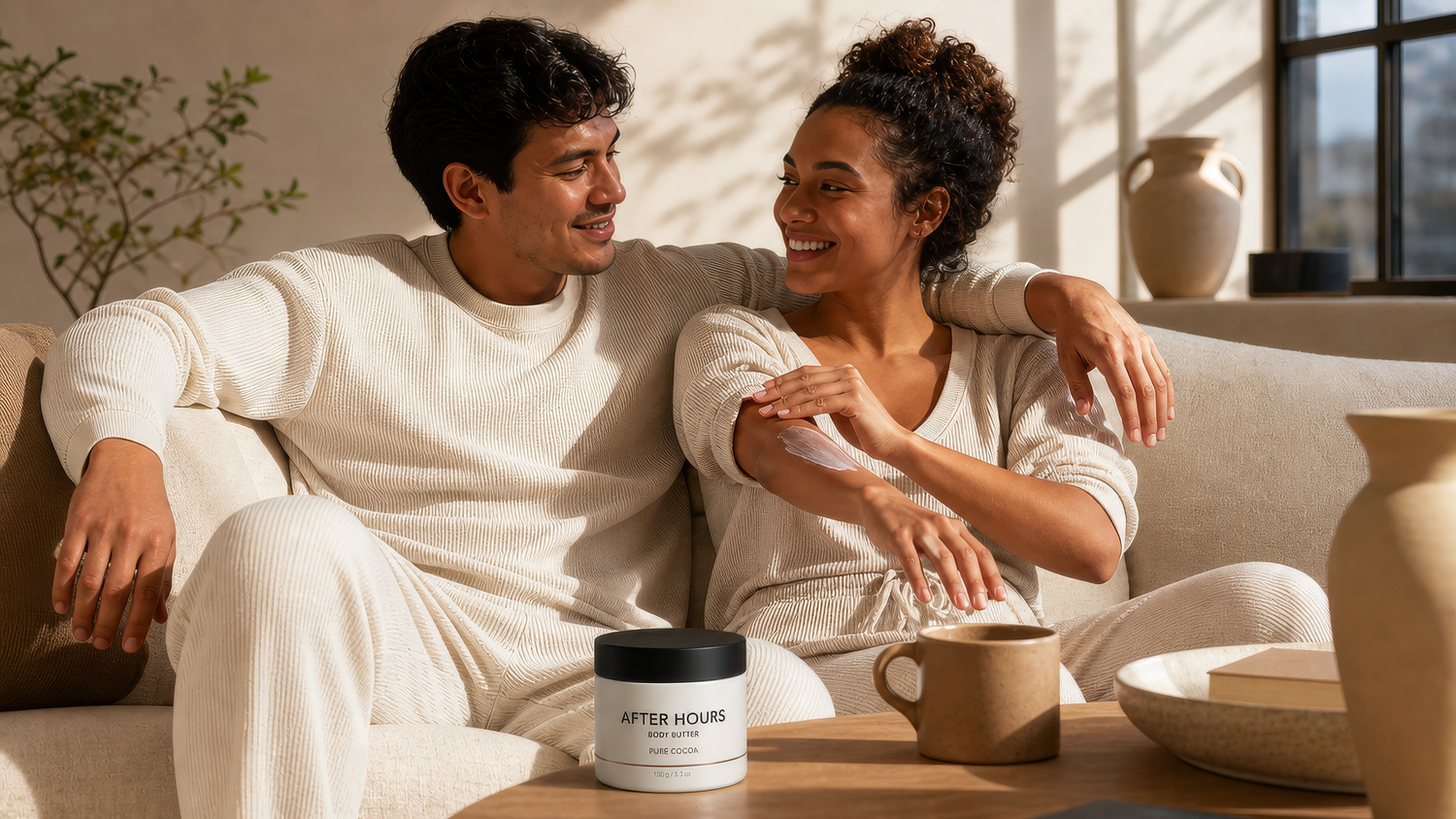

A body care routine for sensitive skin is defined as a limited, step-by-step regimen using fragrance-free, non-foaming cleansers, ceramide-rich moisturisers, and mineral-based SPF to repair the skin barrier and reduce irritation. The standard approach, supported by dermatology guidelines, keeps the routine to three or four products initially. This matters because sensitive skin has impaired barrier function, which leads to increased transepidermal water loss (TEWL) and a higher risk of inflammation. Restoring that barrier requires avoiding common irritants such as fragrance, sulphates, and alcohol, while consistently applying barrier-supporting ingredients. New products should only be introduced after four or more weeks of stability, one at a time.
1. What are the best gentle cleansers for sensitive skin?
The right cleanser does not strip the skin. For sensitive skin, the gold standard is a non-foaming, fragrance-free, SLS-free cleanser with a pH between 5.0 and 5.5. That pH range matches the skin’s natural acid mantle, which protects against bacteria and moisture loss.

Cream, milky, and lotion-based cleansers outperform foaming types for reactive skin. Foaming cleansers rely on surfactants that disrupt the lipid layer, increasing TEWL. Cream cleansers rinse clean without that disruption.
Key ingredients to look for in a gentle cleanser:
- Glycerin: draws moisture into the skin during cleansing
- Ceramides: reinforce the lipid barrier while you wash
- Panthenol (vitamin B5): soothes and supports barrier recovery
- Allantoin: calms redness and minor irritation
Ingredients to avoid:
- Sodium lauryl sulphate (SLS) and sodium laureth sulphate (SLES)
- Synthetic fragrance and parfum
- Alcohol (denat. or isopropyl)
- Menthol and eucalyptus
Hot water and scrubbing worsen barrier irritation and increase sensitivity. Use lukewarm water and pat the skin dry with a soft towel rather than rubbing.
Pro Tip: Rinse your cleanser off with water that feels comfortable on your wrist. If it feels hot on your wrist, it is too hot for your face and body.
2. How to choose and use moisturisers for sensitive skin
Moisturising is the single most important step in a skincare routine for sensitive skin. The barrier cannot repair itself without the right lipid building blocks delivered consistently.
The most effective formulations follow a 3:1:1 ratio of ceramides, cholesterol, and fatty acids. This mirrors the natural composition of a healthy skin barrier. Consistent daily application for 4–8 weeks is required before you see significant improvement.
Beyond ceramides, look for these ingredients:
- Colloidal oatmeal: clinically recognised for calming irritation and reducing itch
- Panthenol: a humectant and anti-inflammatory that supports repair
- Glycerin: pulls water from the air into the skin
- Shea butter: nourishes without irritation when fragrance-free and free of essential oils
- Fatty alcohols (e.g., cetyl alcohol): emollients that soften without clogging pores
Packaging matters as much as the formula. Airless pumps and tubes protect ceramides and other sensitive ingredients from oxidation. Jars expose the product to air and bacteria with every use.
Apply your moisturiser to slightly damp skin, within two to three minutes of patting dry. Damp skin absorbs humectants more effectively, and the moisturiser seals that hydration in place.
Pro Tip: If your skin feels tight after applying moisturiser, the formula is not rich enough. Switch to a thicker cream or body butter rather than applying more of the same product.
For very dry or eczema-prone skin, a richer texture such as a body butter provides deeper nourishment. Body care for eczema benefits from fragrance-free, occlusive-rich formulations that hold moisture in overnight.
3. What role does mineral sunscreen play in your routine?
Mineral sunscreen is not optional for sensitive skin. Zinc oxide and titanium dioxide sit on top of the skin and reflect UV rays rather than absorbing them into the tissue. That physical action means far less risk of stinging, redness, or allergic reaction compared to chemical filters.
The minimum recommendation is SPF 30 with broad-spectrum coverage, applied daily. UV exposure degrades the skin barrier and triggers inflammation, which makes sensitivity worse over time.
How to select and use mineral SPF correctly:
- Choose a formula labelled fragrance-free and non-comedogenic.
- Apply as the final step in your morning routine, after moisturiser.
- Reapply every two hours if you are outdoors or sweating.
- Remove thoroughly at the end of the day with your gentle cleanser to prevent pore congestion and irritation.
Chemical filters such as oxybenzone and avobenzone cause stinging and redness more frequently in people with reactive skin. Mineral filters are the safer default for this skin type.
4. How to safely introduce active ingredients
Active ingredients can strengthen sensitive skin, but only after the core routine has been stable for at least four weeks without any reaction. Rushing this step is the most common mistake people make.
The process for introducing actives safely:
- Patch test first. Apply the new product to your inner forearm twice daily for five days. If no reaction occurs, move to the jawline for three days before full application.
- Start with niacinamide at 2–4%. At this concentration, niacinamide strengthens the barrier by increasing ceramide synthesis. The 10% concentrations common in many products are too strong for reactive skin.
- Add panthenol serums next. Panthenol is both a humectant and an anti-inflammatory. It is one of the gentlest actives available.
- Consider centella asiatica. This botanical extract has well-documented soothing properties and is tolerated by most sensitive skin types.
- Introduce one product at a time. Wait at least four weeks before adding anything new. This is the only way to identify what causes a reaction.
Ingredients to keep out of your routine entirely:
- Synthetic fragrance and parfum
- Essential oils (including lavender and tea tree)
- Alcohol (denat.)
- Harsh physical and chemical exfoliants
Experts advocate a ‘deliberately boring’ routine that focuses on supporting the skin’s structure rather than layering multiple actives. Complex serums with botanical extracts are frequent hidden sources of irritation. Simple humectants like glycerin, hyaluronic acid, and panthenol are safer choices for sensitive skin.
When a flare-up occurs, subtraction is more effective than addition. Stop the newest product in your routine first, pause any exfoliants or strong actives, and return to the three-step core until the skin resets.
5. Daily habits that protect sensitive skin
Product choice matters, but daily habits determine whether those products can work. Friction, heat, and environmental exposure all compromise the barrier independently of what you apply.
Wear loose, soft fabrics against the skin. Rough textures and tight waistbands create physical irritation that no moisturiser can fully offset. Wash clothing in fragrance-free, dye-free detergents.
Keep showers short and cool. Lukewarm water and gentle application protect the skin far better than hot showers, which strip natural oils and raise TEWL. Aim for showers under ten minutes.
Track your skin’s reactions in a simple journal. Note what you applied, what you ate, and any environmental factors such as cold wind or central heating. Patterns become visible within two to three weeks, and that information is more useful than any ingredient list.
6. How to read ingredient labels for sensitive skin
Reading an ingredient list is a practical skill, not a specialist one. The INCI (International Nomenclature of Cosmetic Ingredients) system lists every ingredient in descending order of concentration. The first five ingredients make up the bulk of the formula.
Fragrance appears under several names: “parfum,” “fragrance,” “aroma,” and sometimes as specific essential oils. Any of these in the first ten ingredients signals a high concentration. For sensitive skin, fragrance-free means none of these appear anywhere on the list.
Look for products with short ingredient lists. Minimal ingredient lists reduce the number of potential triggers in each application. A cleanser with eight ingredients carries less risk than one with thirty.
Pro Tip: Use the free CosDNA or INCI Decoder websites to check any product’s ingredient list for known irritants before you buy.
7. Building your routine: a practical step-by-step order
A clear routine order removes guesswork and reduces the risk of applying products incorrectly. For sensitive skin, the sequence is straightforward.
Morning:
- Rinse with lukewarm water or use your gentle cream cleanser.
- Apply ceramide-rich moisturiser to damp skin.
- Apply mineral SPF 30+ as the final step.
Evening:
- Cleanse with your non-foaming, fragrance-free cleanser.
- Apply any approved active (niacinamide serum at 2–4%) if your skin is stable.
- Apply ceramide-rich moisturiser or body butter to seal the barrier overnight.
Keep this routine consistent for at least four weeks before evaluating results. Barrier repair takes time. Switching products before that window closes prevents you from knowing what is actually working.
Key takeaways
A body care routine for sensitive skin works best when it stays simple: three to four fragrance-free, barrier-supporting products applied consistently for a minimum of four weeks.
| Point | Details |
|---|---|
| Keep the routine minimal | Limit to 3–4 products initially; introduce new items only after 4+ weeks of stability. |
| Prioritise ceramide moisturisers | A 3:1:1 ratio of ceramides, cholesterol, and fatty acids supports barrier repair most effectively. |
| Choose mineral SPF daily | Zinc oxide or titanium dioxide at SPF 30+ protects without the irritation risk of chemical filters. |
| Patch test every new product | Apply to the inner forearm twice daily for five days before full use to avoid widespread reactions. |
| Subtract during flare-ups | Stop the newest product first and pause actives; simplification resets the skin faster than adding more. |
What I have learned from years of watching people overcomplicate this
The most common pattern I see with sensitive skin is this: someone starts with a simple routine, sees improvement, and then adds three new products in a fortnight because they feel confident. Within two weeks, the skin reacts. They cannot identify the cause because they changed too many things at once. They conclude that “nothing works for my skin” and start over.
The truth is that sensitive skin rewards patience more than any other skin type. A routine with three well-chosen products, applied consistently for two months, will outperform a ten-step routine every time. The skin does not need more. It needs less interference.
The other mistake I see regularly is treating a flare-up as a signal to add soothing products. The instinct makes sense, but it usually makes things worse. Adding a new product during a reaction introduces another variable when the skin is already compromised. The correct response is to strip back to the core three steps and wait.
One habit that genuinely changes outcomes is keeping a skin journal. Writing down what you applied, what the weather was like, and how your skin looked the next morning takes two minutes. After three weeks, you will have data that no dermatologist appointment can replicate, because it is specific to your skin, your environment, and your products.
Sensitive skin is not a permanent condition in most cases. It is a barrier that needs consistent, gentle support to function correctly. Give it that, and it responds.
— Darnell
Afterhoursbodybutter products for your sensitive skin routine

Afterhoursbodybutter formulates its body butters specifically for people who need nourishment without irritation. The Blueprint Aura Body Butter is built around barrier-supporting, fragrance-free ingredients designed to deliver deep hydration to sensitive and dry skin. It fits directly into the evening moisturising step of the routine above. For those who prefer a richer texture, the Men’s Cocoa Body Butter provides deep nourishment for dry, reactive skin without synthetic fragrance or harsh additives. Both products are vegan, cruelty-free, and formulated without the chemical irritants that compromise sensitive skin. Free UK delivery is available on orders over £30.
FAQ
What is the best body care routine for sensitive skin?
The most effective routine uses three products: a non-foaming, fragrance-free cleanser with a pH of 5.0–5.5, a ceramide-rich moisturiser, and a mineral SPF 30+. Introduce any additional products only after four or more weeks of stability.
How long does it take to repair a sensitive skin barrier?
Consistent daily application of ceramide-rich moisturisers for 4–8 weeks is required before significant barrier improvement becomes visible. Results vary depending on the severity of barrier damage and how consistently the routine is followed.
Can I use niacinamide on sensitive skin?
Yes, but only at a 2–4% concentration. Higher concentrations increase the risk of irritation. Always patch test on the inner forearm for five days before applying to the full body.
What ingredients should sensitive skin avoid?
Avoid synthetic fragrance, essential oils, alcohol (denat.), SLS, SLES, and harsh exfoliants. These are the most frequent triggers of barrier disruption and inflammation in sensitive skin.
Is body butter suitable for sensitive skin?
A fragrance-free, essential-oil-free body butter with nourishing ingredients such as shea butter and ceramides is well-suited to sensitive and dry skin. It provides occlusive protection that seals moisture in overnight without the irritation risk of fragranced alternatives.