

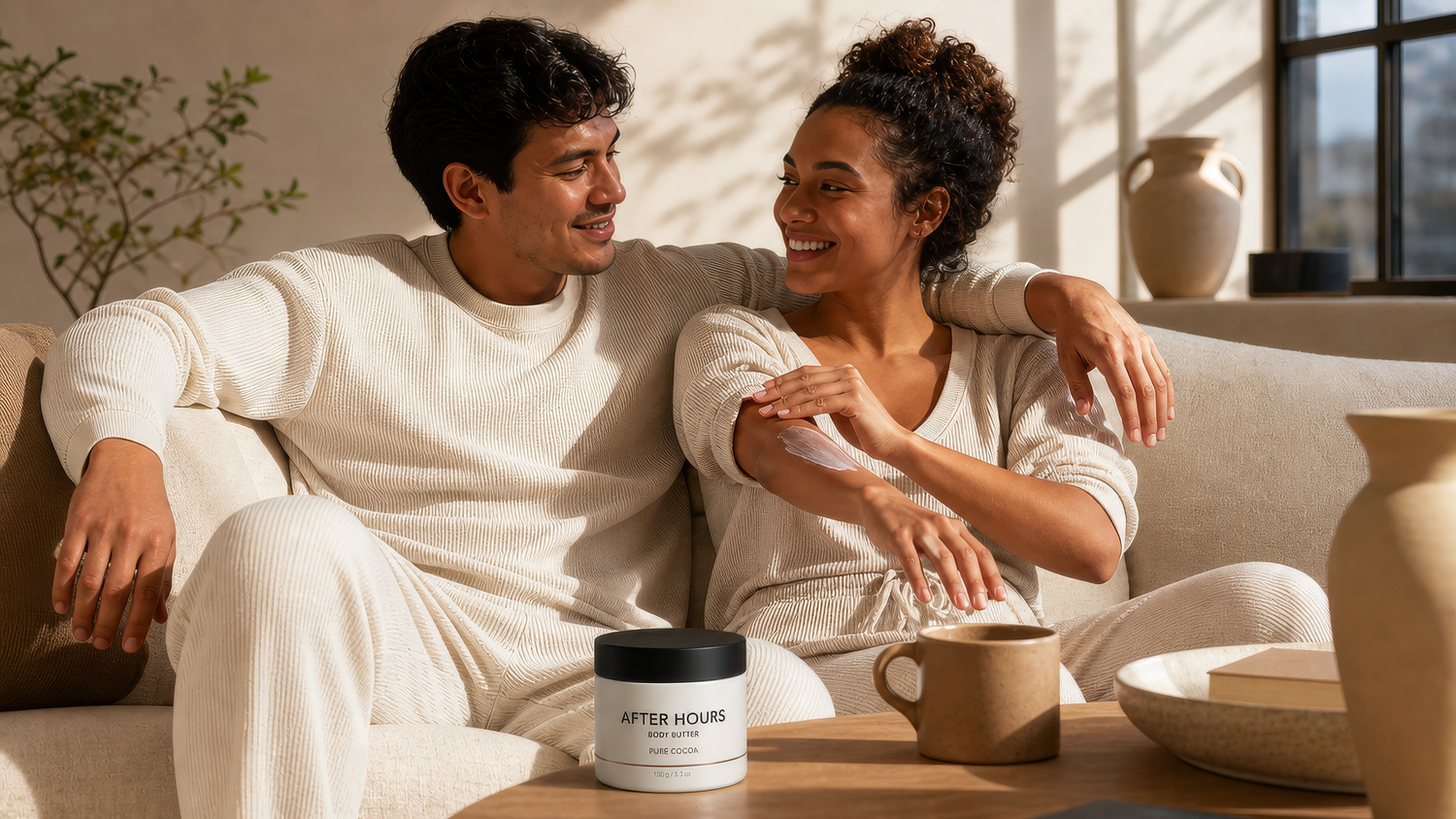

Apply a small amount of body butter to clean, slightly damp skin straight after bathing. Warm it between your palms, massage into dry zones like elbows, knees, and heels, then allow a few minutes to absorb before dressing. That single routine covers the basics. The steps below refine each part so you get consistent results.
- Pat skin dry after your shower, leaving it slightly damp
- Scoop a pea-to-dime-sized amount and warm between palms
- Apply with broad, circular strokes to dry areas
- Allow a few minutes to absorb before putting on clothes
- For intensive care, Afterhoursbodybutter’s vegan, natural formula works well as an overnight treatment on heels and elbows.
Table of Contents
- What makes body butter different from lotion or oil?
- When to apply body butter for maximum effect
- Step-by-step application routine
- Key benefits of body butter and when it beats lotion or oil
- Precautions and patch testing for sensitive or acne-prone skin
- Common mistakes and how to fix them
- Three ready-to-use routines
- Key takeaways
- Why technique and ingredients both matter
- Afterhoursbodybutter: vegan body butter for dry and sensitive skin
- Useful sources
What makes body butter different from lotion or oil?
Body butter is anhydrous. That means it contains no water — just natural fats such as shea, cocoa, and mango butter, plus carrier oils. Lotion is oil-in-water, which is why it feels lighter and absorbs faster. Body butter sits on the other end of the spectrum: thicker, slower to absorb, and far more occlusive.
Occlusion matters because it reduces transepidermal water loss, the process by which moisture escapes through your skin. A lotion adds hydration; body butter seals it in. That distinction shapes everything about when and how you use it.
Body butter acts primarily as an occlusive agent that helps repair compromised skin barriers rather than merely adding water. For dry or sensitive skin, that makes it a more targeted tool than a standard lotion.
Plain oils sit somewhere in between. They absorb faster than butter but lack the same film-forming density. If your skin is very dry or your barrier is compromised, body butter is the stronger choice. For a quick daily refresh on normal skin, a lighter lotion often does the job.
When to apply body butter for maximum effect
Timing is the single biggest factor in how well body butter works. Dermatologists recommend applying it immediately after bathing, while skin is still slightly damp. The surface moisture gives the butter something to seal in.
- Right after your shower or bath — pat dry, leave skin slightly damp, apply within two minutes of stepping out
- Before bed — overnight application on feet, elbows, and knees lets the butter work without interference from clothing or movement
- During cold or dry months — UK winters strip moisture faster; increase frequency from a few times weekly to daily
- Spot treatment through the day — hands, cuticles, and heels can be reapplied as needed without a full routine
For very dry skin, frequent use is the baseline. Normal skin typically benefits from regular use a few times a week. Oily or combination skin does best with targeted application to dry patches only, avoiding areas prone to congestion.

Step-by-step application routine
Follow these steps each time for consistent results. The order matters.
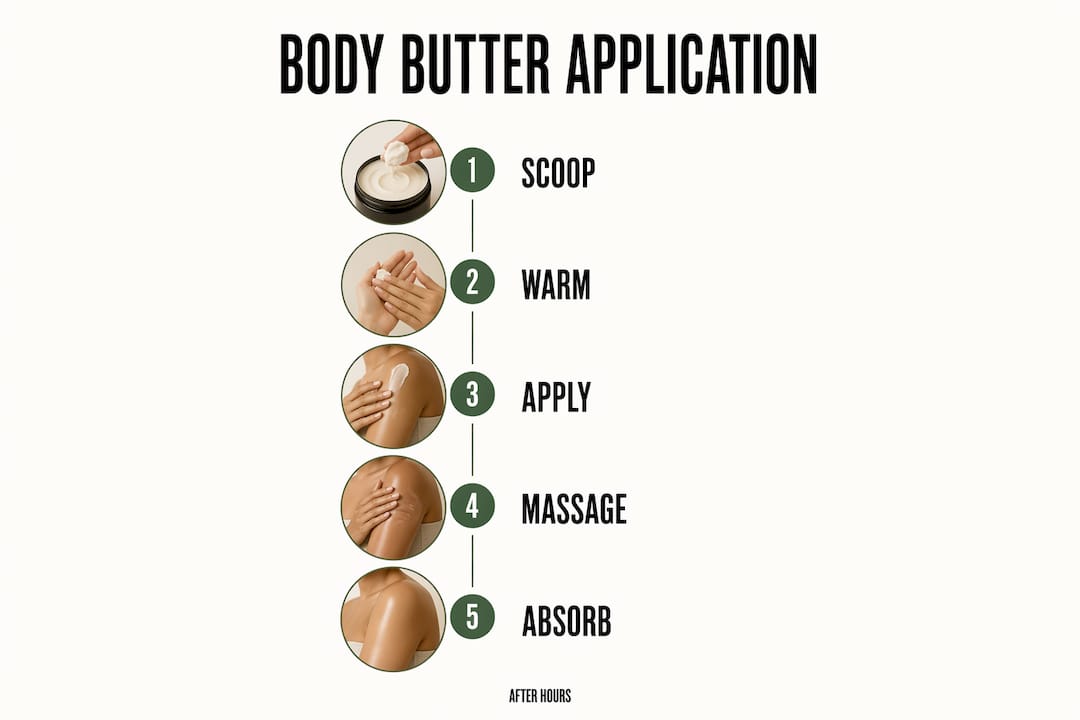
- Cleanse and pat dry. Shower or bathe as normal. Pat skin with a towel but stop before it is fully dry. Slightly damp skin absorbs the butter more effectively.
- Scoop a small amount. A pea-sized amount covers a hand or foot. Scale up to a dime-sized scoop for larger areas like thighs or arms. Less is more — you can always add.
- Warm between your palms. Press hands together and rub gently for a few seconds until the butter turns glossy. This prevents surface pilling and makes spreading much easier.
- Apply with broad, firm strokes. Work in circular motions across the skin. Firm pressure helps absorption and supports circulation. Cover the full area before moving on.
- Prioritise dry zones. Give extra attention to elbows, knees, heels, and shins. These areas lose moisture fastest and benefit most from the occlusive layer.
- Allow time to absorb. Wait 3–5 minutes before dressing. Wear a robe if you need to move around. Rushing this step transfers product to fabric and reduces effectiveness.
Pro Tip: Use a clean spatula to scoop product from the jar rather than your fingers. It keeps the formula free from contamination and extends shelf life.
Key benefits of body butter and when it beats lotion or oil
Body butter delivers three things a standard lotion cannot match: deep hydration, barrier repair, and lasting occlusion. Regular use after bathing can improve skin texture and moisture retention within weeks for dry conditions.
| Situation | Best choice | Why |
|---|---|---|
| Very dry, cracked, or rough skin | Body butter | High occlusion seals moisture and repairs barrier |
| Sensitive or reactive skin | Body butter (natural formula) | Fewer additives, supports barrier without irritants |
| Overnight intensive treatment | Body butter | Works undisturbed; thicker layer on feet/elbows |
| Quick daily refresh, normal skin | Lotion | Lighter, faster absorption, less residue |
| Acne-prone chest or back | Light lotion or oil | Avoids pore congestion from heavy occlusives |
| Post-shave or post-wax | Body butter | Soothes and seals the skin barrier |
The science behind deep absorption comes down to the fat-soluble vitamins and nutrients in quality butters. They penetrate the lipid layers of the skin rather than sitting on the surface the way water-based products do.
Precautions and patch testing for sensitive or acne-prone skin
Not every butter suits every skin type. A patch test before wider use is a straightforward way to avoid reactions.
- How to patch test: apply a small amount to your inner forearm and leave for 48 hours. No redness, itching, or swelling means you are clear to use it more broadly.
- Acne-prone skin: avoid applying heavy butters across your chest, back, or shoulders if you are prone to body breakouts. Stick to extra-dry zones like elbows, knees, and heels. Non-comedogenic carrier oils are a better fit for congestion-prone areas.
- Fragrance sensitivity: if your skin reacts to added fragrance, choose a formula with no synthetic perfume. Natural butters have a mild, inherent scent that rarely causes issues.
- Broken or inflamed skin: do not apply body butter over open wounds, active eczema flares, or infected areas. Stop use and speak to a clinician if irritation develops.
- Ingredient check: look for shea, mango, or cocoa butter as primary ingredients, alongside non-comedogenic carrier oils. For a sensitive skin routine, keep the ingredient list short and avoid unnecessary additives.
Common mistakes and how to fix them
Most issues with body butter come down to a few repeatable errors. Here is what to watch for.
- Using too much. A thick, greasy layer that never fully absorbs usually means you have applied too much. Scale back to a pea-sized amount and build up only if needed. Layering thin coats works better than one heavy application.
- Applying to fully dry skin. If your skin is completely dry, the butter has nothing to seal in. Dampen your skin briefly with a damp cloth or reapply straight after a quick rinse, then use the butter immediately.
- Rubbing instead of massaging. Fast, surface-level rubbing creates friction and can cause pilling. Slow, circular motions with light pressure give better results.
- Applying over broken or inflamed skin. Heavy occlusives can trap bacteria and worsen irritation on damaged skin. Avoid the area until it has healed.
- Greasy residue on clothing. This is almost always a timing issue. Allow the full absorption window before dressing. If transfer is a recurring problem, reduce the amount you apply.
- Pilling. Usually caused by applying to dry skin or not warming the product enough. Warm it longer between your palms and apply to damp skin.
Three ready-to-use routines
Pick the one that fits your schedule.
Daily quick routine Post-shower, pat skin damp, apply a small amount to arms, legs, and hands. Focus on the driest areas. Done in under two minutes. Consistent daily use is what builds lasting moisture retention.
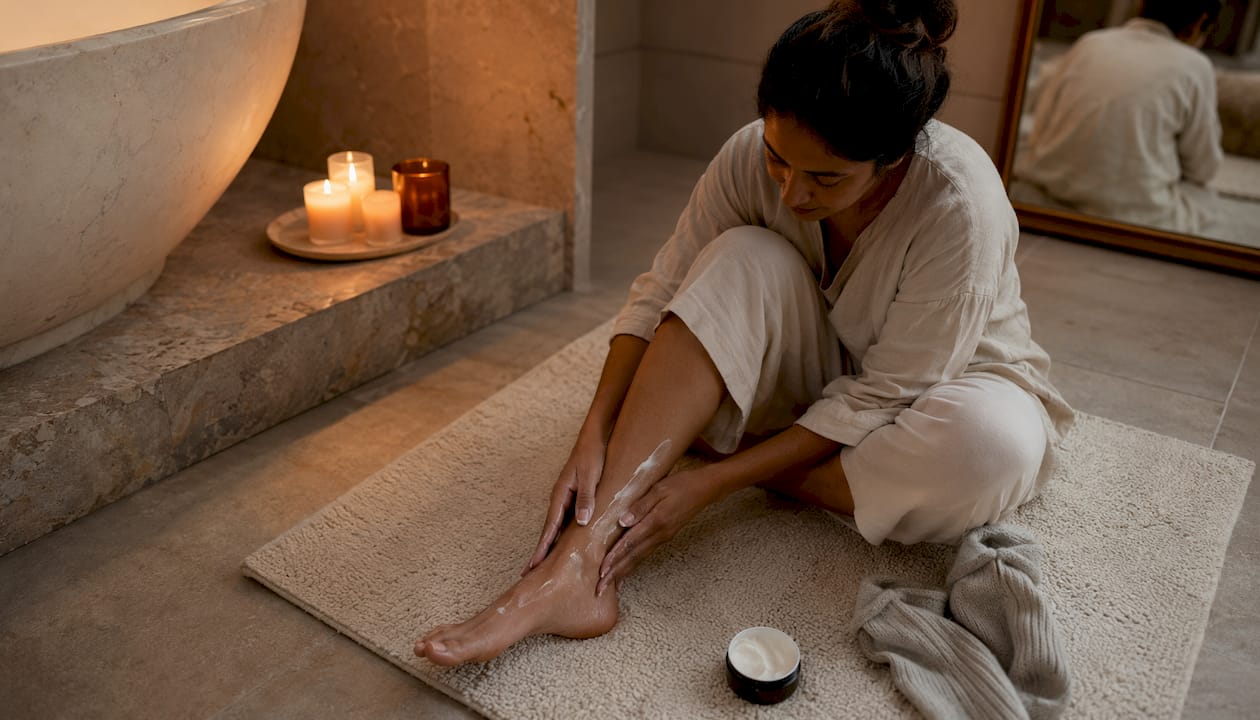
Overnight repair routine Apply a slightly thicker layer to feet and elbows before bed. Pull on a pair of cotton socks straight away to lock in the treatment and reduce transfer to bedding. Repeat nightly for a short repair period of one to two weeks.
Travel and hand care Keep a small travel jar in your bag. Apply a tiny amount to hands and cuticles after washing, especially in air-conditioned or heated environments. Frequent small applications maintain hydration better than one large dose.
Storage tip: keep your body butter away from direct sunlight and heat. A cool, dry spot preserves the texture and extends shelf life.
Key takeaways
Apply body butter to slightly damp skin immediately after bathing, warm it between your palms, and focus on dry zones to get the most from every application.
| Point | Details |
|---|---|
| Timing is everything | Apply to slightly damp skin within two minutes of stepping out of the shower. |
| Warm before applying | Rub between palms until glossy to prevent pilling and improve spread. |
| Target dry zones first | Elbows, knees, and heels need the most attention; avoid acne-prone areas. |
| Patch test first | Apply to inner forearm for 48 hours before using on larger areas. |
| Afterhoursbodybutter | A vegan, chemical-free option suited to overnight repair and dry-zone treatment. |
Why technique and ingredients both matter
Most people focus on which product to buy and skip the technique entirely. That is the wrong order. A quality body butter applied to fully dry skin at the wrong moment will underperform a basic formula used correctly on damp skin. The method is half the result.
That said, ingredients do matter once the technique is right. Formulas built on shea, mango, and cocoa butter with fat-soluble vitamins work with the skin’s lipid structure rather than sitting on top of it. Vegan, chemical-free formulations avoid the synthetic additives that can trigger reactions in sensitive skin. Sustainable sourcing and transparent ingredient lists are not just ethical choices — they are signals of a brand that takes the product seriously.
Afterhoursbodybutter’s approach reflects that. The formulations are designed around specific skin concerns, not generic moisturising. Customers with dry or sensitive skin report visible improvements in texture and reduced irritation. That outcome depends on both the formula and the routine.
Afterhoursbodybutter: vegan body butter for dry and sensitive skin
Dry skin in the UK, especially through autumn and winter, needs more than a quick lotion. Afterhoursbodybutter’s range is built for exactly the routines described here: post-shower application, overnight repair on heels and elbows, and targeted spot treatment for dry patches.
Every product is vegan, cruelty-free, and made from natural, chemical-free ingredients, including shea, cocoa, and mango butters with fat-soluble vitamins. No synthetic fillers. No unnecessary fragrance. Manufactured and packaged sustainably in the UK.
If you have sensitive or acne-prone skin, patch test first and focus application on extra-dry zones. For everyone else, the overnight foot and elbow routine is a good place to start.
Shop the full range at Afterhoursbodybutter. Free UK delivery on orders over £30.
Useful sources
- Body butter vs. lotion — Medical News Today — dermatologist-reviewed comparison of body butter and lotion, covering occlusion and barrier repair
- What Is Body Butter? — Mona Dermatology — practitioner guidance on timing and application technique
- How To Use Body Butter — A Little Bit Etc — practical step-by-step guide covering warming, massaging, and hygiene tips
- Everything You Need To Know About Body Butter — I Love Cosmetics — application technique and post-shower routine advice
- Common Mistakes When Using Body Butter — Jeyanci Beauty — covers overapplication and comedogenic risks
- Why body butter absorbs deeply — Afterhoursbodybutter — the science behind absorption and moisture-barrier support
- Strengthen your skin moisture barrier — Afterhoursbodybutter — practical guide to barrier repair using natural butters