

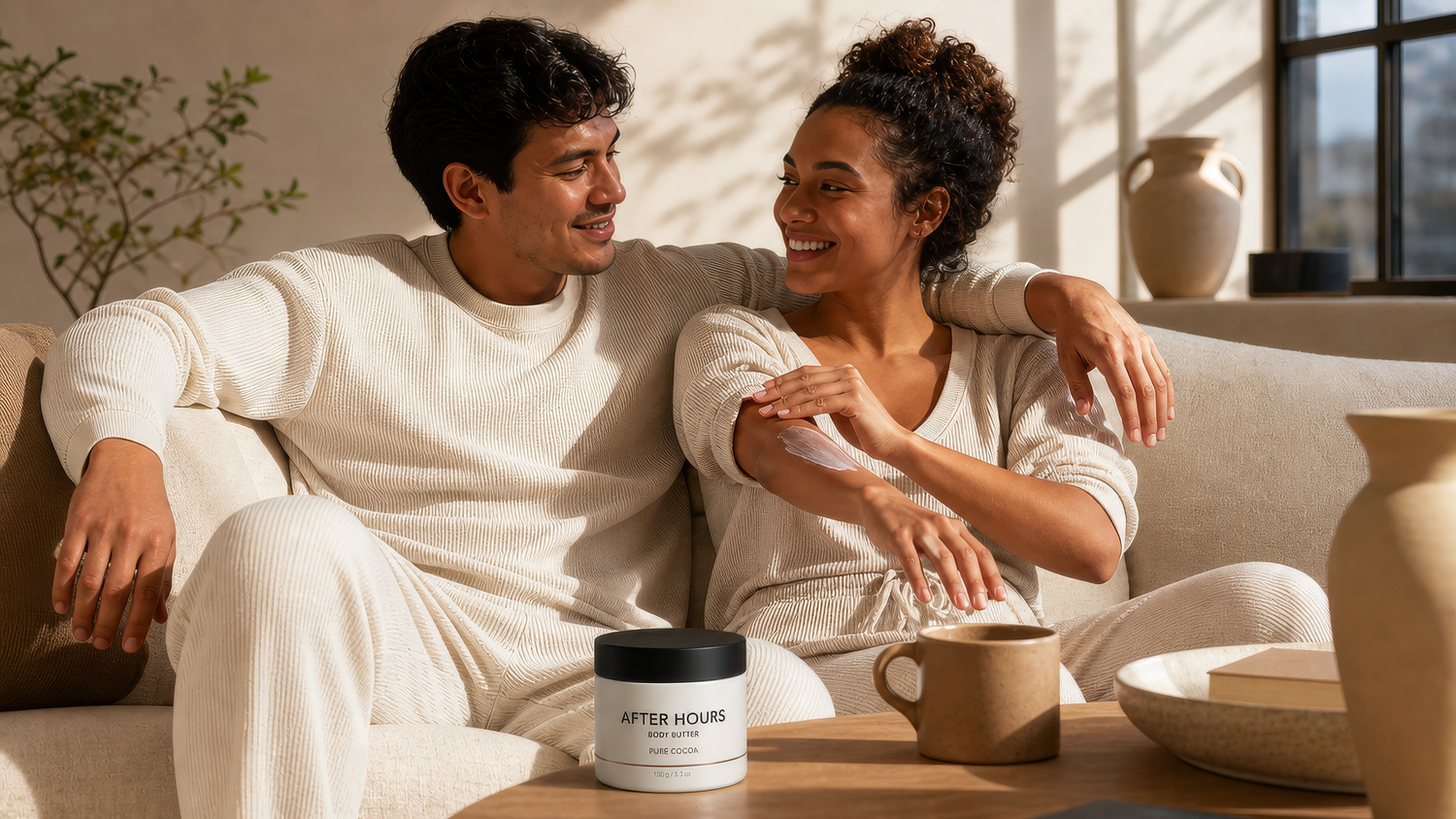

The fastest way to start fading body hyperpigmentation is to do three things consistently: apply a broad-spectrum SPF 30+ every morning to exposed skin, add a proven topical active suited to your skin tone, and moisturise to support your skin barrier. Do those three things daily and you will limit further darkening while gradually fading existing spots.
Start here:
- Apply broad-spectrum SPF 30+ to any exposed body areas every morning, and reapply every two hours outdoors.
- Add one evidence-based active (niacinamide, azelaic acid, or vitamin C) to your PM routine. Patch test first.
- Moisturise with a rich, absorbent body butter morning and night to support barrier recovery and reduce irritation from actives.
See a GP or dermatologist promptly if a patch is changing in size, shape, or colour; if it bleeds without injury; or if you notice sudden, widespread discolouration with no clear cause. These are not cosmetic concerns.
Key takeaways
Consistent sun protection combined with a well-chosen topical active and barrier-supporting moisturiser is the most effective daily approach to reducing body hyperpigmentation.
| Point | Details |
|---|---|
| SPF is non-negotiable | Apply broad-spectrum SPF 30+ every morning and reapply every two hours outdoors to prevent further darkening. |
| Choose actives by skin tone | Niacinamide and azelaic acid suit all skin tones; retinoids and AHAs need careful introduction and strict SPF use. |
| Results take time | Expect 8–12 weeks minimum for mild PIH with consistent topical use; deeper pigment may need months or clinic treatment. |
| Escalate when needed | No change after 12–16 weeks, worsening discolouration, or suspicious lesion changes all warrant a GP or dermatologist appointment. |
| Afterhoursbodybutter supports your routine | Use as a PM barrier-repair layer after actives or as an AM moisturiser before SPF to reduce irritation and support skin recovery. |
Table of Contents
- What does a daily body routine for dark spots look like?
- Which active ingredients actually work on body hyperpigmentation?
- OTC, prescription, or clinic: which route suits you?
- How do you use actives on body skin without causing more damage?
- How long before you see results?
- Do natural remedies actually work for body dark spots?
- When should you see a GP or dermatologist?
- Why you can trust these recommendations
- What actually matters most: a practical perspective
- After Hours Body Butter fits your hyperpigmentation routine
- Sources
What does a daily body routine for dark spots look like?
A consistent, body-focused routine is the backbone of hyperpigmentation body care support. Body skin is thicker than facial skin, so actives need time and the right format to penetrate.
Morning
- Cleanse only where needed (over-cleansing strips the barrier).
- Apply a lightweight leave-on serum or lotion containing your chosen active (niacinamide, azelaic acid, or stabilised vitamin C) to affected areas.
- Moisturise with a rich but absorbent body butter to lock in hydration and reduce the risk of irritation.
- Finish with broad-spectrum SPF 30+ on every exposed area. No sunscreen means no progress.
Evening
- Cleanse to remove SPF and product residue.
- Apply a targeted treatment: a retinoid or AHA on tolerant areas, or niacinamide if your skin is reactive.
- Follow immediately with a nourishing body butter to support the barrier and cushion any dryness from actives.
Weekly
Use an AHA pad or mild chemical exfoliant once or twice a week, depending on your tolerance. Space stronger treatments (retinoids and AHAs) on separate nights rather than layering them. If you use a retinoid three nights a week, keep your AHA exfoliation on off-nights.
Product types to use:
- Leave-on serums or body lotions with actives
- Rich body butters for barrier support and PM moisturising
- Chemical exfoliants (AHA pads, lactic acid lotions)
- Broad-spectrum body sunscreen (SPF 30 minimum)
Pro Tip: If you have sensitive or darker skin, start with the lowest available concentration of any active and patch test on the inner arm or upper thigh for 48–72 hours before applying to larger areas. Introduce one product at a time, spaced two weeks apart, so you can identify any reaction clearly.
Which active ingredients actually work on body hyperpigmentation?
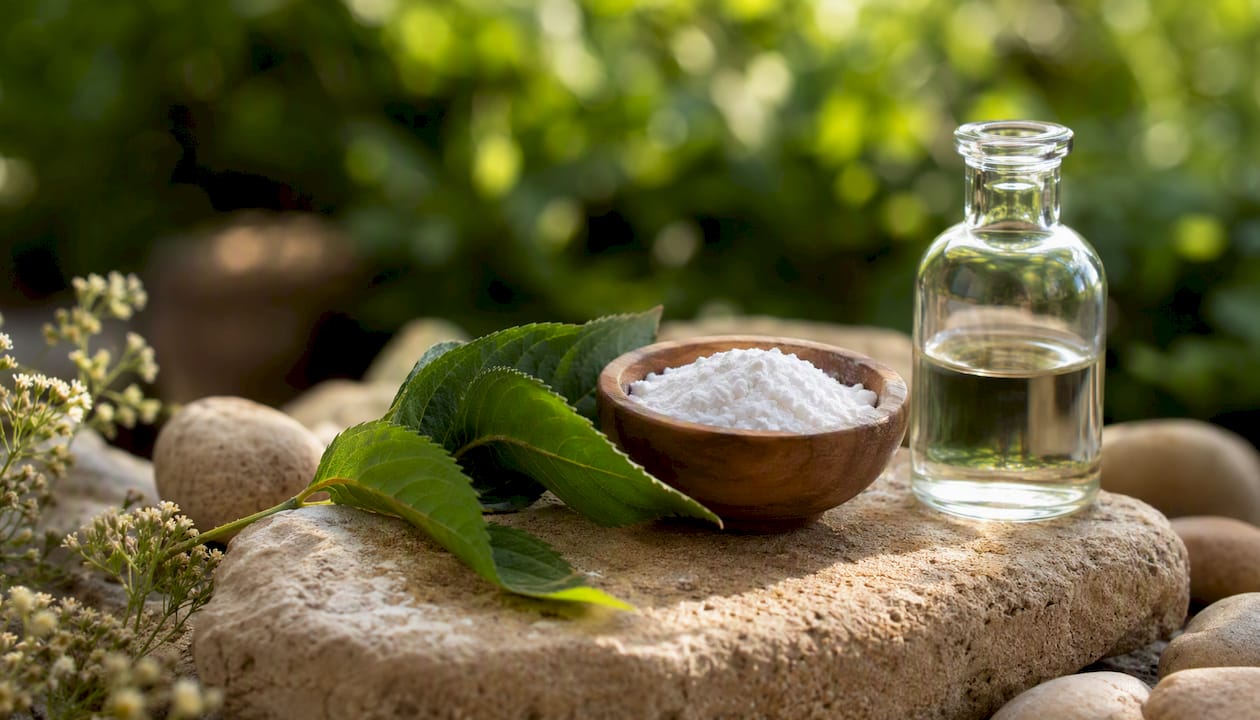
These six ingredients have the strongest evidence for reducing body dark spots. A clinical review published on PubMed confirms that combination therapy with topical agents and sun protection consistently outperforms single-ingredient approaches.
The key actives and how they work:
- Niacinamide (vitamin B3): blocks the transfer of melanin from pigment cells to skin cells. Well tolerated across all skin tones. Typical OTC concentration: low to moderate percentages.
- Azelaic acid: reduces melanin synthesis and has mild anti-inflammatory action, making it a good fit for post-inflammatory hyperpigmentation (PIH). Available OTC at moderate concentrations and on prescription at higher concentrations.
- Vitamin C (ascorbic acid and stable derivatives): antioxidant that inhibits melanin production. Stabilised forms (ascorbyl glucoside, sodium ascorbyl phosphate) hold up better in body lotions and creams.
- Glycolic acid / lactic acid (AHAs): speed up cell turnover to shed pigmented surface cells. Lactic acid is gentler and suits drier or more reactive body skin. OTC concentrations typically run moderate percentages.
- Retinoids (adapalene, tretinoin): increase cell turnover and reduce melanin production over time. Adapalene and tretinoin are available at varying strength levels either OTC or by prescription. Both cause initial dryness, so barrier support is non-negotiable.
- Tranexamic acid: increasingly used for stubborn pigment; shows promise in topical and procedural adjunct roles but often benefits from clinician supervision for body use.
| Active | Typical strength (OTC / Rx) | How to use | Main safety caution |
|---|---|---|---|
| Niacinamide | OTC | AM or PM, layer freely | Rarely irritating; flush reaction at very high doses |
| Azelaic acid | OTC / Rx | AM or PM, once daily to start | Mild tingling; avoid eyes |
| Vitamin C (stable) | OTC | AM preferred | Oxidises quickly; store away from light |
| Glycolic / lactic acid | OTC | PM, 1–3× weekly | Photosensitising; always use SPF |
| Adapalene | OTC | PM only, few times weekly | Dryness, peeling; avoid in pregnancy |
| Tretinoin | Rx | PM only, few times weekly | Irritation, PIH risk if overused; avoid in pregnancy |
| Tranexamic acid | OTC | AM or PM | Generally well tolerated; limited long-term body data |
Body skin needs different textures. Facial serums often absorb too quickly on larger body areas. Look for leave-on body lotions, creams, or gels that contain your chosen active at an effective concentration. Azelaic acid gels and niacinamide body lotions work well on the back, shoulders, and legs.
Safety callouts:
- Do not apply a strong AHA and a retinoid on the same night without building tolerance first.
- Always use SPF the morning after any AHA or retinoid application.
- If you are pregnant or breastfeeding, avoid retinoids entirely. Azelaic acid and niacinamide are generally considered lower risk, but check with your midwife or GP before starting any new active.
OTC, prescription, or clinic: which route suits you?
Start with OTC products for mild PIH. If you see no meaningful change after a consistent 12-week trial, consider escalating. Matching treatment to the underlying cause and skin tone is what separates a routine that works from one that stalls.
Decision path:
- Mild PIH or sun spots, all skin tones: Start OTC. Niacinamide and azelaic acid are good first-line choices because they are well tolerated and reduce pigment transfer effectively.
- No improvement after 12 weeks of OTC use: Consider an online prescriber or GP referral for higher-strength azelaic acid (15–20%), a retinoid, or hydroquinone (available only via a supervised prescriber in the UK).
- Deep pigment, scarring, or melasma: Clinic options become relevant. Chemical peels, laser therapy, and microneedling can deliver faster visible results, but carry a higher risk of PIH if not matched carefully to your skin tone and performed by an experienced practitioner.
Cost and access in the UK:
- OTC actives are widely available in pharmacies and online, typically at low to moderate cost.
- Online prescribers (regulated by the CQC) can issue prescriptions for stronger actives after a consultation, usually at a lower cost than a private dermatology appointment.
- NHS dermatology referrals are available via your GP for clinically significant cases; waiting times vary by region.
- Private dermatology consultations and clinic procedures (peels, lasers) carry higher costs and typically require multiple sessions.
Clinic safety: Choose a clinic regulated by the Care Quality Commission (CQC). Ask specifically about the practitioner’s experience treating your skin tone. Request a test patch before any laser or peel procedure. Dermabrasion and similar procedures suit deeper textural scarring rather than simple superficial PIH, so confirm the procedure matches your actual concern.
How do you use actives on body skin without causing more damage?
Patch testing and a slow introduction are the two steps most people skip, and skipping them is the most common reason actives cause more discolouration rather than less.
- Patch test every new product. Apply a small amount to the inner arm or upper thigh. Leave for 48–72 hours without washing off. If you see redness, swelling, or itching, do not use it on larger areas.
- Introduce one active at a time. Wait at least two weeks before adding a second product so you can identify any reaction.
- Start at the lowest frequency. Use a new retinoid or AHA once a week for the first two weeks, then increase to two or three times weekly if your skin tolerates it.
- Apply sunscreen every morning. Photosensitising actives (AHAs, retinoids, vitamin C) increase UV sensitivity. The AAD recommends reapplying SPF every two hours when outdoors, particularly for darker skin tones where PIH risk is higher.
- Support your barrier. Apply a nourishing body butter after every active treatment to reduce dryness and irritation. A compromised skin moisture barrier makes PIH more likely, not less.
Layering rules:
- Niacinamide layers safely with most actives, including vitamin C and AHAs.
- Do not combine a strong AHA and a strong retinoid on the same application without guidance.
- If you are having professional peels or laser sessions, pause topical retinoids and AHAs for the period your clinician advises. Combining recent topical actives with clinic procedures raises the risk of irritation and PIH.
How long before you see results?
Some improvement is visible in 6–12 weeks with consistent topical use. Deeper pigment or scarring takes longer and may need procedural support.
Typical timelines:
- Niacinamide and azelaic acid: 8–12 weeks of daily use for visible fading of mild PIH.
- Retinoids (adapalene, tretinoin): 8–16 weeks; initial purging or dryness is normal in the first four weeks.
- AHAs (glycolic, lactic acid): Surface brightening can appear within 4–6 weeks; deeper pigment takes longer.
- Professional chemical peels: Multiple sessions (typically 3–6) over several months for meaningful results.
- Laser therapy: Multiple sessions required; results depend on pigment depth, skin tone, and the laser type used. Darker skin tones need a practitioner experienced with appropriate laser wavelengths to reduce PIH risk.
When to escalate:
- No visible change after consistent use for the full expected timeline.
- Persistent irritation, peeling, or worsening discolouration.
- Any lesion that is changing in size, shape, or colour, or that bleeds without injury. These need a clinical assessment, not a longer skincare trial.
Do natural remedies actually work for body dark spots?
A few natural extracts show limited supportive data, but the overall evidence is weaker than for standard actives. Some DIY approaches actively cause harm.
- Aloe vera: Small studies note that aloin (a compound in aloe) may have some skin-lightening properties, but the evidence is limited and small-scale. Aloe gel is unlikely to cause harm and may soothe irritation, but it is not a substitute for proven actives.
- Turmeric (curcumin): Used in traditional medicine; some in vitro data suggests melanin-inhibiting properties, but robust clinical trials on body skin are lacking.
- Lemon juice and citrus acids: Frequently recommended online. Avoid these. Undiluted citric acid irritates the skin barrier, and phototoxic compounds in citrus can cause severe PIH when exposed to sunlight, particularly on body areas.
Myth busters:
- “Natural” does not mean safe. Lemon juice, neat essential oils, and DIY acid blends can cause chemical burns and worsen pigmentation.
- Sun avoidance and sunscreen remain non-negotiable even when using natural remedies. UV exposure will undo any progress.
- No natural remedy has the clinical evidence base of niacinamide, azelaic acid, or retinoids for body hyperpigmentation.
When should you see a GP or dermatologist?
See a clinician for suspicious lesion changes, rapidly expanding pigment, or when OTC logic is unclear or ineffective after a consistent trial.
Red flags — book an appointment promptly:
- A patch has changed in size, shape, or colour.
- Bleeding without injury.
- Persistent pain or tenderness in a pigmented area.
- Sudden onset of widespread discolouration with no clear trigger.
- Pigmentation that does not respond to any OTC treatment after 12–16 weeks.
Before your appointment:
- Take dated photos of the affected areas in consistent lighting.
- Note when the pigmentation started and any likely triggers (sun exposure, inflammation, hormonal changes, medication).
- List every product you have used, including actives and concentrations.
- Mention your skin tone and any history of PIH or sensitivity reactions.
UK referral guidance:
Your GP can refer you to NHS dermatology for clinically significant pigmentation. For cosmetic concerns or faster access, private dermatology clinics and regulated aesthetic clinics are an option. A dermatologist will classify the pigmentation type (PIH, melasma, solar lentigines, or other) before recommending treatment, which is why identifying the cause matters before choosing a product.
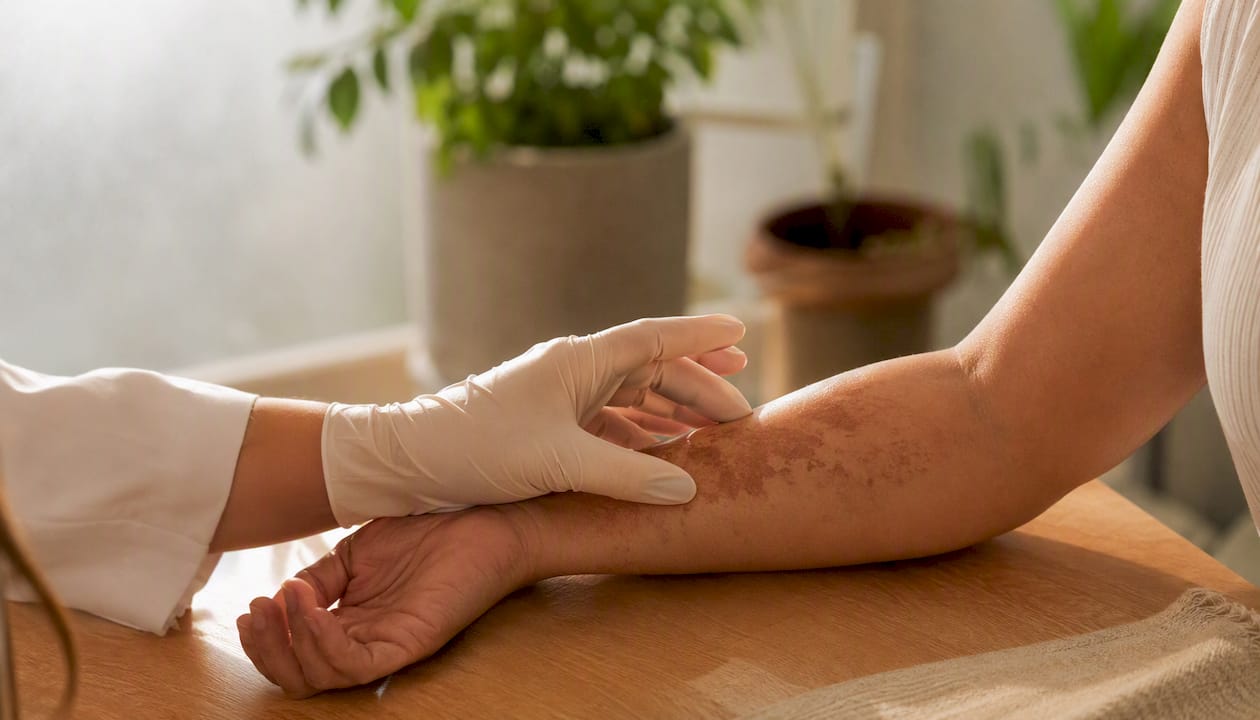
Pro Tip: Photograph affected areas in natural daylight every four weeks from the same angle. Progress with topical actives is gradual and easy to miss day-to-day. Photos give you an objective record and are useful evidence if you do seek a referral.
Why you can trust these recommendations
Recommendations in this guide draw from peer-reviewed dermatology literature, clinical society guidance, and established patient-facing clinical resources.
- The PMC clinical review on topical and procedural treatments for hyperpigmentation underpins the ingredient guidance and combination-therapy rationale.
- The Cleveland Clinic overview supports the sun-protection and prevention recommendations.
- The AAD guidance on darker skin tones informs the PIH risk notes and reapplication advice.
- The American Society of Plastic Surgeons page on dermabrasion candidates supports the procedural-matching guidance.
- Healthline’s treatment overview is used to support the OTC-to-clinic decision path and tranexamic acid notes.
Safety notes for darker skin tones appear throughout this guide because PIH risk is meaningfully higher, and several standard treatments carry greater risk of worsening pigmentation if used incorrectly.
“Combination therapy — a topical agent, consistent sun protection, and where needed a procedural option — gives the best outcomes for hyperpigmentation. No single ingredient or treatment works in isolation.” (PMC clinical review, NCBI)
Afterhoursbodybutter products are formulated with natural, fat-soluble vitamins and nutrients suited to sensitive skin. They do not contain synthetic actives, so they complement rather than replace the evidence-based actives described here.
What actually matters most: a practical perspective
The biggest mistake people make with body hyperpigmentation is treating it as a product problem rather than a consistency problem. Start with SPF and one well-tolerated active. Add a barrier-supporting body butter to every routine step where you use an active. Be patient: 8–12 weeks is the minimum for most topical treatments to show visible results, and deeper pigment takes longer. If you have a darker skin tone, prioritise gentle actives (niacinamide, azelaic acid) over aggressive exfoliation, and never skip sun protection. Seek a clinician early if anything looks suspicious or if OTC products are not working after a full trial period. The routine does not need to be complicated. It needs to be consistent.
After Hours Body Butter fits your hyperpigmentation routine
Barrier repair is where a rich body butter earns its place in a treatment routine. When you use actives like retinoids or AHAs, your skin barrier takes a hit. Dryness and micro-irritation are the conditions that make PIH worse, not better.
Afterhoursbodybutter’s vegan, natural body butters are formulated with fat-soluble vitamins and nourishing plant ingredients to support barrier recovery without synthetic additives. Use them as your PM final layer after any active treatment, or as your AM moisturiser before SPF. They absorb well enough to sit under sunscreen without pilling.
Browse the full range at Afterhoursbodybutter and find the right body butter for your routine. Patch test before first use, and if you are pregnant or breastfeeding, check with your midwife before introducing any new product.
Free UK delivery on orders over £30.
Sources
- Hyperpigmentation: What it is, Causes, & Treatment
- How to fade dark spots in darker skin tones
- Ncbi
- Hyperpigmentation Treatment: Acids, Peels, Lasers, and …
- Plasticsurgery