

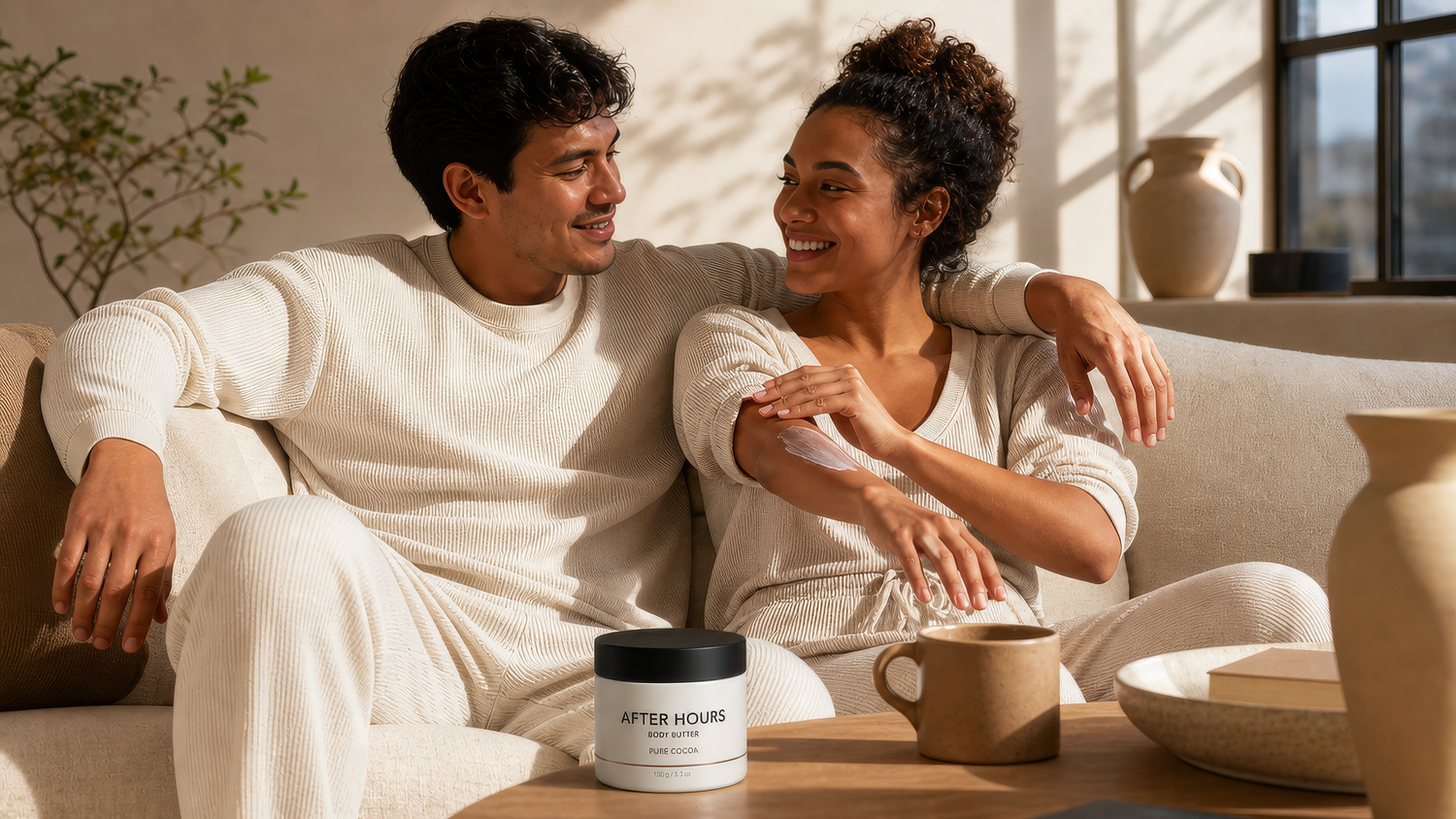

For acne-prone body skin, the right moisturiser must be non-comedogenic, fragrance-free, lightweight in texture, and built around barrier-repairing ingredients such as ceramides, niacinamide, or glycerin. Here is the checklist at a glance:
- Non-comedogenic label — verified, not just implied
- Fragrance-free — no parfum, no essential oils
- Lightweight texture — gel, lotion, or light cream for breakout zones
- Barrier-repairing ingredients — ceramides, niacinamide, hyaluronic acid, or glycerin
- Tested for body use — not just repurposed facial formula
- Free from heavy occlusives on chest/back — avoid lanolin, isopropyl palmitate, and unspecified “natural oils” on acne-prone torso zones
TL;DR: If you want one product that meets this checklist, Afterhoursbodybutter’s After Hours Body Butter is formulated with natural, cruelty-free ingredients, including fat-soluble vitamins and skin-nourishing nutrients, designed specifically to address acne and dryness without pore-clogging fillers.
Table of Contents
- Why does acne-prone body skin still need moisturising?
- Which ingredients should you look for in an acne-safe body lotion?
- What ingredients should you avoid on acne-prone body skin?
- Which textures work best for different body areas?
- How and when should you apply body moisturiser with active treatments?
- How do you know if a moisturiser is causing harm?
- How does After Hours Body Butter meet the checklist?
- Key takeaways
- The checklist works, but only if you use it consistently
- Try After Hours Body Butter on your skin
- Useful sources for further reading
Why does acne-prone body skin still need moisturising?
Skipping moisturiser on acne-prone skin is one of the most common mistakes. Dry, compromised skin produces more sebum to compensate, which can worsen breakouts and slow the healing of post-inflammatory marks. Barrier-repairing ingredients such as ceramides restore the lipid matrix that keeps skin resilient, even when the skin is oily or actively breaking out.
Acne treatments make this even more pressing. Salicylic acid, benzoyl peroxide, and retinoids all strip moisture as a side effect. Without a suitable moisturiser, the skin barrier degrades, making it harder to tolerate active treatments and increasing the risk of irritation. A practical guide to barrier repair explains how restoring the barrier is a prerequisite for any acne routine to work consistently.
Body skin also differs from facial skin. The chest, back, and shoulders have more sebaceous glands and are often covered by clothing, which traps heat and friction. Arms and legs, by contrast, tend to be drier and less prone to breakouts. One moisturiser applied uniformly across the whole body rarely serves both zones well.
- Moisturising reduces barrier damage that worsens breakouts
- Ceramides and lipids support barrier function even on oily skin
- Active acne treatments increase the need for a reliable moisturiser
- Different body zones need different moisturising approaches
Pro Tip: Match the aggressiveness of your moisturiser to your current treatment load. If you are using a retinoid or a strong exfoliant, prioritise a simple, barrier-focused formula over anything with added actives. When skin is calm, you can layer in more targeted ingredients.

Which ingredients should you look for in an acne-safe body lotion?
The most effective non-comedogenic moisturisers for acne-prone body skin combine humectants, barrier lipids, and lightweight emollients. Glycerin and hyaluronic acid draw water into the epidermis without adding oil or blocking pores. Ceramides and linoleic acid reinforce the lipid barrier. Niacinamide supports barrier function and reduces inflammation, making it one of the most useful ingredients for acne-prone skin across body and face.
| Ingredient | Function | Body use notes |
|---|---|---|
| Glycerin | Humectant — draws water into skin | Broad tolerance; suits all body zones |
| Hyaluronic acid | Humectant — deep hydration | Lightweight; good for chest and back |
| Ceramides | Barrier lipid — restores skin matrix | Prioritise on treatment-stressed areas |
| Linoleic acid | Barrier lipid — anti-inflammatory | Particularly useful on breakout-prone torso |
| Squalane | Lightweight emollient | Non-comedogenic; suits oily zones |
| Niacinamide | Barrier support, sebum regulation | Compatible with retinoids; use on chest, back, shoulders |
| Dimethicone | Breathable occlusive | Seals moisture without blocking pores |
| Salicylic acid (low dose) | Exfoliant — unclogs pores | Body-specific products only; avoid on broken skin |
For the chest, back, and shoulders, prioritise niacinamide, ceramides, and glycerin in a gel or lotion base. These zones are more prone to congestion, so lightweight delivery matters. Arms and legs tolerate richer emollients such as squalane or dimethicone without the same comedogenic risk.
Low-dose salicylic acid in a body lotion can help with body texture and keratosis pilaris, but concentration and skin tolerance both matter. Start with the lowest available percentage and reduce frequency if tightness or flaking appears.
- Ceramides + glycerin = the core barrier-repair pairing
- Niacinamide works well alongside retinoids without interaction risk
- Squalane is non-comedogenic and absorbs quickly on limbs
- Low-dose salicylic acid suits body use; high-dose formulas are for targeted spot treatment only
What ingredients should you avoid on acne-prone body skin?
Heavy occlusives and certain emollients are the main culprits behind body breakouts triggered by moisturisers. The British Association of Dermatologists advises prioritising fragrance-free formulas to reduce irritation and allergic reactions, and this applies directly to body products used on acne-prone zones.
Ingredients to avoid or use with caution:
- Fragrance and parfum — the most common cause of contact dermatitis and irritation on acne-prone skin
- Essential oils (tea tree in high concentrations, lavender, citrus) — can irritate and trigger reactive breakouts
- Isopropyl palmitate and isopropyl myristate — known comedogens; common in cheaper body lotions
- Lanolin — occlusive and potentially pore-blocking for acne-prone skin
- Coconut oil and cocoa butter — high in oleic acid; comedogenic on chest and back for many people
- Petrolatum in heavy concentrations — suitable for very dry limbs only, not for breakout-prone torso zones
- Drying alcohols (alcohol denat., SD alcohol) — strip the barrier and trigger compensatory oil production
Formulation flags to watch for: products labelled “natural” or “organic” with unlisted oil blends, heavy creams without non-comedogenic testing, and products that list fragrance components under “natural fragrance” rather than individual INCI names.
Pro Tip: Read the INCI list from top to bottom. Ingredients listed in the first five positions make up the bulk of the formula. If a heavy oil or fragrance appears in the top five, the product likely contains a meaningful concentration of it, regardless of what the front label claims.
Understanding the difference between hypoallergenic and non-comedogenic labels also matters. Hypoallergenic means the formula is less likely to cause an allergic reaction. Non-comedogenic means it has been tested to avoid blocking pores. A product can be hypoallergenic but still comedogenic, and vice versa. For acne-prone skin, you need both, or at minimum a non-comedogenic label backed by testing rather than a marketing claim.
Which textures work best for different body areas?
Texture choice is where most people go wrong with body moisturisers for acne-prone skin. A rich body butter applied to the chest and back during an active flare is likely to worsen congestion, even if the formula is technically non-comedogenic. Gel and lotion textures are preferable for oily or acne-prone zones; richer creams and butters suit drier areas.
| Texture | Best body zones | Pros | Cautions |
|---|---|---|---|
| Gel / gel-cream | Chest, back, shoulders | Fast absorption, no residue, lightweight | May not provide enough moisture for very dry skin |
| Lotion | All zones; good default | Balanced hydration, easy to spread | Check INCI for hidden fragrance or comedogens |
| Light cream | Arms, legs, dry patches | More emollient than lotion | Use sparingly on breakout-prone torso |
| Rich cream / butter | Legs, feet, elbows | Deep nourishment for dry skin | Avoid on chest, back, shoulders during flares |
| Body oil | Legs, arms (non-acne zones) | Softening, fast-absorbing if non-comedogenic | High comedogenic risk if formula is not verified |
For breakout-prone zones, a gel-cream with glycerin, niacinamide, or centella asiatica is the most reliable starting point. On limbs that are dry but not acne-prone, a richer lotion or light cream with squalane or ceramides works well without any comedogenic risk.
Layering guidance: apply your acne treatment first, let it absorb, then apply moisturiser as a separate step. Avoid mixing a mattifying product with a rich emollient on the same zone. If you use a body oil on your legs, apply it after your lotion, not before, so the oil seals rather than blocks.
How and when should you apply body moisturiser with active treatments?
The order and timing of application affects how well both your acne treatment and your moisturiser work. Follow these steps for acne-prone body skin:
- Cleanse with a gentle, non-stripping body wash. Pat skin dry rather than rubbing.
- Apply your acne treatment (salicylic acid wash, benzoyl peroxide, or topical retinoid) to the target zone. Allow it to absorb fully before the next step.
- Wait — give the active treatment time to penetrate. The standard guidance is to wait until the skin feels dry to the touch, which typically takes a few minutes. For stronger actives such as benzoyl peroxide or a retinoid, waiting longer reduces the risk of the moisturiser diluting the treatment.
- Apply a thin, even layer of moisturiser to the whole body, using a lighter formula on breakout zones and a richer one on dry limbs.
- Spot-treat active lesions if needed, after moisturising, not before.
- Allow full absorption before dressing or lying down, particularly if you use a richer formula on any zone.
For those using retinoids or adapalene, a moisturiser is not optional. It manages the dryness and flaking that comes with the adjustment period and helps maintain adherence to the treatment. Skin cycling guidance recommends adjusting your routine day by day based on how your skin responds, rather than following a fixed schedule regardless of irritation.
Patch testing a new body product: apply a small amount to the inner forearm or a patch of skin on the torso that is not actively breaking out. Wait 24–48 hours. If no redness, itching, or stinging appears, proceed with full application.
UK price bands to set expectations:
- Budget (under £10): basic lotions with glycerin and ceramides; fewer actives but functional
- Mid-range (£10–£30): broader ingredient range, niacinamide, squalane, better non-comedogenic testing
- Premium (£30+): clinically tested formulations, higher active concentrations, sustainable sourcing
Expect to wait 4–6 weeks of consistent use before judging whether a moisturiser is improving skin texture or reducing breakout frequency. Hormonal fluctuations can also affect body acne timing, which is worth factoring into your assessment.
How do you know if a moisturiser is causing harm?
Normal acne variation looks like gradual fluctuation: a few more spots one week, fewer the next, often tied to hormonal cycles or stress. A product reaction looks different.
Signs of irritation or allergic reaction:
- Rapid spreading rash or hives within hours of application
- Burning or stinging that does not settle within a few minutes
- Blistering or oozing
- Swelling, particularly around the application zone
Signs of comedogenic reaction (slower):
- Noticeably more closed comedones or small bumps in the application zone within 2–4 weeks
- Congestion that appears specifically where the new product was applied
What to document during a trial:
- Product name and INCI list
- Date started and application zones
- Any changes in breakout frequency, location, or type
- Photos taken in consistent lighting every 1–2 weeks
If you suspect a hormonal pattern is affecting your body acne, understanding why skin breaks out during hormonal shifts can help you separate product reactions from natural fluctuation.
When to see a GP or dermatologist: if breakouts are severe, widespread, or not responding to over-the-counter products after 8–12 weeks; if you experience a rapid allergic reaction; or if you develop cystic acne on the body. Bring photos, your product list, and a timeline of changes.
Pro Tip: Keep a simple log in your phone’s notes app. One line per day: product applied, zones, and any changes. After two weeks, patterns become obvious. This also gives your GP or dermatologist something concrete to work with.
How does After Hours Body Butter meet the checklist?
Afterhoursbodybutter’s After Hours Body Butter is built around the same criteria this checklist prioritises: natural, vegan ingredients, no harsh chemicals, and a formulation designed to address acne and dryness without pore-clogging fillers.
Key checklist matches:
- Cruelty-free and vegan — no animal-derived ingredients or testing
- Natural, chemical-free formulation — focused on fat-soluble vitamins and skin-nourishing nutrients
- Designed for acne and dryness — not a generic body product repurposed for sensitive skin
- Sustainable sourcing — aligns with clean-label standards that clean luxury skincare buyers increasingly expect
- Education-led brand — the Afterhoursbodybutter blog provides detailed ingredient science and routine guidance, supporting informed product use
Customers report visible reductions in acne and skin irritation after using After Hours Body Butter, with improvements in skin texture and moisture retention noted across different skin types. The brand’s focus on fat-soluble vitamins means the formula nourishes at a cellular level rather than simply coating the surface.
For more on how the brand approaches moisturising and acne, the Afterhoursbodybutter blog covers the dermatology rationale in detail.
Key takeaways
A non-comedogenic, fragrance-free body moisturiser with ceramides or niacinamide in a lightweight base is the most reliable choice for acne-prone body skin across all severity levels.
| Point | Details |
|---|---|
| Non-comedogenic label matters | Verify the label is backed by testing, not just a marketing claim on the front of the pack. |
| Texture to zone | Use gel or lotion on chest, back, and shoulders; richer formulas on arms and legs only. |
| Apply after actives | Let acne treatments absorb fully before moisturising to avoid reducing their effectiveness. |
| Patch test every new product | Apply to the inner forearm for 24–48 hours before full-body use. |
| Afterhoursbodybutter | After Hours Body Butter meets the checklist: vegan, cruelty-free, natural ingredients, formulated for acne and dryness. |
The checklist works, but only if you use it consistently
Most people who struggle with body acne and moisturisers are not using the wrong product. They are applying the right product in the wrong zone, at the wrong time, or without giving it enough time to show results.
The checklist in this article is not complicated. Non-comedogenic, fragrance-free, lightweight on breakout zones, barrier-focused ingredients. What gets overlooked is the consistency part. Switching products every two weeks because you do not see instant results is the single most common reason the checklist fails in practice. Four to six weeks is the minimum trial period for any body moisturiser, and that window needs to be free of other major routine changes to be meaningful.
Afterhoursbodybutter’s approach, building around natural, fat-soluble vitamins and skin-nourishing nutrients rather than synthetic fillers, reflects exactly the kind of formulation philosophy this checklist is built on. Clean ingredients, clear purpose, no unnecessary additions.
Try After Hours Body Butter on your skin
Afterhoursbodybutter ships directly to UK customers, with free delivery on orders over £30. After Hours Body Butter is available now at afterhoursbodybutter.co.uk, where you can browse the full range and choose the right product for your skin concern.
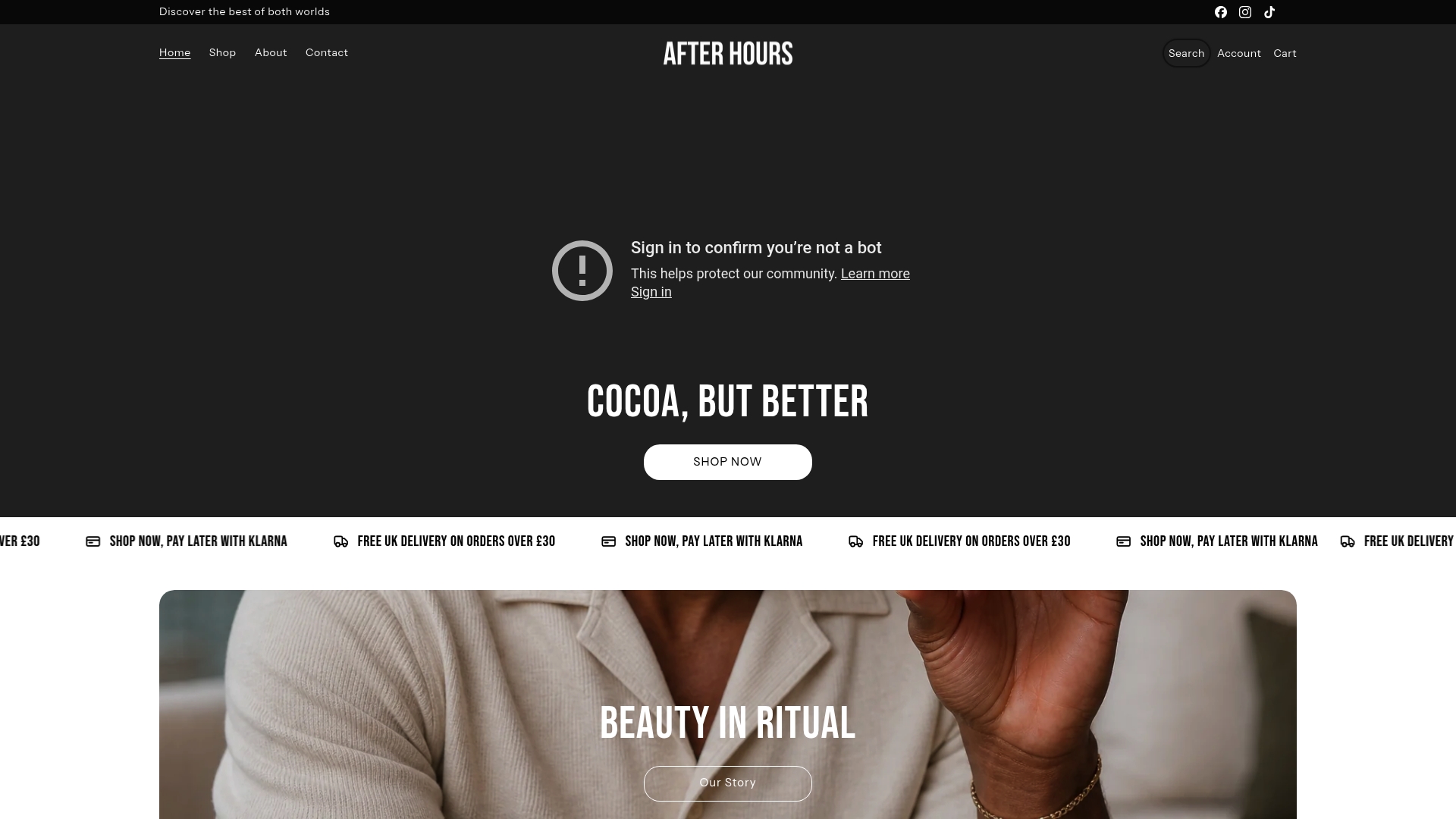
The formula is vegan, cruelty-free, and built for skin that needs real nourishment without the risk of added congestion. If you have been searching for a body moisturiser that genuinely fits the non-comedogenic checklist, this is a practical place to start. Visit the shop, check the ingredient list against this checklist, and place your first order with confidence.
Useful sources for further reading
The following sources were used to build this checklist and are worth consulting directly for more detail.
- British Association of Dermatologists: contact dermatitis — UK clinical guidance on fragrance sensitivity and contact dermatitis; directly relevant to fragrance-free label advice.
- PubMed: ceramides and skin barrier function — peer-reviewed research on barrier lipids and their role in skin repair.
- NCBI: moisturiser formulation and skin barrier — clinical overview of humectants, occlusives, and emollients in moisturiser science.
- Dermatology Times: OTC acne-prone skin care — professional guidance on ingredient combinations for acne-prone skin, including ceramides and lightweight vehicles.
- Ohio State University: how to skin-cycle — practical guidance on adjusting active treatments by skin response and prioritising barrier repair.
- Verywell Health: understanding moisturiser ingredients — clear breakdown of humectant, occlusive, and emollient categories with examples.
- Afterhoursbodybutter: what makes moisturiser effective — publisher guide to formulation science, covering how ingredients work together for barrier repair.