


An effective moisturiser is defined by the synergistic action of three ingredient classes: humectants, emollients, and occlusives. Together, they draw water into the skin, repair the skin barrier, and seal hydration in. Without all three working in balance, a formula addresses only part of the problem. Petrolatum, the gold standard occlusive, reduces transepidermal water loss by up to 99%. That single benchmark tells you everything about what makes moisturiser effective: it is not one ingredient but a layered system that protects the skin’s ability to hold water.
What makes moisturiser effective: humectants, emollients, and occlusives
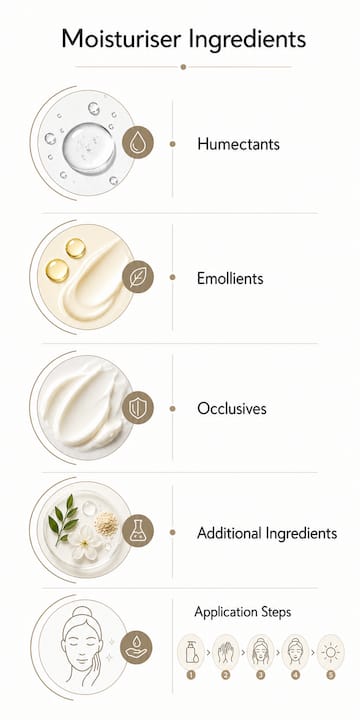
The three categories of moisturising ingredients each do a distinct job. Understanding them is the fastest way to read a product label and know whether it will actually work for your skin.
Humectants: drawing water into the skin
Humectants attract water from the environment and from deeper skin layers up to the surface. Hyaluronic acid and glycerin are the most widely used examples. Hyaluronic acid can hold up to 1,000 times its weight in water. That capacity makes it one of the most efficient hydrating agents available in skincare formulations.
The catch is that humectants need a seal. Using humectants alone may paradoxically increase moisture loss if not followed immediately by an occlusive or emollient. In low humidity conditions, they can pull water out of the skin rather than into it.
Emollients: softening and repairing the barrier
Emollients fill the gaps between skin cells with lipids, making the surface feel smooth and soft. Ceramides, squalane, and fatty acids are the most effective examples. Ceramides make up about 50% of the skin barrier. Topical application replenishes lipid loss and directly supports barrier restoration.
Emollients do more than improve texture. They repair the structural integrity of the skin, which reduces sensitivity and prevents irritants from penetrating.
Occlusives: locking hydration in
Occlusives sit on top of the skin and form a physical barrier that slows water evaporation. Petrolatum and dimethicone are the most studied examples. Petrolatum reduces transepidermal water loss by up to 99%, which is why dermatologists regard it as the most effective occlusive available.
Pro Tip: Layer in order: humectant first, emollient second, occlusive last. This sequence locks each layer’s benefit in place and prevents the humectant from drawing moisture out of the skin.
| Ingredient type | Primary function | Common examples | Best suited for |
|---|---|---|---|
| Humectant | Attracts and binds water | Glycerin, hyaluronic acid | All skin types, especially dehydrated |
| Emollient | Softens skin and repairs barrier | Ceramides, squalane, shea butter | Dry, sensitive, and compromised skin |
| Occlusive | Seals moisture and reduces water loss | Petrolatum, dimethicone, beeswax | Very dry, cracked, or post-procedure skin |
How do skin type and environment influence moisturiser choice?
Skin type determines which texture and ingredient balance will actually absorb well and perform. Choosing the wrong texture means the product either sits on the surface or disappears without effect.
Matching product texture to skin behaviour observed 30 minutes after washing is the most reliable method for selecting a moisturiser. Oily skin produces excess sebum and needs hydration without added heaviness. Dry skin lacks both water and lipids, so it needs richer formulas with emollients and occlusives. Combination skin requires a lighter base with targeted application of richer products to dry zones. Sensitive skin benefits most from fragrance-free, minimal-ingredient formulas built around ceramides and glycerin.
Environment matters just as much as skin type. Cold weather and indoor heating both reduce ambient humidity, which accelerates transepidermal water loss. In these conditions, even oily skin types benefit from a slightly richer formula than they would use in summer.
- Oily skin: Lightweight gel or gel-cream texture. Key ingredients: glycerin, niacinamide, hyaluronic acid. Non-comedogenic formulas prevent breakouts and balance oil without clogging pores.
- Dry skin: Rich cream or balm texture. Key ingredients: ceramides, shea butter, squalane, petrolatum. Prioritise emollient and occlusive content.
- Combination skin: Medium-weight lotion. Apply richer creams only to dry patches. Key ingredients: ceramides, glycerin.
- Sensitive skin: Fragrance-free, minimal-formula cream. Key ingredients: ceramides, oat extract, glycerin. Avoid alcohol and synthetic fragrance.
- Acne-prone skin: Oil-free gel or fluid. Key ingredients: salicylic acid, niacinamide, hyaluronic acid. Choose products labelled non-comedogenic.
Pro Tip: Switch to a richer formula in october and revert to a lighter one in april. Seasonal adjustment prevents the barrier from becoming compromised during temperature transitions.
What application techniques improve moisturiser results?
The best formula in the world underperforms if applied incorrectly. Timing and method directly affect how much hydration the skin retains.
Applying moisturiser to damp skin within three minutes after cleansing traps water and maximises hydration. Once the skin dries completely, there is less water available to seal in. The three-minute window is not a suggestion. It is the point at which the formula works as intended.
The amount you use also matters. Too little leaves areas unprotected. Too much on oily or acne-prone skin can block pores. A pea-sized amount covers the face; a 10p-coin-sized amount covers each limb section. For body care textures, richer butters and creams require warming between the palms before application to spread evenly.
- Cleanse skin with a gentle, pH-balanced cleanser.
- Pat skin lightly with a towel, leaving it slightly damp.
- Apply your humectant serum or toner within three minutes.
- Follow with an emollient-rich moisturiser while the humectant is still absorbing.
- Finish with an occlusive layer if your skin is very dry or the environment is cold and dry.
- For new products, patch test on the inner arm for 24–48 hours before full application.
Patch testing is not optional for reactive or sensitive skin. Gradual introduction of one new product at a time also makes it easier to identify any ingredient causing irritation.
Which additional ingredients strengthen a moisturiser’s performance?
Beyond the core three categories, several ingredients extend what a moisturiser can do. They address concerns like environmental damage, acne, and accelerated barrier breakdown.
Effective formulas now focus on skin-identical lipids to repair the skin barrier rather than simply providing symptomatic relief. Ceramides, cholesterol, and fatty acids in the correct ratio mimic the skin’s own lipid matrix. This approach produces lasting barrier improvement rather than temporary softness.
Antioxidants add another layer of protection. Vitamin C neutralises free radicals from UV exposure and pollution. Niacinamide reduces redness, regulates sebum, and strengthens the barrier. Both ingredients complement humectants and emollients without interfering with their function.
- Ceramides: Replenish the lipid matrix. Ceramides make up roughly 50% of the skin barrier and are depleted by ageing, harsh cleansers, and environmental stress.
- Niacinamide (vitamin B3): Reduces inflammation, regulates oil production, and improves skin tone. Works well alongside glycerin and ceramides.
- Vitamin C (ascorbic acid): Protects against oxidative damage and supports collagen production. Most stable in formulas at pH 3.5.
- Salicylic acid (≤2%): Effective for acne-prone skin as a non-comedogenic ingredient that clears pores without stripping moisture.
- Fatty acids (linoleic acid, oleic acid): Restore barrier lipids and reduce water loss. Particularly useful for dry and eczema-prone skin.
- Squalane: A lightweight emollient derived from plants that mimics the skin’s natural sebum. Absorbs quickly and suits most skin types.
For those researching skin nourishing butters, natural plant-derived fats like shea and mango butter deliver emollient and occlusive benefits alongside fat-soluble vitamins.
Key takeaways
An effective moisturiser requires humectants to attract water, emollients to repair the barrier, and occlusives to seal hydration in. All three must work together.
| Point | Details |
|---|---|
| Three-category system | Humectants, emollients, and occlusives each serve a distinct role and work best in combination. |
| Petrolatum benchmark | Petrolatum reduces transepidermal water loss by up to 99%, making it the most effective occlusive available. |
| Apply to damp skin | Applying moisturiser within three minutes of cleansing maximises the amount of water sealed into the skin. |
| Match texture to skin type | Gels suit oily skin; rich creams suit dry skin. Seasonal adjustment improves year-round results. |
| Barrier repair ingredients | Ceramides, fatty acids, and cholesterol actively restore the skin barrier rather than just softening the surface. |
Why I stopped choosing moisturisers by brand
The biggest mistake I see people make is choosing a moisturiser because of the packaging or the brand name. I did the same thing for years. The shift that changed everything was reading ingredient lists instead of marketing claims.
Modern dermatological advice has moved firmly toward ingredient-based selection tailored to skin type. A product with glycerin, ceramides, and dimethicone in the first five ingredients will outperform a premium-branded cream built on fragrance and filler. The label tells you everything if you know what to look for.
The other mistake I see constantly is using a hyaluronic acid serum and stopping there. Without an occlusive or emollient on top, humectants in dry conditions can pull water out of the skin rather than into it. That is not a minor caveat. It is the reason some people feel their “hydrating” serum is making their skin drier.
Moisturisers are no longer passive cosmetics. They now function as biologically active skin barrier repair agents. That shift in how dermatologists classify them should change how you shop. Look for formulas that list barrier-repairing lipids alongside humectants. That combination is what separates a genuinely effective product from one that simply feels nice for an hour.
— Darnell
Afterhoursbodybutter: body butters built on effective moisturising principles
Afterhoursbodybutter formulates its products around the same ingredient principles covered in this guide: emollients to soften, occlusives to seal, and fat-soluble vitamins to nourish the barrier.
The Blueprint Aura Body Butter combines plant-derived emollients and natural occlusives in a vegan, cruelty-free formula designed for visible moisture retention. For those with dry skin, the Men’s Cocoa Body Butter delivers a richer emollient and occlusive profile suited to skin that loses moisture quickly. Both products are free from synthetic chemicals and built for people who want results grounded in ingredient quality, not brand promises.
FAQ
What are the three types of moisturising ingredients?
The three types are humectants, emollients, and occlusives. Humectants attract water, emollients repair and soften the skin barrier, and occlusives seal moisture in by reducing evaporation.
Why use moisturiser on damp skin?
Applying moisturiser to damp skin within three minutes of cleansing traps existing water in the skin. Once the skin dries, there is less moisture available for the formula to seal in.
Can humectants make skin drier?
Yes. Humectants used alone in low humidity conditions can draw water out of the skin rather than from the air. Always follow a humectant with an emollient or occlusive to prevent this.
What is a good moisturiser for acne-prone skin?
A non-comedogenic gel or gel-cream with salicylic acid at or below 2% is effective for acne-prone skin. It hydrates without clogging pores and helps clear existing congestion.
How do I choose moisturiser ingredients for my skin type?
Assess your skin 30 minutes after washing. Oily skin suits lightweight gels with glycerin and niacinamide. Dry skin benefits from rich creams containing ceramides, fatty acids, and squalane.