

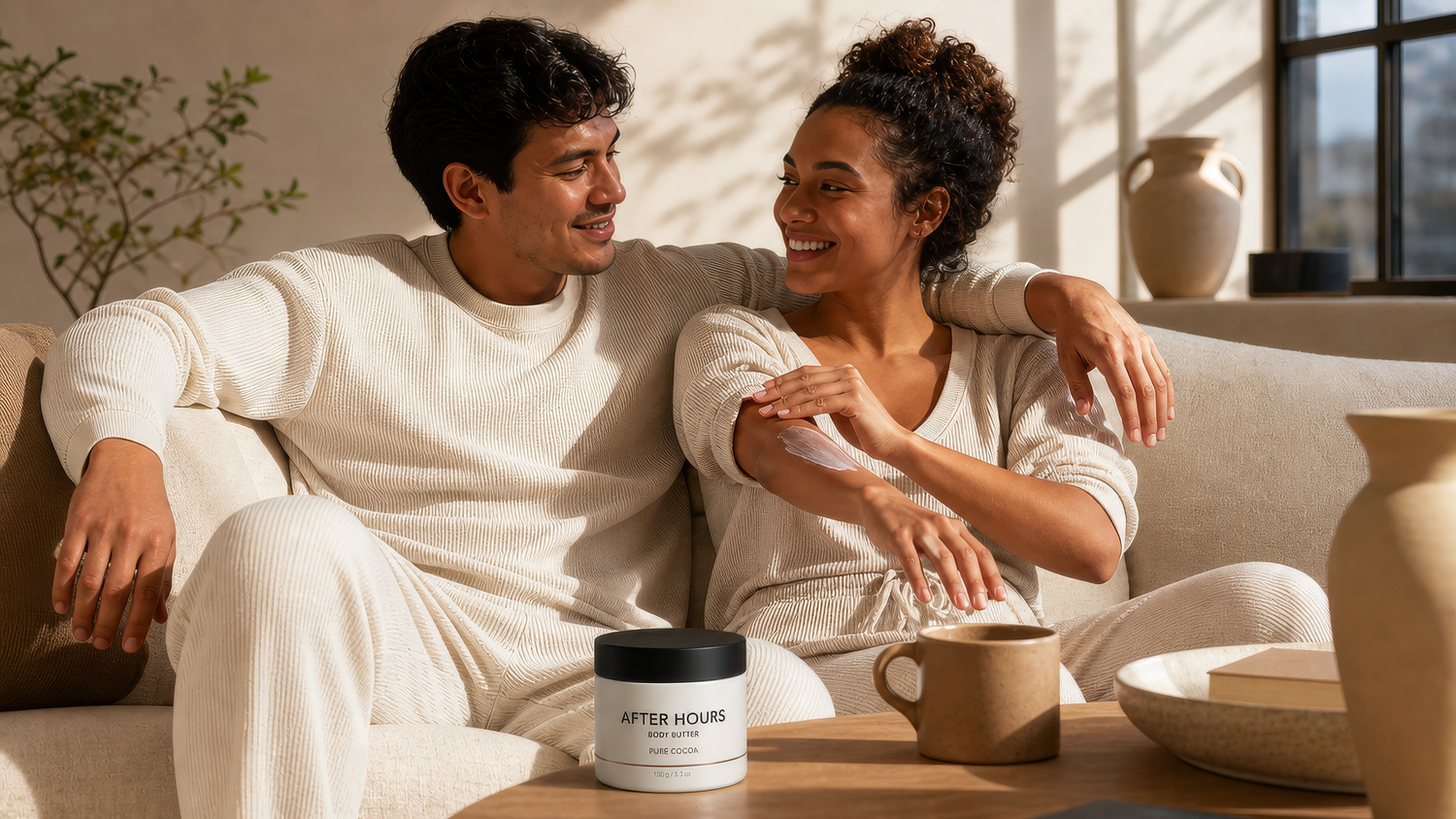

For your face, mango butter is the lighter daily choice. For dry body skin, shea butter delivers deeper, longer-lasting moisture. For lips, either works well, though mango’s silkier texture spreads more easily. For hair and scalp, shea’s richer, more occlusive feel suits coarse or very dry hair, while mango suits finer hair that needs moisture without weight.
Quick picks at a glance:
- Face (oily or acne-prone): mango butter, refined grade
- Face (dry or mature): unrefined shea butter
- Body (general dryness): shea butter, alone or blended
- Lips: mango butter for daily wear; shea for overnight repair
- Hair: shea for thick or coarse hair; mango for fine or oily-prone scalps
- Substitution: you can swap one for the other in most recipes, but expect a richer, heavier result when you replace mango with shea, and a lighter, faster-absorbing result when you do the reverse
Key takeaways
Mango butter suits lighter daily use and oily or combination skin; shea butter suits dry, sensitive and mature skin needing deeper, longer-lasting moisture.
| Point | Details |
|---|---|
| Match butter to skin type | Mango for oily or combination skin; shea for dry, sensitive or mature skin. |
| Grade matters as much as species | Refined butter reduces scent, allergen risk and pore-clogging potential for facial use. |
| Blending gives the best results | A 40–50% shea and 20–30% mango blend delivers both barrier support and a non-greasy finish. |
| Patch test before face use | Apply to the inner forearm for 24–48 hours before using any butter on your face. |
| Afterhoursbodybutter | Vegan, chemical-free body butters using carefully selected butter grades, made sustainably in the UK. |
Table of Contents
- How do mango butter and shea butter compare side by side?
- How does each butter actually feel on your skin?
- Which skin types suit mango or shea butter?
- What do mango and shea butter actually deliver for your skin?
- Does refining change which butter you should use?
- How do you use and blend these butters in practice?
- How do you store butters safely and spot when they have gone off?
- Formulator tips from Afterhoursbodybutter: do’s and don’ts
- Which butter should you use for each specific need?
- What the ingredient data actually tells you about choosing butters
- Vegan body butters made for your skin type, ready to shop
- Sources
How do mango butter and shea butter compare side by side?
Both moisturise effectively but behave quite differently on skin. Comedogenicity refers to a substance’s tendency to block pores. A rating of 0 means non-comedogenic; 5 means highly likely to clog.
| Property | Mango butter | Shea butter |
|---|---|---|
| Texture / consistency | Firm but silky; breaks down quickly on contact | Soft, creamy, more spreadable |
| Melting point | Lower (around 30 °C) | Higher (around 40 °C) |
| Absorption / skin feel | Fast-absorbing, light, non-greasy | Slower, richer, more occlusive |
| Best for (skin types) | Oily, combination, normal, sensitive | Dry, very dry, mature, sensitive |
| Comedogenic rating | low to moderate | low |
| Key nutrients | Oleic, stearic, palmitic acids; vitamins A, C, E | Oleic, stearic, linoleic acids; vitamins A, E; triterpenes |
| Scent (unrefined) | Faint, mildly fruity | Nutty, earthy |
| Climate suitability | Performs well in warm UK summers; can feel lighter year-round | Better for cold, dry UK winters; may feel heavy in heat |
| Common uses | Face, lips, light body lotion, hair serum | Body butter, intensive lip balm, hair mask, barrier cream |
| Availability / price | Widely available online in the UK; slightly pricier than shea | Very widely available; generally lower cost |
How does each butter actually feel on your skin?
Mango butter melts at a lower practical temperature than shea, which is why it softens almost immediately on contact with skin. The result is a silky, non-greasy finish that absorbs within a minute or two. For daily face or hand use, that speed matters. You apply it, it disappears, and you get on with your day.
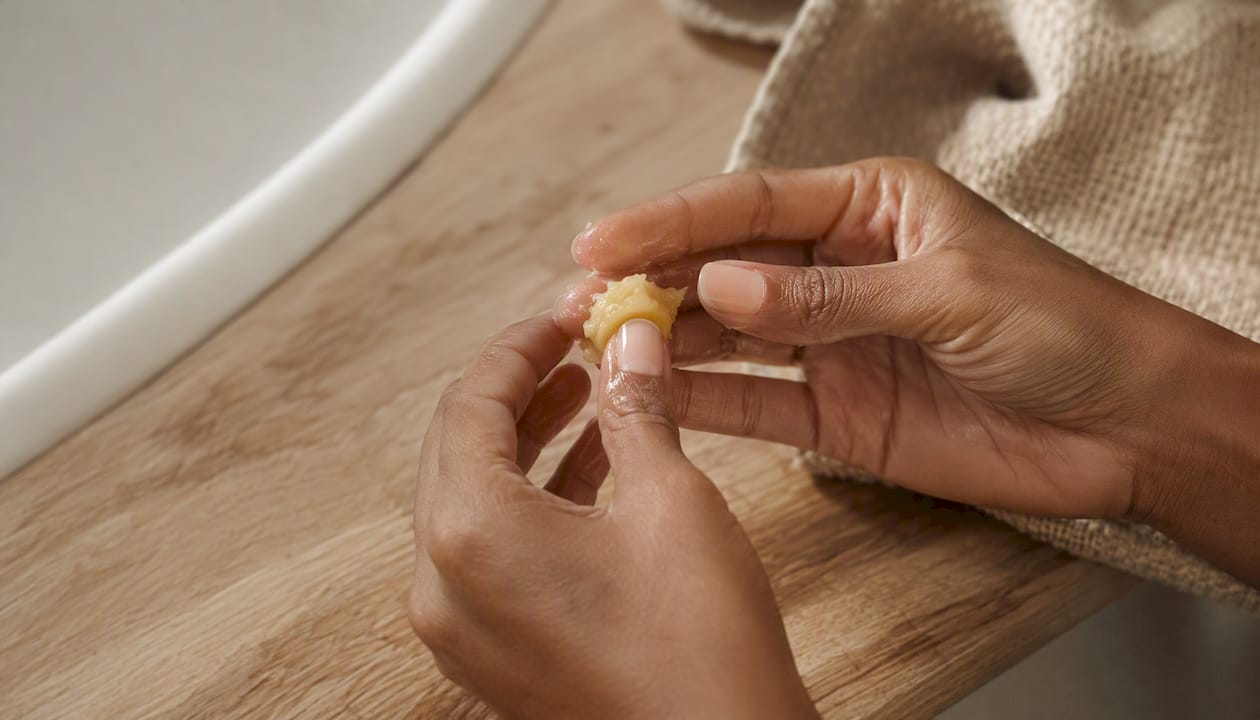
Shea butter behaves differently. Its higher melting point means it sits on the skin a little longer before absorbing fully, creating a more occlusive layer. That is exactly what you want for very dry elbows, cracked heels or a body butter you apply before bed. The richness that feels heavy on your face works in its favour on thicker skin.
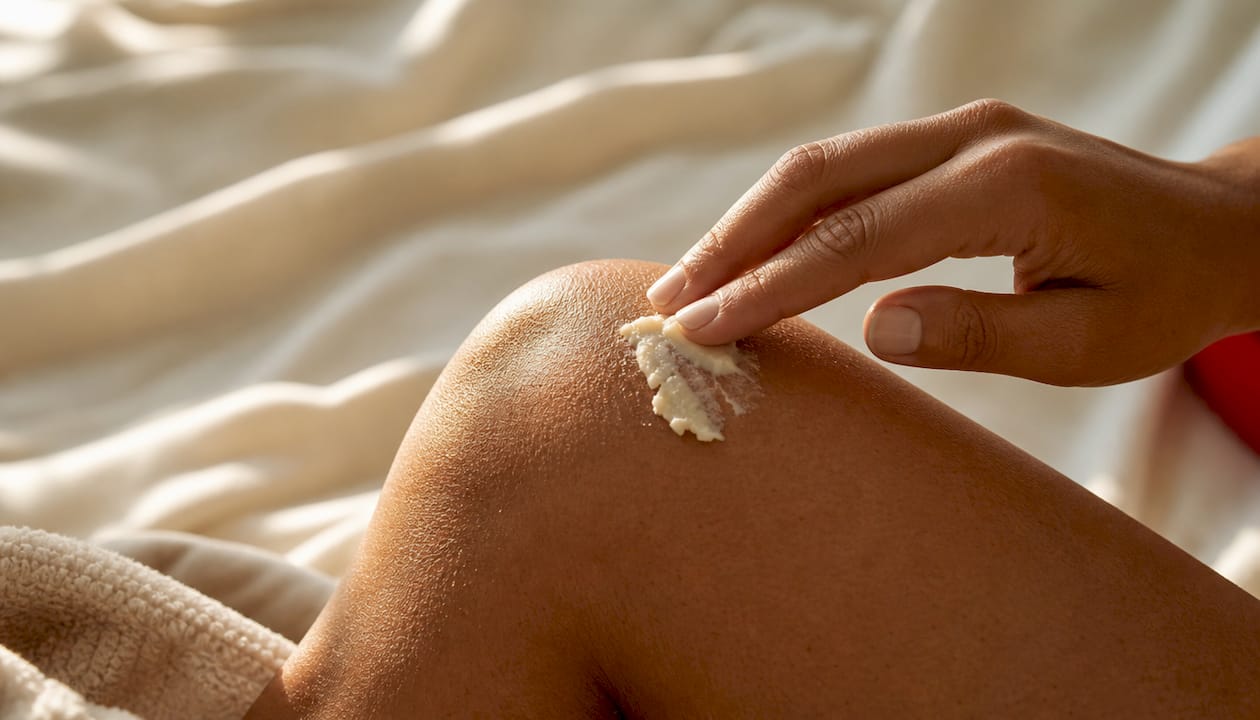
Melting point also affects how products perform in different UK conditions. In a warm bathroom or during summer, mango butter can become quite soft in its container. Shea, with its higher melt, holds its shape better at room temperature, which makes it easier to scoop and apply in warmer months without the product turning oily.
Pro Tip: Place a small amount of each butter on the back of your hand and time how long each takes to absorb. Mango should disappear in roughly 60–90 seconds; shea will take noticeably longer. That difference tells you which one suits your skin’s pace.
Which skin types suit mango or shea butter?
Comedogenic risk is the most practical deciding factor for facial use. Mango butter carries a comedogenic rating of around 2, which is low but not zero. Shea butter sits at 0–2 depending on grade and processing, making it one of the more pore-friendly options among plant butters. For most people, neither butter is a guaranteed breakout trigger, but skin response varies.
For oily or combination skin, mango butter is the safer starting point. Its lighter texture is less likely to sit heavily on already-active sebaceous glands. Dermatology contributors at Curology note that shea butter can be a preferable option for people concerned about pore congestion, particularly when compared with heavier alternatives like cocoa butter. Refined shea on oily skin is worth trying if mango is unavailable.
For dry or sensitive skin, shea is the stronger choice. Its triterpenes, vitamins A and E, and anti-inflammatory properties help soothe irritation and support the skin barrier. Small studies also suggest shea-containing moisturisers can reduce itch and improve skin quality in dry-skin and atopic dermatitis contexts when well formulated.
Patch-test guidance: Apply a small amount of butter to the inner forearm or behind the ear. Leave it for 24 hours without washing the area. If you see redness, itching or swelling, do not use that butter on your face. For acne-prone skin, extend the test to 48–72 hours and monitor for new breakouts. If you have a known tree nut allergy, consult a pharmacist or dermatologist before using unrefined shea, which is derived from the shea tree seed.
If you have persistent acne, rosacea or a diagnosed skin condition, check with a GP or dermatologist before adding either butter to your routine.
What do mango and shea butter actually deliver for your skin?
Both butters work as emollients, filling gaps in the skin’s surface and reducing water loss. Their fatty acid profiles explain most of their functional differences.
Mango butter key nutrients:
- Oleic acid (40–50%): softens and conditions; supports moisture retention
- Stearic acid (30–45%): adds firmness to formulations; helps skin feel smooth
- Palmitic acid: contributes to barrier function
- Vitamins A, C and E: antioxidant protection; supports collagen synthesis and cell turnover
Shea butter key nutrients:
- Oleic acid (40–55%): deep conditioning; helps other actives absorb
- Stearic acid (35–45%): occlusive barrier support
- Linoleic acid: anti-inflammatory; supports skin barrier integrity
- Vitamins A and E: antioxidant and skin-repair activity
- Triterpenes (lupeol, butyrospermum parkii triterpenes): anti-inflammatory compounds specific to shea; linked to reduced redness and irritation
For dryness, both butters perform well. Shea’s triterpenes give it a slight edge for inflamed or reactive skin. For antioxidant protection and a lighter daily layer, mango’s vitamin C content adds a point of difference. For barrier repair after sun exposure or harsh weather, shea’s occlusive weight is more effective.
Note on variability: fatty acid percentages shift depending on the butter’s geographic origin and how it was processed. West African shea, for example, can differ in stearic acid content from East African varieties. Mango butter from Indian Mangifera indica seed may vary from other regional sources. Treat the ranges above as a guide, not a fixed specification.
Understanding how these nutrients interact with skin is covered in more depth in our guide to what makes moisturiser effective.
Does refining change which butter you should use?
Yes, and the difference matters more than most people expect. Refining removes volatile compounds and some pigments, leaving a paler, odourless product. Unrefined butter retains its natural scent, colour and a higher proportion of its original nutrients.
Unrefined shea has a distinctive nutty, slightly smoky scent and an ivory to yellow colour. Unrefined mango butter has a faint, mildly fruity note and ranges from pale yellow to off-white. Both are perfectly usable on the body, but on the face, strong scent can irritate sensitive skin or conflict with a fragrance you are already wearing.
For facial products, refined or deodorised grades are the practical choice. The refining process also reduces the risk of triggering reactions in people with sensitivities to the natural volatile compounds in raw plant materials. If you have a tree nut allergy, unrefined shea carries a higher risk than refined shea because more of the original protein fraction may remain. Mango butter comes from the seed kernel of the mango fruit, not a tree nut, so it is a different allergen category entirely. That said, seed allergies are possible, so always check with a pharmacist if you are uncertain.
For body butters, hair masks and foot creams where scent is less of a concern, unrefined versions give you more of the natural nutrient profile. The choice comes down to where you are applying it and how your skin responds.
Pro Tip: If you want to use a butter in a perfumed product or a facial cream, always choose refined or deodorised. The neutral base lets your chosen fragrance or essential oil come through cleanly, and it reduces the chance of scent clashes or skin sensitivity.
How do you use and blend these butters in practice?
Direct application
For face use, warm a pea-sized amount between your fingertips and press gently into clean skin. Mango butter at this quantity absorbs without leaving a film. Shea at the same amount may feel slightly heavier; use it as the last step in your evening routine rather than under makeup.
For body, take a larger amount (roughly a 50p coin in size for each limb) and apply to slightly damp skin after a shower. Damp skin helps the butter absorb rather than sit on the surface.
For lips, a fingertip amount is enough. Apply mango butter before going out; shea butter overnight for deeper repair.
For hair, melt a small amount in your palms and work through the mid-lengths and ends. Avoid the scalp if your hair is fine or prone to greasiness.
Blending ratios
- Body butter: 40–50% shea, 20–30% mango, 20–30% carrier oil (such as jojoba or sweet almond). This gives a stable, non-greasy texture that still provides barrier benefits. Formulators commonly blend a lower-melting butter with a higher-melting one to achieve this balance.
- Lip balm: 30–40% mango butter, 30–40% beeswax or candelilla wax (for vegan), 20–30% carrier oil. Mango’s lower melt keeps the balm soft and spreadable.
- Conditioner bar: 30–40% shea, 20% mango, remainder emulsifying wax and conditioning agents. Shea’s higher melt helps the bar hold its shape.
Substitution rules
- Replace mango with shea at a 1:1 ratio, but expect a richer, heavier result. Compensate by reducing the shea by 10–15% and increasing a light carrier oil by the same amount.
- Replace shea with mango at 1:1 for a lighter product. If the formula needs more occlusivity, add a small amount of cocoa butter or increase the wax content slightly.
- Do not substitute mango for shea in products that rely on shea’s higher melting point to hold their shape at room temperature. The finished product may become too soft.
Pro Tip: Add your carrier oils after your butters have melted and cooled to around 40 °C. Adding cold oil to very hot butter can cause graininess when the mixture sets. Patience at the cooling stage makes a smoother final product.
For more on how natural butters work in skincare formulations, the After Hours guide covers the full picture.
How do you store butters safely and spot when they have gone off?
Patch testing
Always patch test a new butter before full use. Apply a small amount to the inner forearm, leave for 24–48 hours, and check for redness, itching or swelling. This applies to both refined and unrefined grades.
Shelf life
Unrefined mango and shea butters typically last 12–24 months from production when stored correctly. Refined versions can last slightly longer because the refining process removes some of the compounds that accelerate oxidation. Heat, light and air exposure all shorten shelf life.
Signs of rancidity
- Sour, crayon-like or “off” smell that was not there when you opened the product
- Unusual discolouration or dark spots
- Grainy or separated texture that was not present originally (note: some graininess in shea is normal after temperature fluctuation and does not mean it is rancid)
If you notice any of these signs, discard the butter. Do not use rancid product on your face or broken skin.
Storage in UK homes
UK homes can fluctuate between 15 °C and 25 °C across the year, which is within the safe storage range for both butters. Keep them away from direct sunlight and radiators. Store in a sealed, dark glass or opaque container rather than clear plastic. A cool bathroom cabinet or a kitchen cupboard away from the hob works well.
Pro Tip: If your shea butter develops a gritty texture after a warm spell, it has likely gone through a melt-and-resolidify cycle. Gently melt the whole batch in a bain-marie, stir well, then let it cool slowly at room temperature. This usually restores a smooth consistency.
Formulator tips from Afterhoursbodybutter: do’s and don’ts
These are the practical points that make the difference between a smooth, stable product and one that grains, separates or goes off faster than it should.
Do:
- Melt butters gently using a bain-marie or double boiler. Direct heat degrades nutrients and can scorch the butter.
- Cool your whipped butter mixture to around 45 °C before whipping. Whipping too hot produces a greasy, flat result.
- Add antioxidants such as vitamin E oil (tocopherol) at 0.5–1% of total batch weight to extend shelf life.
- Label every batch with the date made, ingredients and batch number. UK e-commerce regulations require ingredient transparency and traceability on finished products.
- Use separate, clean utensils for each butter to avoid cross-contamination.
Don’t:
- Add water or water-based ingredients (aloe vera gel, hydrosols) to a pure butter blend without a proper emulsifier and a broad-spectrum preservative. Water in an anhydrous formula creates conditions for microbial growth.
- Whip butter that is still warm. It will deflate as it cools and produce a dense, heavy texture.
- Store finished products in clear containers on a windowsill. UV exposure accelerates rancidity.
- Skip the preservative if your formula contains any water phase. Butters alone do not need a preservative, but any water addition changes that completely.
Pro Tip: For small-batch makers scaling up, weigh every ingredient by percentage of total batch weight rather than by volume. Butters vary in density depending on temperature, so volume measurements give inconsistent results across batches. A digital scale accurate to 0.1 g is the single most useful piece of equipment you can own.
For more on natural butter formulation and ingredient choice, the After Hours guide covers sourcing and application in detail.
Which butter should you use for each specific need?
| Use-case | Recommended butter | Notes |
|---|---|---|
| Face, daytime | Mango butter (refined) | Light, fast-absorbing; sits well under SPF or makeup |
| Face, night | Shea butter (unrefined or refined) | Richer barrier support while skin repairs overnight |
| Body, general | Shea butter or 50/50 blend | Shea alone for very dry skin; blend for normal-to-dry |
| Lips, daily | Mango butter | Spreads easily; non-greasy |
| Lips, overnight | Shea butter | More occlusive; seals in moisture while you sleep |
| Hair, coarse or dry | Shea butter | Heavier weight suits thick, dry or chemically treated hair |
| Hair, fine or normal | Mango butter | Conditions without weighing hair down |
| DIY body butter | Both (40–50% shea + 20–30% mango) | Blend for texture balance and barrier benefit |
When you layer both butters, apply mango first as the absorbing layer, then a small amount of shea on top to seal. This works particularly well on very dry patches such as elbows, knees and heels.
What the ingredient data actually tells you about choosing butters
Most articles on mango butter vs shea treat the choice as a simple heavy-versus-light binary. That framing misses the more useful question: what grade are you using, and where are you applying it?
Unrefined shea on an oily face is a common mistake. Refined mango on very dry, cracked skin is equally mismatched. The butter species matters less than the combination of grade, skin type and application site. A refined mango butter applied to dry skin will still outperform an unrefined shea applied incorrectly, because the refined version absorbs faster and does not sit on the surface long enough to cause congestion.
The other point worth making: neither butter is a standalone treatment for acne, eczema or rosacea. Both can support a skincare routine, but they work best as part of a well-formulated product rather than as raw ingredients applied directly to problem skin. The nutrient profiles are real, but the delivery matters. A body butter that combines the right butter grade with complementary carrier oils and a stable formulation will outperform a raw scoop of either butter applied alone.
Vegan body butters made for your skin type, ready to shop
Afterhoursbodybutter takes the guesswork out of butter selection. Each product uses carefully chosen grades of natural butters, including refined options suited to sensitive and acne-prone skin, formulated without harsh chemicals and produced sustainably in the UK.
Every product is vegan, cruelty-free and built around the same fatty acid and vitamin principles covered in this guide. You get the barrier support of shea, the lighter feel of mango, and none of the formulation compromises that come with DIY. Free UK delivery on orders over £30.
Browse the full range and find the right body butter for your skin type today.
Sources
The claims in this guide draw on dermatology-aligned ingredient reviews, practical formulation guides and ingredient analysis resources. The five sources below are the primary references; each is linked at the relevant claim in the article above.
- Cocoa butter vs. shea butter: Which is better for your skin?
- Cocoa butter vs. shea butter in skincare | Curology
- Mango Butter Vs Shea Butter - An Ultimate Guide
- Cocoa Butter Vs Shea Butter: Differences & Beauty Benefits
For broader context on dry skin remedies and natural ingredient choices, the After Hours blog covers UK-focused guidance on chemical-free skincare.