

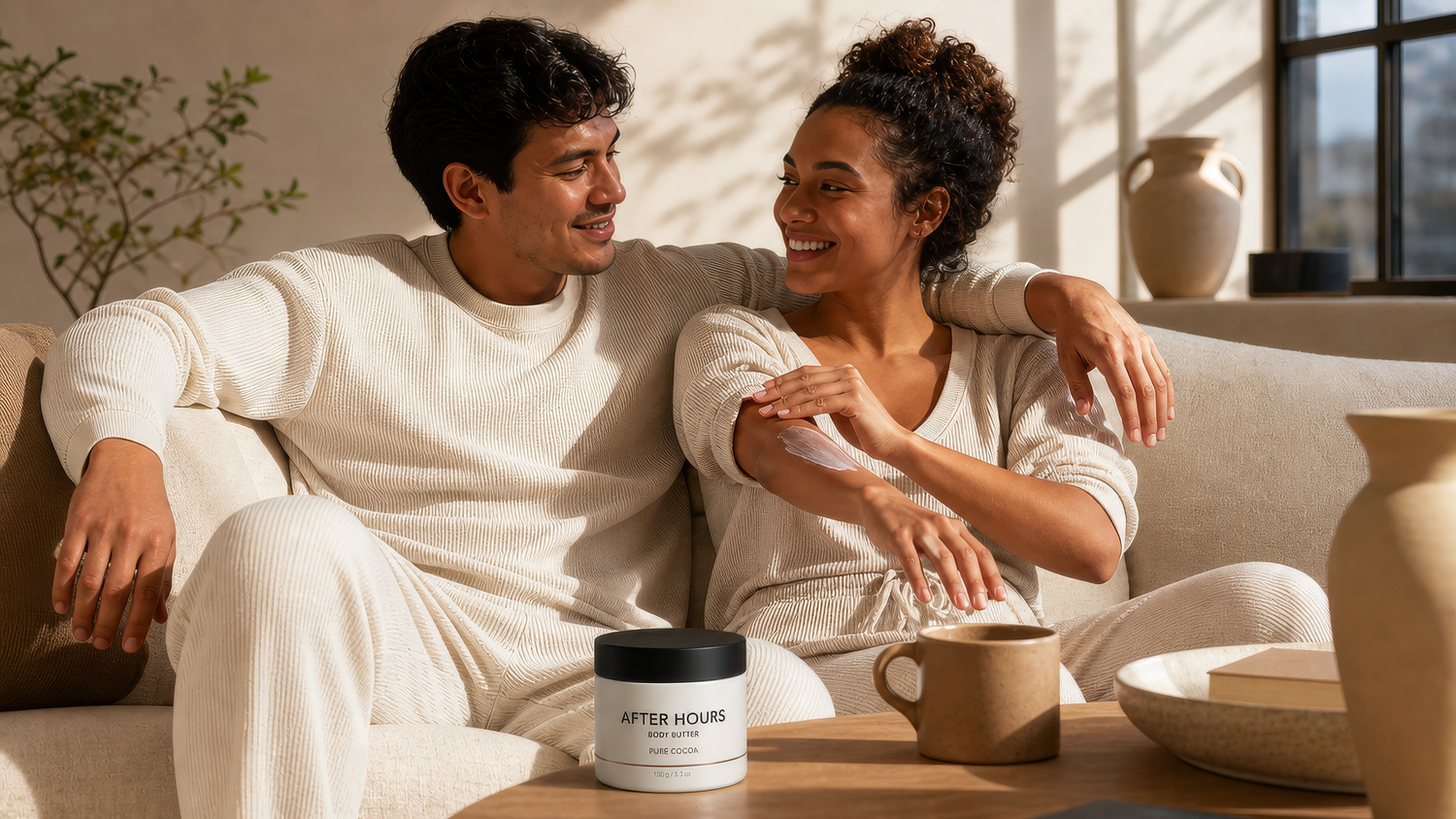

Natural butters outperform lotions for one clear reason: they contain little to no water. Lotions are mostly water that evaporates within minutes of application, leaving the skin to fend for itself. Butters stay on the surface, lock in moisture, and actively support the skin barrier. The result is longer-lasting hydration with fewer synthetic additives.
Key reasons natural butters deliver more than standard lotions:
- No water content. Butters focus entirely on lipids, so there is nothing to evaporate.
- Stronger barrier effect. Their semi-solid, saturated fatty acid structure forms a physical barrier that locks moisture in and keeps irritants out.
- Reduced transepidermal water loss (TEWL). Clinical studies confirm that vegetable butters and oils decrease TEWL more effectively than water-based emulsions.
- Bioactive compounds. Shea, mango, and cocoa butters carry essential fatty acids, tocopherols, and unsaponifiable matter that actively support skin repair.
- No synthetic preservatives required. Without water, there is no microbial risk, so butters need no parabens or other preservatives.
- Longer-lasting hydration. One application of a natural butter typically outlasts multiple applications of a standard lotion.
Table of Contents
- How lotions and natural butters differ in formulation
- When to use body butter and when to reach for a lotion
- Which natural butters are available in the UK and what each one does
- What the science says about natural butters and long-term skin health
- Afterhoursbodybutter: natural butters formulated for real skin concerns
- Key takeaways
How lotions and natural butters differ in formulation
Lotions are oil-in-water emulsions. Manufacturers disperse a small amount of oil into a large volume of water, then add emulsifiers to keep the two from separating, plus preservatives to prevent bacterial growth. The result is a light, spreadable product that absorbs quickly. The trade-off is that the water evaporates fast, and the preservatives and stabilisers add ingredient complexity that can irritate sensitive skin.
Natural butters work differently. They are solid or semi-solid plant fats with no water content, which means no emulsifiers and no synthetic preservatives. Their fatty acid profiles determine texture, absorption speed, and how occlusive they feel on skin.
Fatty acid profiles at a glance
| Property | Shea butter | Mango butter | Cocoa butter |
|---|---|---|---|
| Dominant fatty acids | Stearic, Oleic | Stearic, Oleic | Stearic, Palmitic, Oleic |
| Melting points vary with shea butter melting around body temperature, mango butter a bit higher, and cocoa butter similarly firm. | |||
| Texture at room temp | Soft, creamy | Firm, slightly brittle | Hard, snaps cleanly |
| Skin feel | Rich, melts slowly | Lighter, non-greasy | Gliding, very occlusive |
| Comedogenic ratings range from low for shea butter to higher for cocoa butter, influencing pore-clogging risk. | |||
| Shea butter has a notably higher unsaponifiable content compared to mango and cocoa butters. |
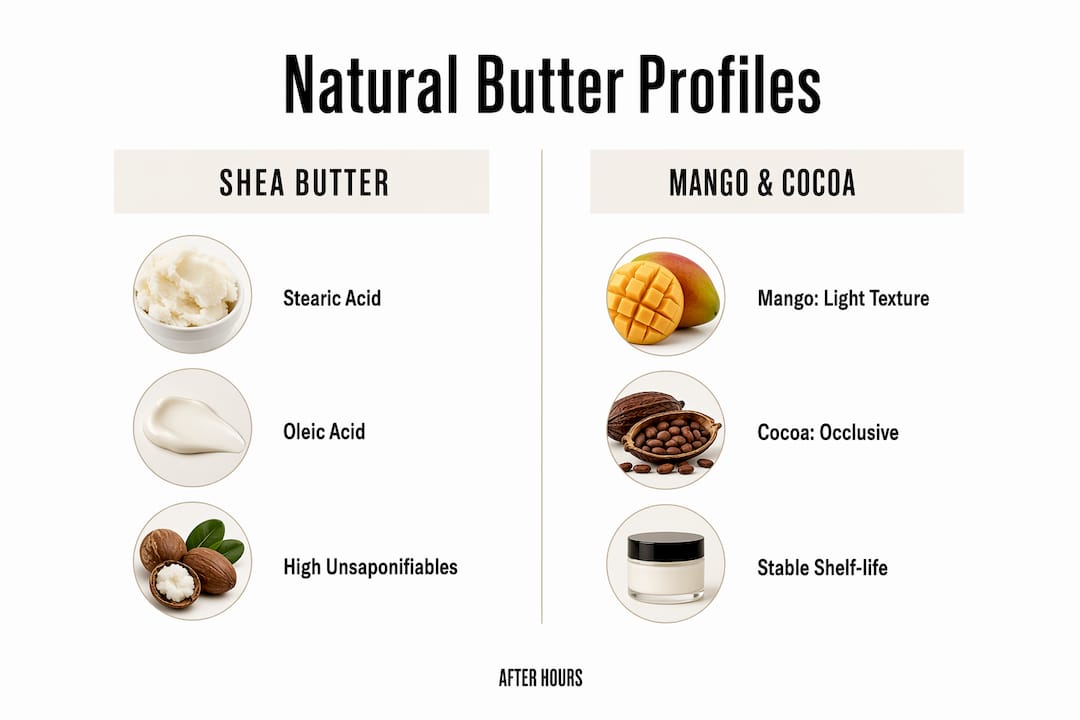
Shea butter’s high stearic and oleic acid content gives it a creamy texture that melts on skin contact. Mango butter shares a similar profile but with a slightly different balance, producing a lighter, less greasy finish. Cocoa butter’s elevated palmitic acid content makes it the firmest and most occlusive of the three, but also the most likely to block pores.
Butters also have a more stable texture and longer shelf life than oils and lotions. Less oxidation and no water content mean the product stays consistent from the first use to the last.
When to use body butter and when to reach for a lotion
The choice comes down to your skin’s current condition and how much time you have.
Choose a natural butter when:
- Your skin is very dry, cracked, or flaking
- You have sensitive or reactive skin that responds poorly to preservatives
- You want intensive overnight moisture without reapplying
- You are targeting rough areas such as elbows, knees, or heels
- Your skin is mature and producing less natural sebum
Choose a lotion when:
- You need a quick-absorbing product before getting dressed
- Your skin is naturally oily and does not need heavy occlusion
- You want light daily maintenance rather than intensive treatment
- You are applying to a large body area and need easy spreadability
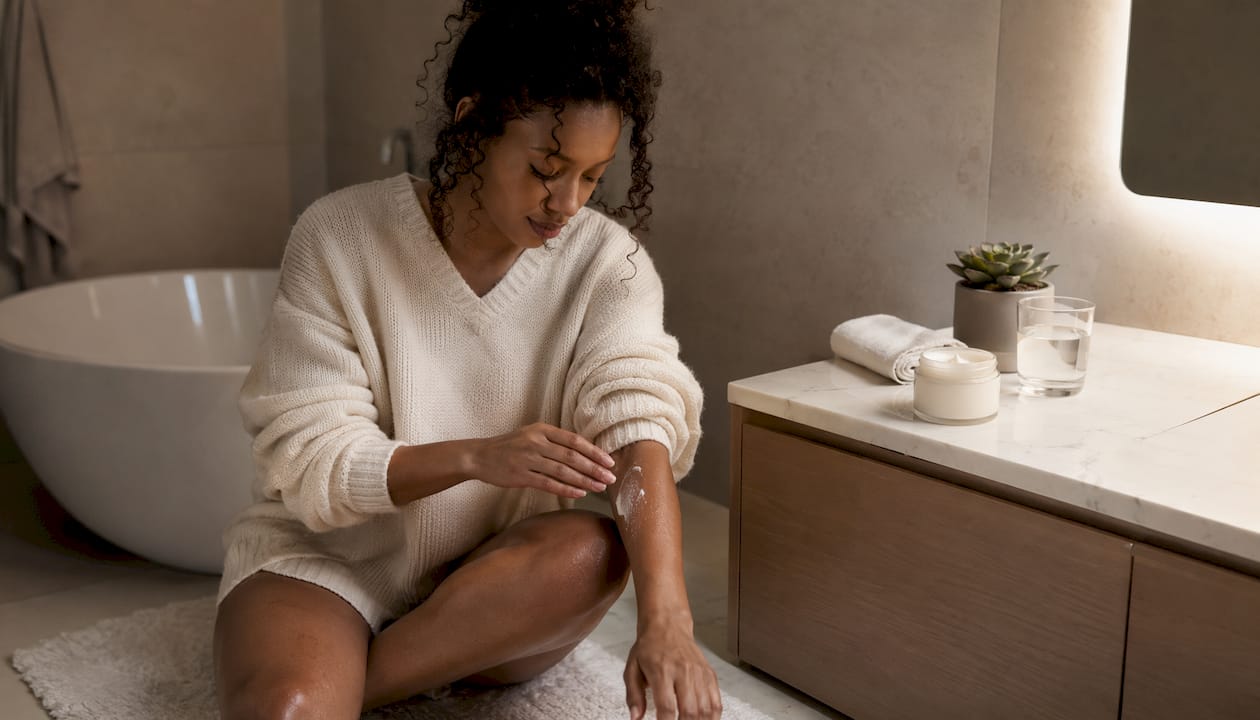
Body butter is best applied to slightly damp skin, immediately after a shower or bath. The residual moisture gives the butter something to seal in. Apply a small amount, warm it between your palms, and press it into the skin rather than rubbing vigorously. This approach reduces the greasy feeling that puts some people off.
Pro Tip: Apply body butter at night on particularly dry areas such as heels or elbows, then cover with cotton socks or light clothing. The occlusion overnight accelerates absorption and repair without the daytime inconvenience of a heavier product.
Lotions suit morning routines. Butters suit evenings, targeted treatments, and any time your skin genuinely needs more than surface-level hydration. You can also layer: apply a lotion for quick daily coverage, then use a butter on specific dry patches.
Which natural butters are available in the UK and what each one does
Understanding the differences between shea, mango, and cocoa butters helps you pick the right one for your skin type.
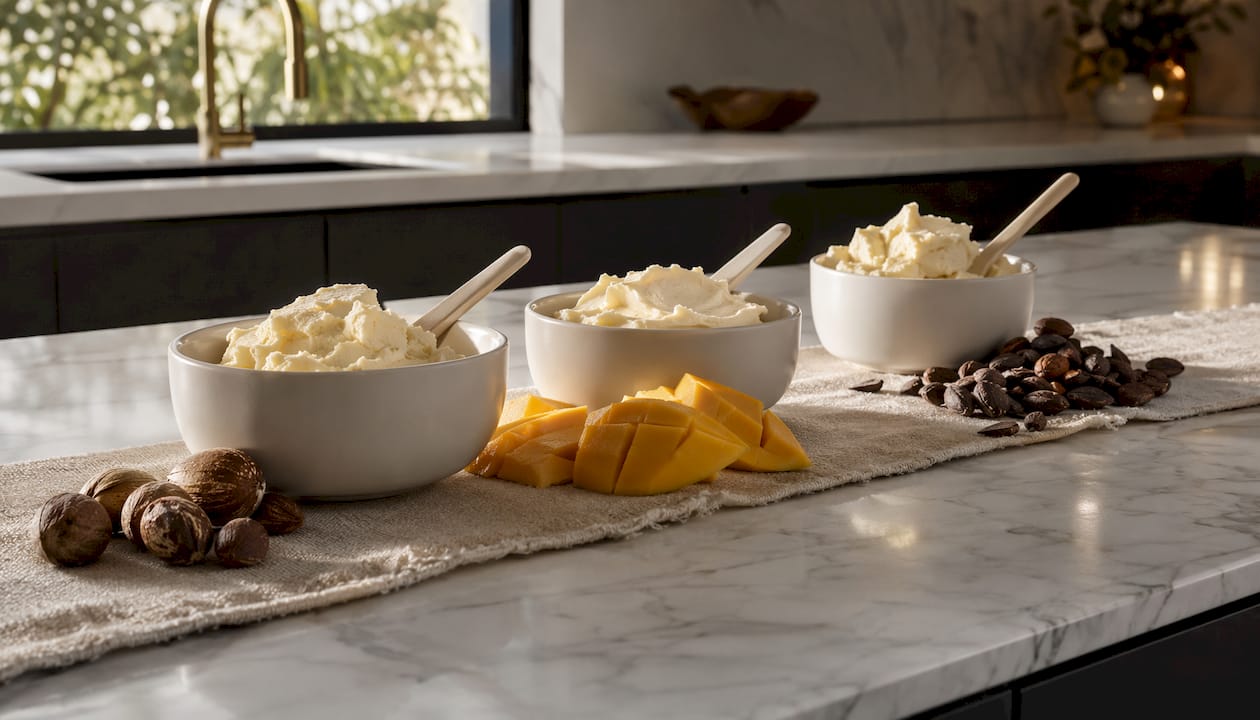
Shea butter (Vitellaria paradoxa) Shea is the most versatile option. Its fatty acid profile includes stearic and oleic acids alongside a high unsaponifiable fraction of 5–11%, which contains triterpenes, tocopherols, and phenolic compounds. These bioactives give shea genuine anti-inflammatory and wound-healing properties. One clinical study found shea butter reduced eczema symptoms more effectively than petroleum-based products, attributed in part to its linoleic acid content. Comedogenic rating of 0–2 makes it suitable for dry, sensitive, and most normal skin types. Widely available across UK health retailers and independent skincare brands.
Mango butter (Mangifera indica) Extracted from the mango kernel, mango butter delivers a rich feel without the heaviness of shea. Its higher melting point (32–42°C) means it holds its structure better in warm conditions, producing firmer products. The lighter, non-greasy finish makes it well suited to oily or acne-prone skin, and its comedogenic rating of 2 keeps pore-clogging risk low. Mango butter also carries vitamins A, C, and E, which support skin elasticity and calm irritation. A good option for facial use when a lighter texture is needed.
Cocoa butter (Theobroma cacao) Cocoa butter is the hardest and most occlusive of the three. Its melting point of 34–38°C means it releases a characteristic gliding sensation on skin contact. The high palmitic acid content creates a very effective physical barrier, making it excellent for very dry, cracked, or mature skin, and for scar and stretch mark support. The trade-off is a comedogenic rating of approximately 4. As dermatologist Dr Alok Vij at the Cleveland Clinic notes, cocoa butter is excellent for dry skin and chapped lips but is less suited to acne-prone skin. Keep it away from facial formulations targeting oily skin.
Combining shea and mango butter produces a balanced body butter that is rich without being heavy. A blend of 60% shea with 20% mango, for example, gives a creamy, non-greasy finish that works across a range of skin types and UK climates.
What the science says about natural butters and long-term skin health
The moisturising benefit of natural butters goes well beyond keeping skin soft. The key mechanism is the unsaponifiable fraction present in plant butters. These compounds, which cannot be converted into soap and therefore remain bioactive on the skin, include triterpenes, phytosterols, and tocopherols. They modulate inflammation, stimulate natural repair mechanisms, and support barrier restoration in ways that water-based lotions simply cannot replicate.
A review published in Frontiers in Pharmacology covering 27 clinical studies on vegetable butters and oils confirmed that their primary dermal activity is improved skin hydration through decreased TEWL. The review also identified that oils and butters high in linoleic acid and saturated fatty acids show positive effects in inflammation-affected skin, while the bioactive unsaponifiables drive active repair rather than passive surface coverage.
Shea butter’s unsaponifiable content of 5–11% is notably high compared to most plant butters. Research published via Zenodo confirms that shea butter enhances epidermal barrier function and reduces TEWL, while its tocopherols and triterpenes deliver antioxidant and anti-inflammatory activity. Regular use supports skin resilience over time, not just temporary softness.
The long-term picture matters. Lotions provide surface hydration that fades as water evaporates. Natural butters, used consistently, support the skin’s own repair processes and strengthen the barrier so it retains moisture more effectively on its own. That is the practical difference between a product that treats a symptom and one that addresses the underlying condition. You can read more about this mechanism in the science behind deep absorption of natural butters.
Afterhoursbodybutter: natural butters formulated for real skin concerns
Afterhoursbodybutter makes premium, vegan body butters using natural ingredients with no synthetic preservatives or chemical fillers. The formulations are built around fat-soluble vitamins and nutrients that nourish skin at a deeper level, targeting specific concerns including dryness, acne, and irritation.
If you have read this far, you already know that not all body butters are equal. Afterhoursbodybutter uses a cruelty-free, chemical-free approach with a focus on skin that genuinely needs more than a standard lotion can offer. Customers with sensitive skin report visible improvements in texture and moisture retention. Free UK delivery is available on orders over £30.
Browse the full range and find the right formulation for your skin at Afterhoursbodybutter. You can also explore partner options such as the Buttercream Frosting Body Butter from Zenith for a complementary natural butter experience.
Key takeaways
Natural butters outperform lotions because their water-free, lipid-rich composition reduces TEWL, strengthens the skin barrier, and delivers bioactive compounds that support long-term skin repair.
| Point | Details |
|---|---|
| Water content is the core difference | Lotions typically contain 60–80% water that evaporates quickly; butters contain minimal to no water and focus on reinforcing the skin barrier. |
| Barrier strength | Butters form a more effective physical barrier on the skin surface than lotions or oils. |
| Unsaponifiables drive repair | The bioactive unsaponifiable fraction in shea butter (5–11%) supports active skin healing, not just hydration. |
| Match butter to skin type | Shea (0–2 comedogenic) suits dry or sensitive skin; mango (2) suits oily skin; cocoa (4) suits very dry or mature skin. |
| Afterhoursbodybutter | Vegan, chemical-free formulations targeting dryness, acne, and irritation with fat-soluble vitamins and natural butters. |