

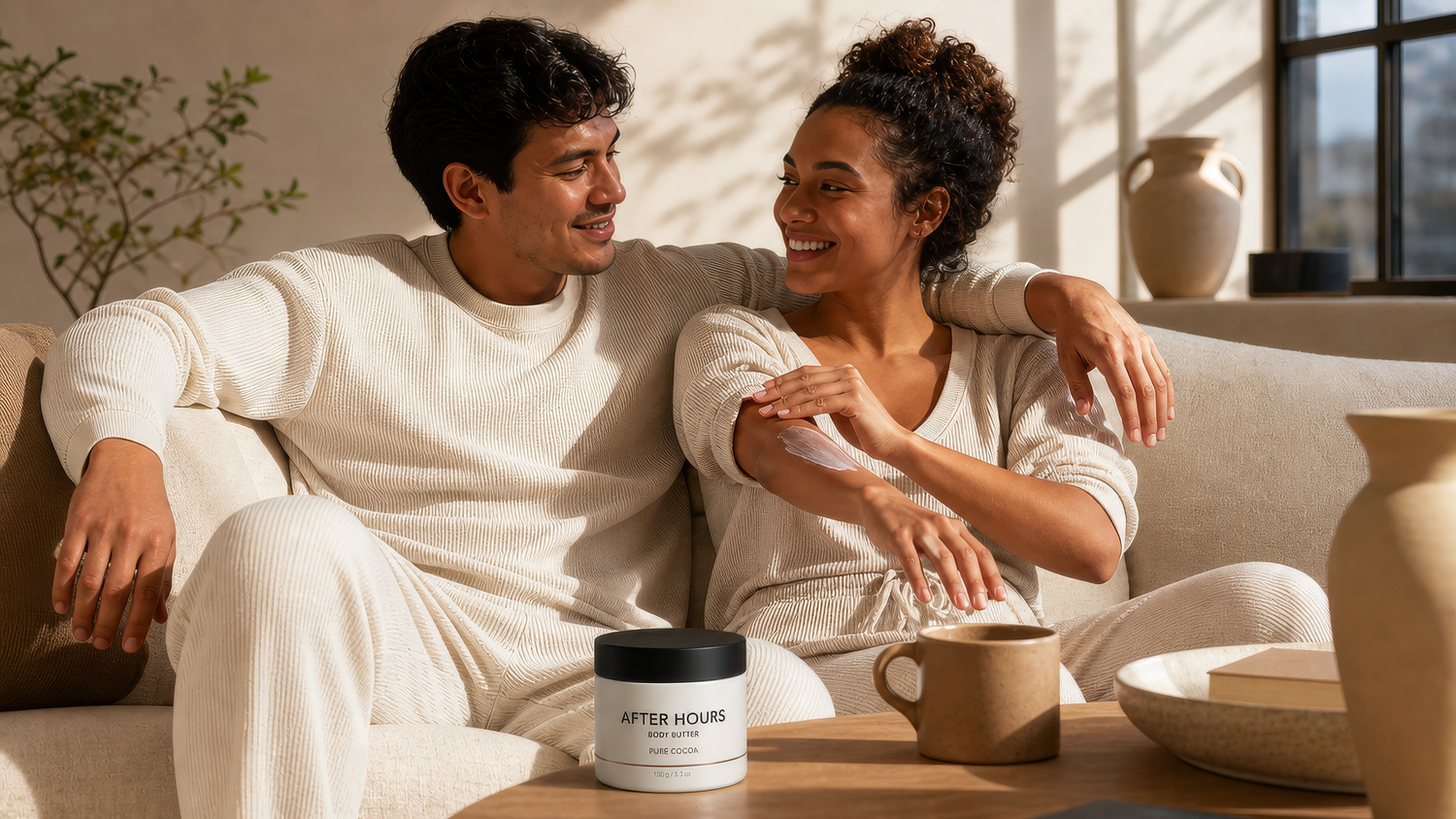

Body butter is defined as a solid, plant fat-based skin moisturiser that melts on contact with warm skin, forming an occlusive barrier that retains moisture for hours. Understanding why body butter absorbs deeply starts with its composition: dense plant butters like shea, kokum, and cocoa replace the water that makes up 60–80% of most lotions. That fundamental difference in formulation is what separates a product that sits on the surface from one that integrates with your skin’s own lipid layer. Afterhoursbodybutter builds its entire range around this principle, using vegan, plant-based fats chosen specifically for their compatibility with human skin.
Why does body butter absorb deeply compared to lotions?
Body butter absorbs deeply because its solid fats melt gradually with body heat, allowing them to integrate with the skin’s natural lipid layer rather than evaporating off the surface. Lotions contain 60–80% water, which means a significant portion of the product evaporates within minutes of application. Body butter contains almost no water, so every gram you apply contributes directly to moisturisation.
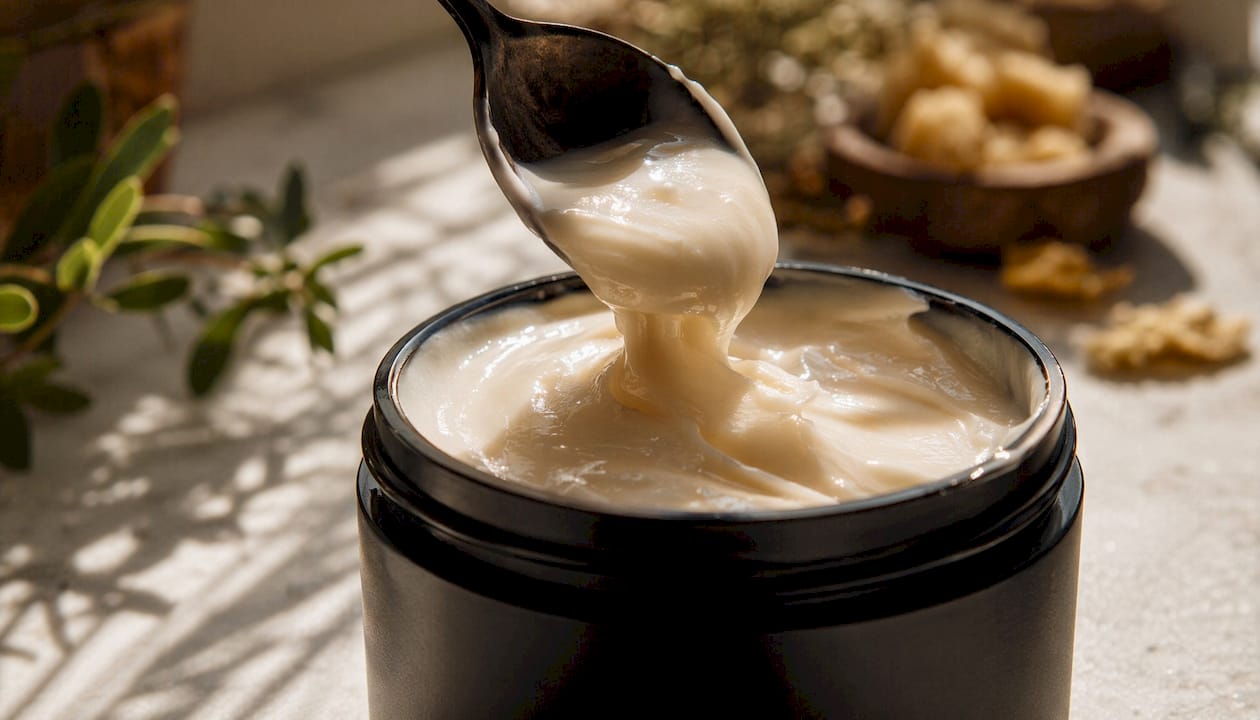
The technical term for this effect is occlusion. An occlusive agent forms a physical film over the skin that prevents transepidermal water loss, known in dermatology as TEWL. Body butter achieves this through plant butters with specific melting points close to body temperature, which is why the product transforms from solid to a silky film the moment it touches your skin.
Waterless body butters are often preservative-free and contain more concentrated moisturising ingredients than their water-based counterparts. That concentration matters because it means the active fats and vitamins reach the skin in full strength rather than diluted form.
| Feature | Body butter | Standard lotion |
|---|---|---|
| Water content | Minimal to none | 60–80% |
| Absorption time | 5–15 minutes | 1–3 minutes |
| Moisturising duration | 6–12 hours | 2–4 hours |
| Occlusive barrier | Strong | Weak to moderate |
| Preservatives required | Few to none | Usually required |
The absorption time difference is not a flaw. It reflects the depth at which the fats are integrating with your skin. A lotion that vanishes in seconds has not penetrated; it has evaporated.
What application methods maximise body butter absorption?
The single most effective technique for maximising absorption is applying body butter to slightly damp skin immediately after bathing. Damp skin enhances absorption and moisture-locking by up to 50% compared to applying to dry skin. The water already present in the skin gives the occlusive layer something to seal in, which is the entire point of how body butter works.
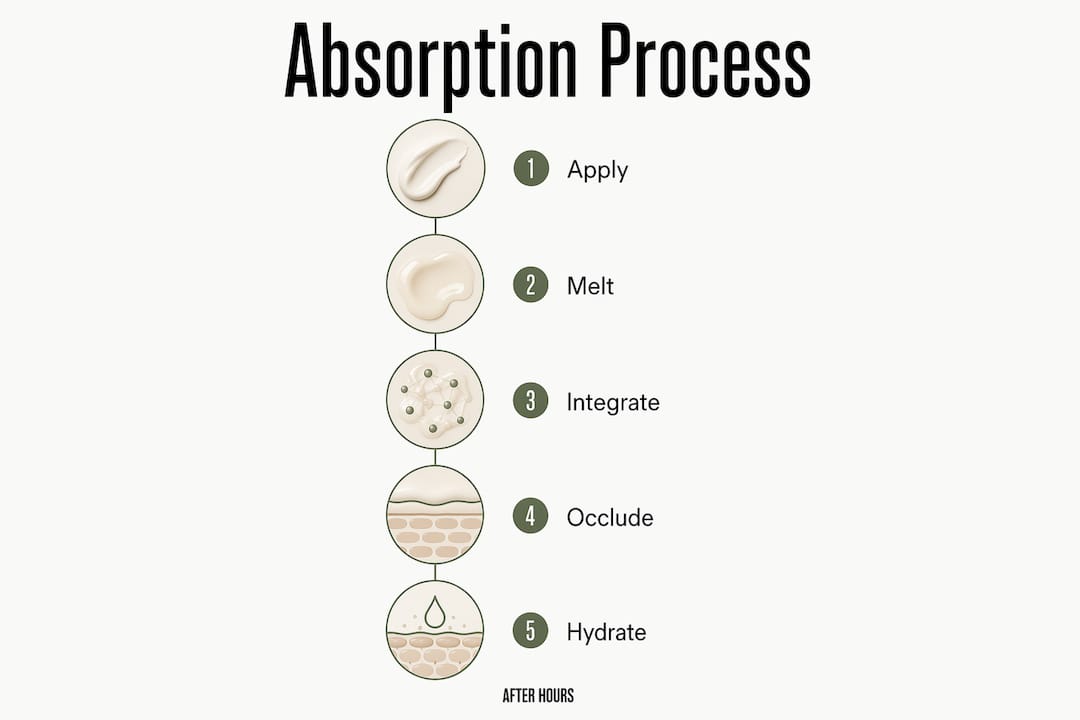
Warming the product between your palms before applying is equally important. Body butter melts with warmth, not friction. Aggressive rubbing hinders absorption because it moves the product across the surface rather than allowing it to settle into the skin. Gentle, circular motions give the fats time to melt evenly and integrate with your skin’s lipid layer.
Best practices for deep absorption:
- Apply within two minutes of stepping out of the shower, while skin is still slightly damp
- Scoop a small amount and warm it between both palms for 10–15 seconds before touching skin
- Use slow, circular motions rather than brisk rubbing
- Focus on areas prone to dryness: elbows, knees, heels, and shins
- Allow 5–15 minutes before dressing to avoid transferring product to fabric
Common pitfalls to avoid:
- Applying to completely dry skin, which reduces moisture retention significantly
- Using too much product, which extends absorption time and leaves a greasy feel
- Applying immediately before exercise, when sweat disrupts the occlusive barrier
- Rubbing vigorously, which prevents the fats from settling properly
Pro Tip: Apply body butter just before bed. Skin temperature rises slightly during sleep, which accelerates fat absorption and allows the occlusive barrier to work undisturbed for the full 6–12 hour window.
Which ingredients in body butter enhance absorption?
The fatty acid profiles of plant butters are the primary reason body butter absorbs so effectively. Shea butter’s fatty acid profile closely matches human sebum, which is why it absorbs fully within 10–15 minutes without leaving an oily residue. When an ingredient mirrors your skin’s own chemistry, the skin accepts it readily rather than treating it as a foreign substance.
Kokum butter deserves particular attention. Research into polyherbal kokum-based formulations confirms good skin retention and moisturising properties, making it one of the more effective plant butters for reinforcing the moisture barrier. Cocoa butter and mango butter round out the core group, each contributing a slightly different fatty acid balance that broadens the skin-nourishing effect.
Carrier oils added to body butter formulas also affect how quickly and deeply the product penetrates. Sweet almond oil is lightweight and absorbs quickly, making it useful for balancing denser butters. Jojoba oil is technically a liquid wax with a structure close to sebum, which gives it excellent skin compatibility. Coconut oil adds antimicrobial properties alongside its moisturising effect, though it suits some skin types better than others.
Ingredient absorption and nourishing properties at a glance:
- Shea butter: Rich in oleic and stearic acids; matches sebum chemistry; absorbs in 10–15 minutes; suited to all skin types
- Kokum butter: High stearic acid content; very firm texture; excellent skin retention; particularly effective for cracked or very dry skin
- Cocoa butter: High in palmitic and stearic acids; strong occlusive effect; slower absorption; best for extremely dry areas
- Mango butter: Balanced fatty acid profile; lighter feel than cocoa; good for sensitive skin
- Sweet almond oil: High oleic acid; lightweight; speeds absorption of denser butters when blended
- Jojoba oil: Liquid wax structure; mirrors sebum; non-comedogenic; excellent for oily or combination skin types
Vitamin E, present in shea butter naturally and often added to formulas, acts as an antioxidant that supports skin repair. Afterhoursbodybutter uses fat-soluble vitamins and nutrients specifically because they travel with the fats into the skin rather than sitting on the surface. You can read more about how natural butters benefit skin in detail.
Why does body butter outperform lighter creams for dry skin?
Body butter does not add water to the skin. It prevents transepidermal water loss by forming an occlusive film that keeps existing moisture locked inside the skin. This is a critical distinction. A lotion that contains humectants like glycerin or hyaluronic acid draws water into the skin, but without an occlusive layer on top, that water evaporates quickly.
Body butter solves the second half of the hydration equation. Its occlusive barrier lasts 6–12 hours, compared to 2–4 hours for a standard lotion. That duration difference is what makes body butter the preferred choice for people with chronic dryness, eczema-prone skin, or skin that loses moisture rapidly in cold or dry environments. Understanding what causes skin dehydration helps clarify why sealing in moisture matters as much as adding it.
The most effective approach for very dry skin combines both mechanisms. Applying a humectant-rich lotion to damp skin first, then following with a thin layer of body butter, loads the skin with moisture and then seals it in. This two-step method is recommended for chronic dryness and can extend hydration beyond 12 hours.
| Moisturiser type | Hydration duration | Barrier effect | Best suited for |
|---|---|---|---|
| Standard lotion | 2–4 hours | Weak | Normal to slightly dry skin |
| Cream | 4–6 hours | Moderate | Dry skin |
| Body butter | 6–12 hours | Strong | Very dry, cracked, or sensitive skin |
| Lotion plus body butter | 12+ hours | Very strong | Chronic dryness, eczema-prone skin |
The synergy between humectants and occlusives is the reason dermatologists recommend layering for severe dryness. Body butter alone handles the sealing function exceptionally well. Pairing it with a humectant addresses both sides of the hydration process.
Key takeaways
Body butter absorbs deeply because its solid plant fats melt with body heat, forming an occlusive barrier that prevents moisture loss for 6–12 hours, far longer than water-based lotions.
| Point | Details |
|---|---|
| Absorption mechanism | Solid plant fats melt on skin contact, integrating with the skin’s lipid layer rather than evaporating. |
| Application technique | Apply to slightly damp skin with gentle circular motions to maximise moisture retention. |
| Ingredient compatibility | Shea and kokum butter fatty acids closely match human sebum, enabling deep and residue-free absorption. |
| Hydration duration | Body butter’s occlusive barrier lasts 6–12 hours, compared to 2–4 hours for standard lotions. |
| Best results for dry skin | Layering a humectant lotion beneath body butter extends hydration beyond 12 hours for chronic dryness. |
What I’ve learned from using body butter consistently
People often assume that slow absorption means a product is not working. The opposite is true with body butter. The 5–15 minutes it takes to absorb is the time the fats spend integrating with your skin’s lipid layer. A product that vanishes in seconds is mostly water leaving the surface.
The greasy feeling that puts some people off is almost always a sign of too much product or application to dry skin. I’ve found that a pea-sized amount warmed properly between the palms, applied to damp skin, absorbs cleanly without any residue. The texture after absorption should feel like your own skin, not like a coating on top of it.
Seasonal use matters more than most people realise. In winter, when central heating strips moisture from indoor air, the occlusive barrier body butter provides is genuinely protective rather than cosmetic. In summer, a lighter application to damp skin after showering is enough. The product does not need to change; the amount does.
For very dry skin, I’d always recommend the two-step approach: a light humectant product first, body butter second. The humectant loads moisture into the skin; the butter locks it there. Used separately, each does half the job. Used together, they cover the full process. You can explore nourishing butter options to find the right combination for your skin type.
— Darnell
Body butter that actually delivers on absorption
Choosing a body butter that absorbs well comes down to ingredient quality and formulation. Plant-based butters with the right fatty acid profiles, no unnecessary fillers, and no synthetic preservatives are what separate a product that works from one that just feels heavy.
Afterhoursbodybutter formulates each product with vegan, chemical-free ingredients chosen for their compatibility with skin. The focus is on fat-soluble vitamins and natural plant butters that nourish at a level lighter creams cannot reach. Customers with sensitive skin and chronic dryness report visible improvements in texture and moisture retention after consistent use.
Browse the full range of natural body butters at Afterhoursbodybutter to find a formula suited to your skin’s needs.
FAQ
Why does body butter take longer to absorb than lotion?
Body butter takes 5–15 minutes to absorb because its solid plant fats must melt with body heat before integrating with the skin. Lotions absorb faster because they are mostly water, which evaporates rather than penetrating.
Should I apply body butter to wet or dry skin?
Apply body butter to slightly damp skin immediately after bathing. Damp skin enhances absorption and moisture retention significantly compared to applying to completely dry skin.
How long does body butter keep skin moisturised?
Body butter’s occlusive barrier lasts 6–12 hours, compared to 2–4 hours for a standard lotion. This extended duration is the main reason it suits very dry or sensitive skin.
What makes shea butter absorb without leaving residue?
Shea butter’s fatty acid profile closely matches human sebum, which is why skin accepts it readily. Applied in the correct amount to damp skin, it absorbs fully within 10–15 minutes without an oily finish.
Can I use body butter with other moisturisers?
Applying a humectant-rich lotion to damp skin first, then a thin layer of body butter on top, is the most effective method for chronic dryness. The lotion adds moisture; the body butter seals it in for 12 hours or more.