

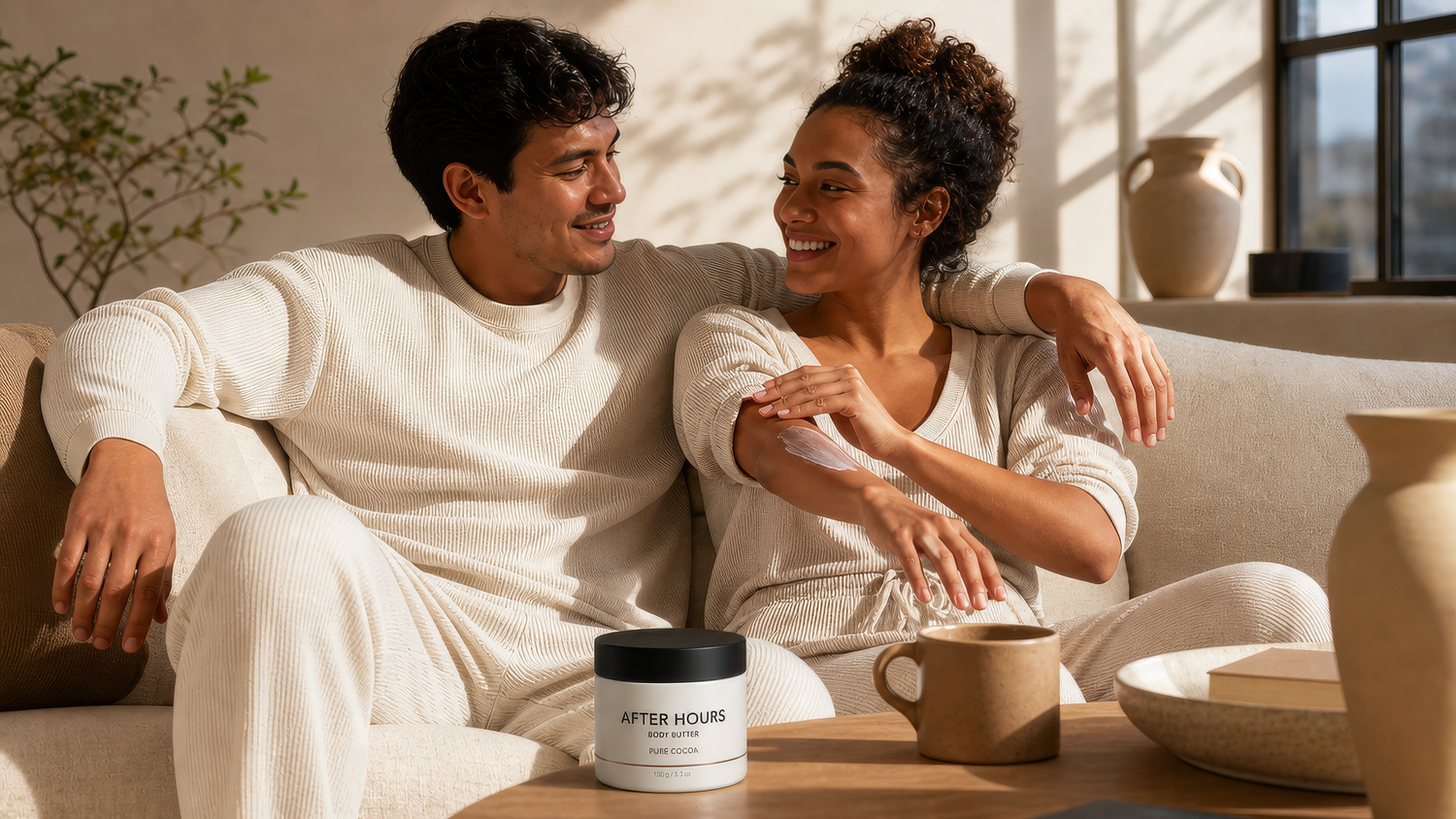

You can use body butter on your face, but only in specific circumstances: on very dry, non-acne-prone patches, in small amounts, and only after a patch test. For daily full-face use, a lightweight, non-comedogenic facial moisturiser is the safer choice for most skin types. Some body butters formulate for targeted skin concerns, so check the label before applying any body product above the jaw.
TL;DR:
- Body butter’s high emollience and oil content can cause pore congestion on oily or acne-prone facial skin, especially if used daily over the T-zone.
- Use body butter only on dry patches or isolated areas, applying a small amount after patch testing to minimize the risk of breakouts or irritation.
- Ingredients like cocoa butter and coconut oil carry higher risks of clogging pores, while refined shea butter, mango butter, and oils like jojoba are safer facial options.
- Sensitive skin and rosacea-prone individuals should avoid heavily fragranced formulas and perform patch tests before any tentative face use.
- Longer-term alternatives include humectants and lightweight facial oils that hydrate without occlusion, promoting healthier skin over time.
Table of Contents
- Why body butter on face care needs different rules than body skin
- Which skin type decides if body butter belongs on your face
- Ingredients in body butter that clog pores versus ones that don’t
- How to test body butter on your face without risking a breakout
- Better ways to hydrate your face without the pore risk
- What After Hours Body Butter’s formulation approach tells us about facial use
- A balanced view on body butter and facial skin
- Where After Hours Body Butter fits into your routine
- Sources
Why body butter on face care needs different rules than body skin
Facial skin is not just a thinner version of the skin on your arms or legs. It behaves differently under a heavy product, and that’s down to basic anatomy.
The skin on your face is thinner than most body skin, with a higher density of sebaceous glands and pores per square centimetre. That combination means anything occlusive sits closer to oil-producing machinery that’s already active. Body butter is water-free and highly emollient, while body lotions contain a high proportion of water and absorb far faster. On the arms or legs, that slower absorption usually does not cause issues. On the face, it can mean a thick film sitting on top of pores for extended periods.
Different zones react differently too:
- The T-zone (forehead, nose, chin) already produces more sebum, so adding an occlusive layer raises the risk of trapped oil and congestion.
- The cheeks tend to be drier and less pore-dense, making them more tolerant of richer textures.
- The eye area has the thinnest skin on the whole face and is prone to milia (small white bumps) from heavy creams, so it’s usually best left alone.
This is why a product that works beautifully on cracked heels or dry elbows can trigger breakouts within days when used across the whole face.
Which skin type decides if body butter belongs on your face
Skin type is the biggest variable in whether using body butter on the face causes problems or actually helps.
Dry skin often tolerates a rich butter reasonably well, particularly on isolated dry patches or as a night-time treatment rather than a daily morning step. Normal skin can sometimes get away with occasional spot use, say on a windburned cheek, but daily full-face application still raises the odds of clogged pores over time. Oily and acne-prone skin should avoid full-face body butter altogether; the ingredients that make it so nourishing for elbows are frequently the same ones that block already-active pores. Combination skin does best with a zone-based approach: apply on the drier cheeks, skip the T-zone entirely. Sensitive skin and rosacea-prone skin need extra caution, since fragrance and essential oils in many body butters are a common trigger for redness and irritation.
- Dry skin: patch or night-time use only
- Normal skin: occasional spot treatment, not daily
- Oily or acne-prone skin: avoid full-face use
- Combination skin: cheeks yes, T-zone no
- Sensitive or rosacea-prone skin: fragrance-free formulas only, patch test first
Pro Tip: If you’re not sure which category you fall into, watch your skin over a week rather than guessing. Shine by midday points to oily; tightness after cleansing points to dry.
Ingredients in body butter that clog pores versus ones that don’t
Not every body butter carries the same risk, and the ingredient list is where that risk actually lives.
Cocoa butter carries a relatively high comedogenic rating, which can cause breakouts on many face types(https://us.yonka.com/blogs/skin-hydration/is-cocoa-butter-good-for-dry-skin-on-face), even though it works well on the body. Coconut oil sits in a similar bracket. Refined shea butter and mango butter tend to rate lower, making them more forgiving if you’re set on trying a butter above the jawline. Squalane and jojoba oil are considered facial-friendly across most skin types because they mimic skin’s own sebum rather than sitting on top of it.
- High risk: cocoa butter, coconut oil
- Lower risk: refined shea butter, mango butter
- Facial-friendly oils: squalane, jojoba
Fragrance and concentrated essential oils are a separate concern entirely. Even a low-comedogenic butter can irritate facial skin if it’s heavily fragranced, particularly around the eyes and mouth where skin is thinnest. Before trying any body butter on your face, scan the ingredient list for cocoa butter or coconut oil near the top, and check whether fragrance appears at all. Our breakdown of cocoa butter’s comedogenic risk covers this in more depth if you want to compare specific products.
How to test body butter on your face without risking a breakout
If you want to try body butter on a dry patch rather than switching to a full facial moisturiser, follow a cautious sequence.
- Patch test first. Apply a small amount behind your ear or along the jawline and wait 24 to 48 hours, watching for redness, itching, or small bumps.
- Use a tiny amount. A pea-sized amount is plenty for a single dry patch; more product doesn’t mean more benefit, only more occlusion.
- Apply to slightly damp skin. This helps lock in existing moisture rather than sealing dry skin under a heavy layer.
- Avoid the T-zone and eye crease entirely, even if the patch test goes well elsewhere.
- Start with once every few days, not nightly, and watch for texture change or new comedones over the following two weeks.
Stop immediately if you notice new bumps, persistent redness, or a rough texture developing, and switch back to a facial-specific product. If irritation doesn’t settle within a few days of stopping, it’s worth speaking to a dermatologist rather than guessing further.
Pro Tip: Never layer body butter over active treatments like retinoids or benzoyl peroxide. The occlusion can trap the active ingredient against skin and increase irritation.
Better ways to hydrate your face without the pore risk
For most people, the better long-term move is building a routine around products designed for facial skin rather than adapting a body product.
Humectants such as hyaluronic acid draw moisture into skin without sitting on top of it, and lightweight emulsions or non-comedogenic facial oils give a similar softness to body butter without the same occlusion. Reserve heavier occlusives for night-time or targeted spot use on the driest areas, rather than as a daily all-over step.
- Morning: hydrating serum, then a light moisturiser, then sunscreen
- Night: same serum, optionally followed by a slightly richer cream on dry patches only
- Spot treatment: a small dab of a low-comedogenic butter on cracked or flaking areas, applied sparingly
This layering approach gets closer to what body butter promises (softness, a lasting feel) while keeping most of the face on products actually built for it.
What After Hours Body Butter’s formulation approach tells us about facial use
Some body butters formulate around fat-soluble vitamins and vegan, chemical-free ingredients aimed at specific concerns like dryness and acne, rather than a single all-purpose blend. That’s relevant here because not every body butter behaves the same way on skin, and formulation detail matters more than the category label.
- Some brands provide guidance on why body butter absorbs deeply explaining the occlusive mechanism behind the softness customers report.
- Customer feedback for some products points to improved texture and reduced irritation when used as directed, on the areas they’re intended for.
- Quantity matters just as much as ingredient choice. The guide on how much to use applies whether you’re treating an elbow or a stubborn dry patch on your cheek.
Formulations vary between products and even between batches, so always check the label rather than assuming one body butter behaves like another.
A balanced view on body butter and facial skin
Most of the fear around body butter and breakouts is really about volume and frequency, not the ingredient category itself. Used sparingly on a genuinely dry patch, a low-comedogenic butter rarely causes trouble. Used daily across an oily T-zone, almost any rich butter will eventually cause some congestion. Patch test, go small, and default to a facial moisturiser for anything you’re doing every day.
— Darnell
Where After Hours Body Butter fits into your routine
If your skin runs dry, sensitive, or prone to specific concerns like irritation and acne, the right approach isn’t choosing between “body product” and “face product” in the abstract. It’s matching the formulation to the exact area you’re treating. Some body butters are built for targeted use: vegan, chemical-free, and formulated with fat-soluble vitamins for dry or sensitive skin, rather than a generic one-size-fits-all butter.
If you’ve read through the ingredient guidance above and want to see how a specific formula measures up, the After Hours Body Butter shop lists full ingredient details on every product page. Check the formulation notes against your skin type before adding anything new to your routine, and start with a patch test either way.
Sources
Further reading: Medical News Today on body butter versus lotion, Yon-Ka on cocoa butter and comedogenicity, and our application quantity guide.