



Cocoa butter can be sourced sustainably, but most of the supply chain still isn’t there yet. Certification helps. Agroforestry helps more. Neither works without traceability back to the cooperative and a genuine living-income commitment to farmers.
If you’re buying or formulating with cocoa butter, three things matter before anything else:
- Chain-of-custody clarity — ask whether the certification is segregated or mass balance, because the difference changes what you’re actually paying for.
- Traceability to cooperative level — not just “certified”, but traceable to a named farmer group or region.
- A living-income commitment, not just a premium payment that gets absorbed by middlemen.
As a consumer, look for brands that publish supplier names, certification type, and some measure of farmer engagement. Vague sustainability language on a label usually means there’s nothing concrete behind it.
Pro Tip: If a brand can’t tell you whether its cocoa butter is segregated or mass balance, ask them directly. A brand serious about sourcing will know the answer without checking.
Key Takeaways
Cocoa butter sustainability depends on agroforestry, verified traceability, and living-income commitments working together, not on certification labels alone.
| Point | Details |
|---|---|
| Certification has limits | Voluntary standards raise farm income modestly but rarely shift deforestation or biodiversity at landscape level. |
| Traceability model matters | Segregated chain-of-custody is more reliable than mass balance for verifying actual bean origin. |
| Agroforestry is the strongest lever | Shade-grown systems consistently improve soil, biodiversity, and farm resilience across studies. |
| Alternatives carry farmer risk | Precision-fermentation and cell-culture fats need funded transition plans, or smallholder incomes suffer. |
| Afterhoursbodybutter’s approach | Vegan, cruelty-free body butters made with natural ingredients and manufactured sustainably in the UK. |
Table of Contents
- Is cocoa butter sustainable by nature, or only under certain conditions?
- Where does the cocoa butter supply chain actually break down?
- Which certifications should you actually trust, and what won’t they fix?
- What sourcing practices genuinely improve sustainability outcomes?
- Are cocoa butter alternatives a shortcut to sustainability?
- How should buyers and consumers act on this right now?
- Frequently asked questions
- Sources
Is cocoa butter sustainable by nature, or only under certain conditions?
Cocoa butter is the pale yellow fat pressed from cocoa beans, prized in chocolate for its sharp melting point and in cosmetics for its stability and skin-feel. It’s not inherently sustainable or unsustainable. The outcome depends entirely on how the beans were grown, who was paid what, and how much forest disappeared to plant the trees.
The concerns clustering around cocoa butter are consistent across the sector:
- Deforestation linked to cocoa expansion in West Africa and parts of Latin America.
- Child labour risk in smallholder farming households.
- Farmer incomes that sit well below a living wage in many producing regions.
- Biodiversity loss where monoculture replaces shaded forest systems.
- Climate vulnerability, since cocoa trees are sensitive to shifting rainfall and heat.
A systematic review of sustainability attributes in cocoa agroecosystems found that reconciling ecological health with farmer wellbeing consistently depends on one factor above others: agroforestry integration. That single variable shows up across studies globally.
Where does the cocoa butter supply chain actually break down?
The failures aren’t evenly spread. They cluster at three points, and each one demands a different fix.
At farm level, smallholders often clear forest edges to expand plots, partly because yields on ageing trees are declining and partly because there’s no capital for replanting with shade cover. Smallholders produce the vast majority of the world’s cocoa, which means farm-level practice is the single biggest lever in the entire chain, and also the hardest to influence directly.
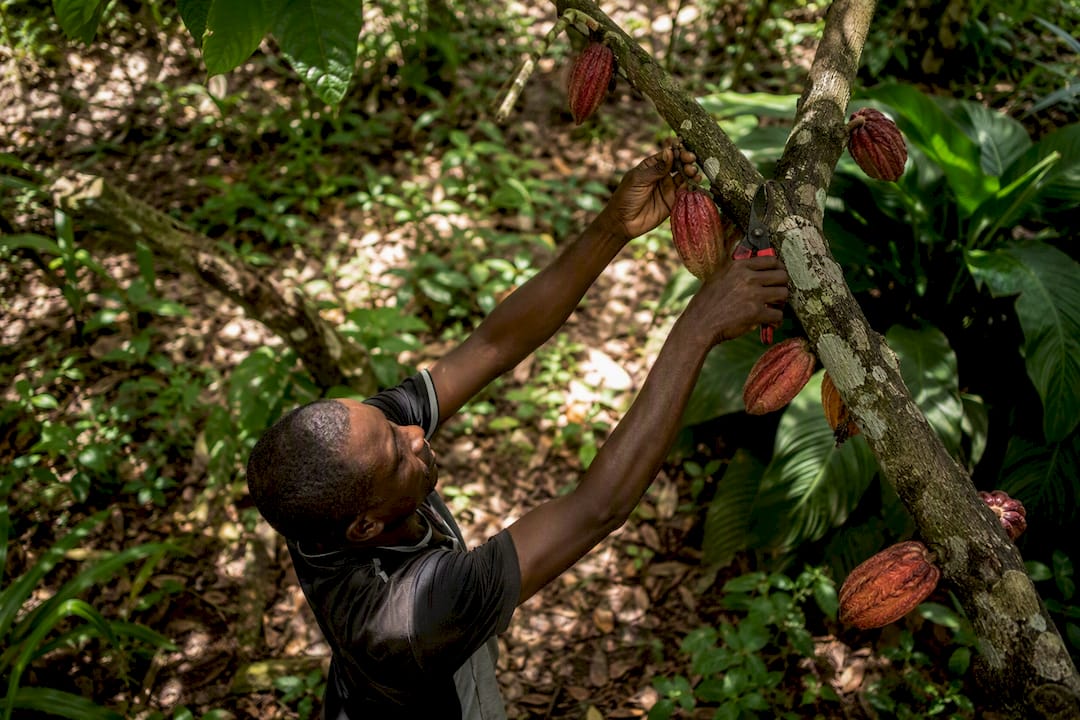
At the mid-chain, beans move through informal aggregators and local traders before reaching an exporter. Traceability frequently gets lost here. A cooperative might document its farmers carefully, only for that record to dissolve once beans are pooled with unverified supply.
At the industrial processing stage, energy use, packaging, and transport add a further layer of carbon cost. Cargill’s own 2025 cocoa sustainability impact report describes renewable energy adoption and transport optimisation, including ISO tank shipping, as a genuine lever for cutting mid-chain emissions. But processing gains don’t substitute for farm-level fixes. They run alongside them.
Voluntary sustainability standards tend to deliver modest income gains, mainly through yield improvements, and encourage farm-level practices like agroforestry. Their effect on landscape-level deforestation and biodiversity remains limited and highly context dependent.
That finding comes from a systematic review of 45 studies on voluntary sustainability standards across the cocoa value chain, and it’s a sobering one. Certification changes behaviour on individual farms far more reliably than it changes what happens across a landscape.
| Risk point | Primary issue | Who holds the leverage |
|---|---|---|
| Farm level | Deforestation, child labour, ageing trees | Smallholders, cooperatives |
| Mid-chain | Lost traceability, weak price transmission | Traders, exporters |
| Processing | Energy use, packaging, transport emissions | Processors, manufacturers |
Which certifications should you actually trust, and what won’t they fix?
Several major certification programmes dominate this space, each with different focuses.
Rainforest Alliance certifies farm practices, trains farmers, and builds traceability systems, though its own materials acknowledge that certification alone rarely transforms landscape-level outcomes without wider governance reform. Fairtrade guarantees a minimum price and a social premium paid to cooperatives, which helps with income stability but doesn’t automatically address deforestation risk. Cocoa Life, Mondelez’s own sourcing programme, focuses on community investment and farmer training tied to its own supply. Cocoa Horizons, run by Barry Callebaut, funds farmer projects through a foundation model rather than a strict certification label. The World Cocoa Foundation isn’t a certifier at all. It’s an industry body that coordinates traceability standards and deforestation-risk guidance across competing companies, which matters because harmonised risk assessment reduces duplicated monitoring costs sector-wide.
Here’s how they stack up against each other:
| Initiative | Environmental focus | Social focus | Traceability model |
|---|---|---|---|
| Rainforest Alliance | Farm practice, some forest protection | Farmer training | Segregated or mass balance |
| Fairtrade | Limited direct environmental scope | Minimum price, social premium | Segregated typically |
| Cocoa Life | Landscape restoration in target regions | Community investment | Company-specific traceability |
| Cocoa Horizons | Agroforestry funding | Farmer income projects | Mass balance common |
| World Cocoa Foundation | Sector-wide risk mapping | Standards harmonisation | Not a certifier; sets frameworks |
Segregated means the certified beans stay physically separate from uncertified beans throughout the chain. Mass balance means certified and uncertified volumes are mixed, with the certified proportion tracked on paper rather than in the physical bag. That distinction matters more than most labels admit.
Pro Tip: When a brand says “certified,” ask which chain-of-custody model applies. Segregated cocoa butter costs more, but it’s the only version where you can be confident the specific beans you’re buying came from the farms named on the label.
What sourcing practices genuinely improve sustainability outcomes?
Agroforestry is the practice that appears again and again in the evidence. Growing cocoa under a mixed canopy of shade trees improves soil fertility, supports biodiversity, and gives farms more resilience against drought and heat spikes. A systematic review of cocoa agroecosystem indicators identifies it as the most consistently positive intervention across global studies.
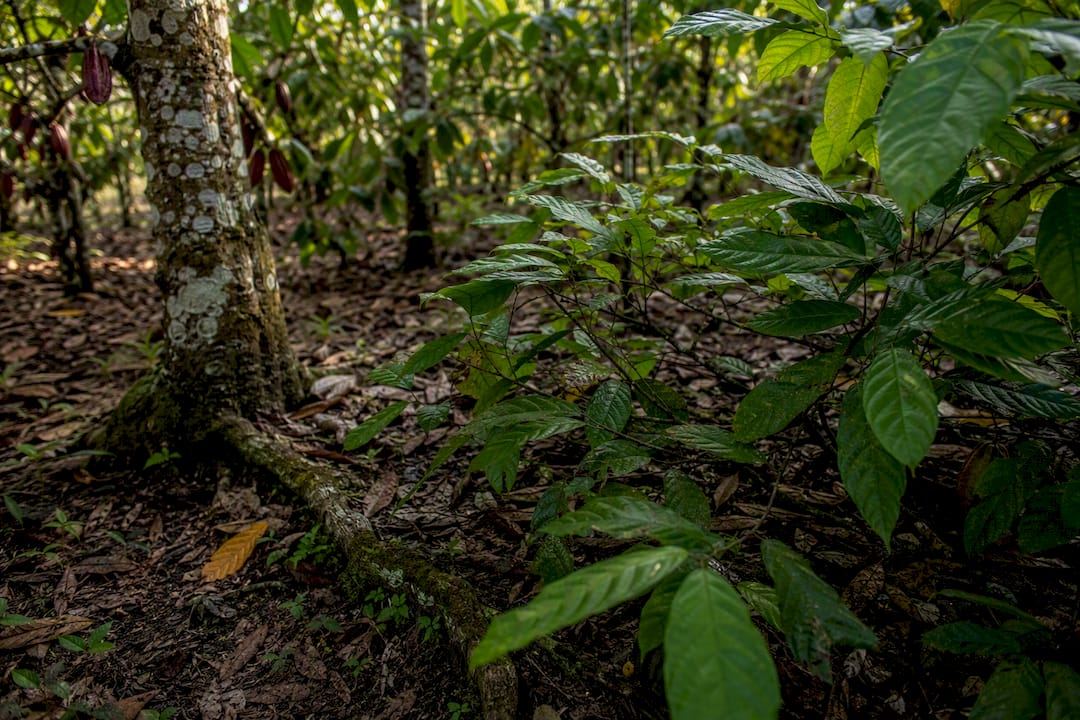
Traceability tools have moved beyond paperwork too. Satellite-based deforestation risk mapping now lets buyers check whether a cooperative’s plots overlap with recently cleared forest, before a contract is even signed.
Programmes worth watching for real results:
- Cooperative-level GPS mapping tied to deforestation-risk databases.
- Living-income top-ups paid directly to registered farmer groups, not blended into a generic premium.
- Farmer training in intercropping and soil management, often funded through foundation-style models like Cocoa Horizons.
- Multi-actor projects such as the Agroecological Regenerative Cocoa project in Colombia, Ecuador and Peru, which links zero-deforestation farming to real market access rather than isolated pilot funding.
Pro Tip: Ask any supplier for hectares under agroforestry, not just a certification logo. That single figure tells you more about genuine on-the-ground change than most marketing copy ever will.
Are cocoa butter alternatives a shortcut to sustainability?
Not automatically, and sometimes the opposite. Shea butter and palm mid-fraction have long served as cocoa butter equivalents (CBEs) in confectionery and cosmetics, chosen for cost stability or specific melting properties. More recently, precision fermentation and cell-culture technology have entered the space, aiming to grow cocoa-butter-like fats without the tree at all.
These alternatives can reduce exposure to cocoa price volatility and, in theory, cut deforestation pressure tied to expanding plantations. But reporting on cocoa butter replacements flags a real risk: if demand shifts away from smallholder cocoa without a funded transition plan, millions of farming households lose income with no safety net.
| Alternative | Land use impact | Farmer livelihood risk | Best suited for |
|---|---|---|---|
| Shea butter | Lower, often wild-harvested | Different communities, not cocoa farmers | Cosmetics, some confectionery |
| Palm mid-fraction | Land-intensive in some regions | Not tied to cocoa farmers | Industrial confectionery |
| Precision fermentation CBE | Localised, lower land footprint | High risk to cocoa smallholders if scaled fast | Emerging, niche applications |
The responsible path isn’t choosing alternatives instead of cocoa farmers. It’s blending strategies while co-investing in farmer transition, so substitution doesn’t quietly hollow out livelihoods that depend on the crop today.
How should buyers and consumers act on this right now?
For procurement teams and formulators, four questions separate a genuine commitment from a marketing claim:
- What’s the exact chain-of-custody model, segregated or mass balance?
- Is there a published, farmer-level living-income commitment?
- What on-farm interventions are funded, and what results have been reported?
- Is there independent third-party audit data available on request?
Consumers can ask a simpler version of the same thing:
- Does the brand name its cocoa butter certification and chain-of-custody type?
- Does it publish anything about supplier relationships beyond a logo?
Pro Tip: If a customer service team can’t answer a basic sourcing question within a day, that’s usually your answer about how deep their sustainability claims actually go.
What should cosmetic formulators weigh when choosing cocoa butter?
Refined cocoa butter has a cleaner scent and lighter colour, useful where fragrance-free formulation matters. Unrefined retains more antioxidants but carries a stronger chocolate aroma, which limits its use in some product lines. Melting point and stability at room temperature drive most sourcing decisions in body care, and both properties shift depending on bean origin and processing method.
Formulators working in the EU or exporting there should cross-check ingredient status against COSING, which lists permitted functions and restrictions for cocoa butter and its substitutes. Blending cocoa butter with shea or CBEs can solve texture problems, but every substitution needs testing against the same sustainability questions asked of the primary ingredient.
Pro Tip: Never assume a substitute ingredient is automatically more sustainable. Test the claim the same way you’d test the original.
Why a just transition matters more than a clean substitute
Cocoa sustainability isn’t a choice between protecting forests and protecting farmers. Both fail if treated as separate problems. Agroforestry, fair traceability, and living-income work only succeed together, and any shift toward lab-grown alternatives has to fund farmer transition, not sidestep it. Buyers who verify claims rather than trust logos are the ones actually moving this forward.
Choosing cocoa butter that matches your values in skin care
There are real trade-offs to weigh when picking cocoa-butter-based skin care, and no single certification settles every question on its own. Afterhoursbodybutter formulates its vegan, cruelty-free body butters with natural, chemical-free ingredients, manufactured and packaged sustainably in the UK, so sourcing questions sit at the centre of the product rather than as an afterthought. If you want cocoa butter body care formulated with fat-soluble vitamins for sensitive or acne-prone skin, browse the range and check the sourcing detail for yourself. This article is informational, not a supplier audit. Always verify a brand’s current sourcing statements directly before buying.
Frequently asked questions
Is cocoa butter sustainable? It can be, but only when agroforestry, traceability, and living-income measures are actively in place. Most conventional supply chains fall short on at least one of these.
What’s the difference between segregated and mass balance cocoa butter? Segregated cocoa butter stays physically separate from uncertified supply throughout the chain. Mass balance mixes certified and uncertified volumes, tracking only the certified proportion on paper.
Do cocoa butter alternatives solve sustainability problems? Not on their own. Shea, palm mid-fraction, and precision-fermentation fats can reduce deforestation pressure, but scaling them without funding farmer transition risks damaging smallholder livelihoods.
Which certification is best for cocoa butter? None covers every dimension. Rainforest Alliance and Fairtrade address different priorities, environmental practice versus guaranteed pricing, so check which outcome matters most for your purchase.
Sources
- A systematic review of the impacts of voluntary sustainability standards on the cocoa global value chain | Springer
- Agroecological Regenerative Cocoa (ARC) Project | Alliance of Bioversity International & CIAT
- World Cocoa Foundation
- Rainforest Alliance