

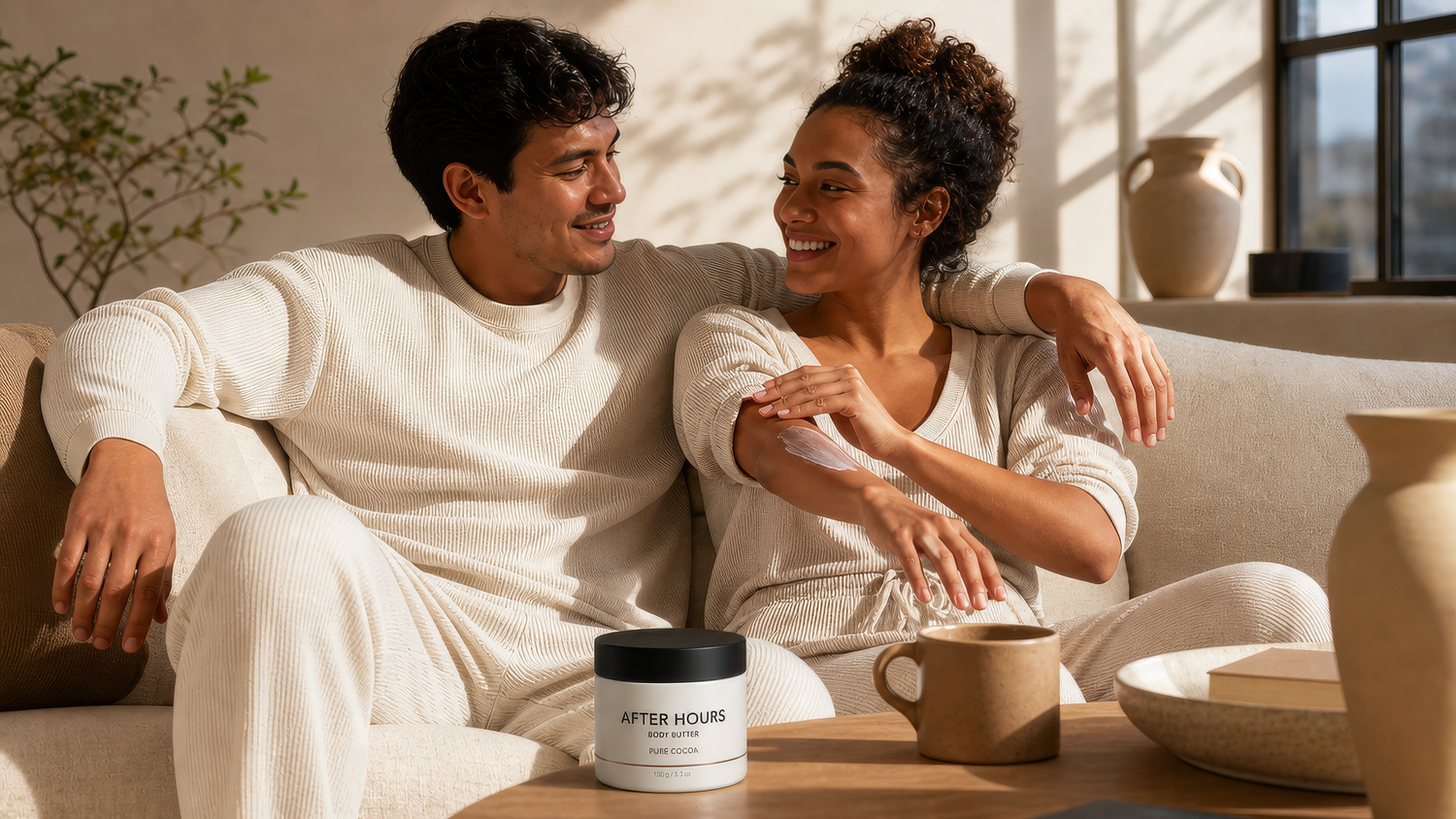

The fastest fix for dry elbows is a daily moisturiser combining a humectant and an emollient, paired with a richer occlusive ointment or body butter at night. Most mild dryness softens within a week of consistent use; deeper cracks or scaling may require a longer period of consistent care. After Hours Body Butter works well as both the daily and overnight step, given its fat-rich, chemical-free formulation.
TL;DR:
- Using a layered approach with humectants, emollients, and occlusives consistently produces better long-term results than relying on creams with water and fragrance first.
- Exfoliating gently two to three times weekly and applying moisturizer immediately afterward maximizes water absorption and skin repair.
- Nighttime application of thick body butter or ointments significantly enhances healing by trapping moisture and reducing water loss during sleep.
- Individuals with severely cracked or bleeding elbows should consider medicated urea creams a few nights weekly alongside regular moisturizing routines.
- DIY remedies like oil-based scrubs or petrolatum are safe for mild dryness but should be avoided if skin shows signs of infection or cracking.
Table of Contents
- Why do elbows get so dry?
- What ingredients actually soften rough elbow skin?
- How do you build a daily routine for dry elbows?
- Getting the technique right (and where people go wrong)
- Are DIY remedies for dry elbows actually safe?
- Who’s behind this advice, and where can you learn more?
- What actually moves the needle on dry elbows
- Get a ready-made dry elbows moisturizer that does the layering for you
- Sources
Why do elbows get so dry?
Elbows have far fewer oil-producing glands than most of the body, so they cannot replenish their own lipid barrier the way your face or torso can. That anatomical gap is only half the story. Every time you lean on a desk, rest your arm on a car door, or fold your arms while sitting, you create friction against skin that already has minimal natural protection. Over months, that repeated rubbing thickens the outer layer into the rough, greyish patches most people recognise as dry elbows.
Environmental and daily habits pile onto that vulnerability:
- Low humidity, especially in winter or air-conditioned rooms, pulls moisture straight out of the skin’s surface.
- Hot showers strip natural oils faster than warm or cool water.
- Harsh, heavily fragranced soaps disrupt the skin’s barrier further.
- Rough clothing seams and scratchy fabrics add mechanical wear.
- Over-washing, particularly with antibacterial or foaming cleansers, compounds all of the above.
Medical News Today’s analysis of dry elbow causes confirms that this combination of thin oil coverage and external stress explains why elbows dry out faster than almost any other area, and why they respond well to consistent topical care rather than a one-off fix.
Not every rough patch is simple dryness, though. If the skin cracks and bleeds, itches intensely, develops raised scaly plaques, or doesn’t improve after a few weeks of proper moisturising, it’s worth seeing a GP or dermatologist. Those signs can point to eczema, psoriasis, a thyroid issue, or a nutrient deficiency, none of which resolve with body butter alone.
What ingredients actually soften rough elbow skin?
An effective dry elbows moisturizer needs three ingredient categories working together, not just one. Skipping any of them is why so many lotions “feel nice” for ten minutes and do nothing by evening.
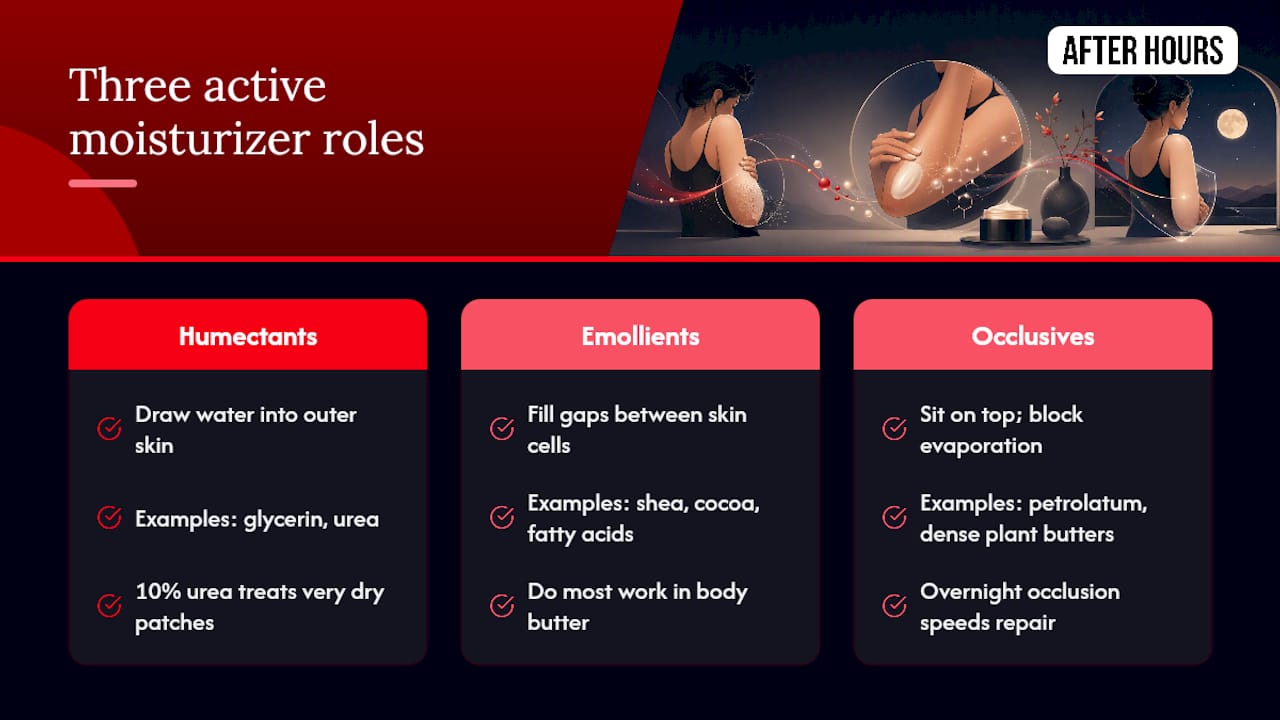
Humectants draw water into the skin’s outer layer. Glycerin and urea are the two most common, and urea does double duty: at lower strengths it hydrates, while at higher concentrations it also helps break down thickened, scaly tissue. That’s why 10% urea creams are formulated specifically for very dry, rough patches on elbows, knees, and heels rather than for everyday facial use.
Emollients fill in the gaps between skin cells and smooth the surface. Shea butter, cocoa butter, and plant-derived fatty acids fall into this group, and they’re the ingredients doing most of the work in a good body butter.
Occlusives sit on top and physically block water from evaporating. Petrolatum is the classic example, but plant butters used in thick concentrations behave similarly. Healthline’s guidance on treating dry elbows notes that layering humectants with emollients and occlusives, rather than relying on one alone, produces the most reliable results, and that occlusion overnight speeds repair on stubborn patches.
A quick way to judge a product: if the ingredient label leads with water and fragrance and lists actual butters or oils near the bottom, it’s mostly filler.
Pro Tip: Check for “fragrance” or “parfum” on the ingredient list if your elbows are sensitive or prone to irritation. Fragrance-free formulas, and ones that avoid added essential oils, cause far fewer flare-ups on already-compromised skin.
Roughly a third of a well-formulated body butter’s ingredient weight typically comes from these active humectant, emollient, and occlusive components rather than water or filler, which is a reasonable benchmark to keep in mind when comparing labels.
How do you build a daily routine for dry elbows?
Follow these steps in order, and stick with them daily rather than only when elbows feel unbearably rough.
- Exfoliate gently, two to three times a week. Use a soft washcloth or a mild sugar scrub in the shower. Skip anything abrasive like a pumice stone on cracked or broken skin.
- Apply moisturiser to slightly damp skin, right after washing. Damp skin absorbs humectants more effectively because there’s already water present for glycerin or urea to draw in and lock down. Use a generous, visible layer rather than a thin smear.
- Layer thicker products at night. After your usual moisturiser has absorbed, apply a richer body butter or ointment directly over the elbows before bed. This is the overnight occlusion step, sometimes called slugging, and it works because your skin isn’t fighting friction or airflow while you sleep.
- Protect the area during the day. Long sleeves in cold or windy weather reduce moisture loss, and avoiding prolonged desk-leaning gives skin a break from repeated pressure.
- Reapply after washing hands or forearms if elbows get incidentally wet, since even brief water contact without a follow-up moisturiser undoes some of the day’s progress.
For very thick or cracked patches, Vaseline’s dermatology-aligned tips on dry elbow skin suggest using an occlusive ointment two to three nights a week minimum, since it meaningfully cuts overnight water loss and improves softness within days.
Expect visible softening within a week if you’re consistent with mild dryness. Deep, scaly, or cracked elbows usually need three to four weeks, and may respond faster to a medicated urea cream layered in a couple of nights a week alongside your regular body butter.
Getting the technique right (and where people go wrong)
Even a good product underperforms if the application habits around it are sloppy. A few adjustments make a noticeable difference:
- Use about a coin-sized amount per elbow for daily moisturising, and don’t be shy with the nighttime layer since occlusives are meant to sit thick.
- Wear an old long-sleeved top to bed after slugging, or loosely wrap the elbow, to stop rich ointments transferring onto sheets.
- Choose cotton over synthetic fabrics for sleeves and bedding; rough or static-prone materials add friction that undoes moisturising work.
- Keep showers warm rather than hot, and pat skin dry instead of rubbing with a towel.
- Avoid fragranced laundry detergents if elbows react to friction combined with residue.
Small consistency wins matter more than product intensity. Applying an average moisturiser every single night outperforms an expensive one used sporadically. Our guide on how to apply body butter covers technique in more depth if you want to refine the layering step further.
Are DIY remedies for dry elbows actually safe?
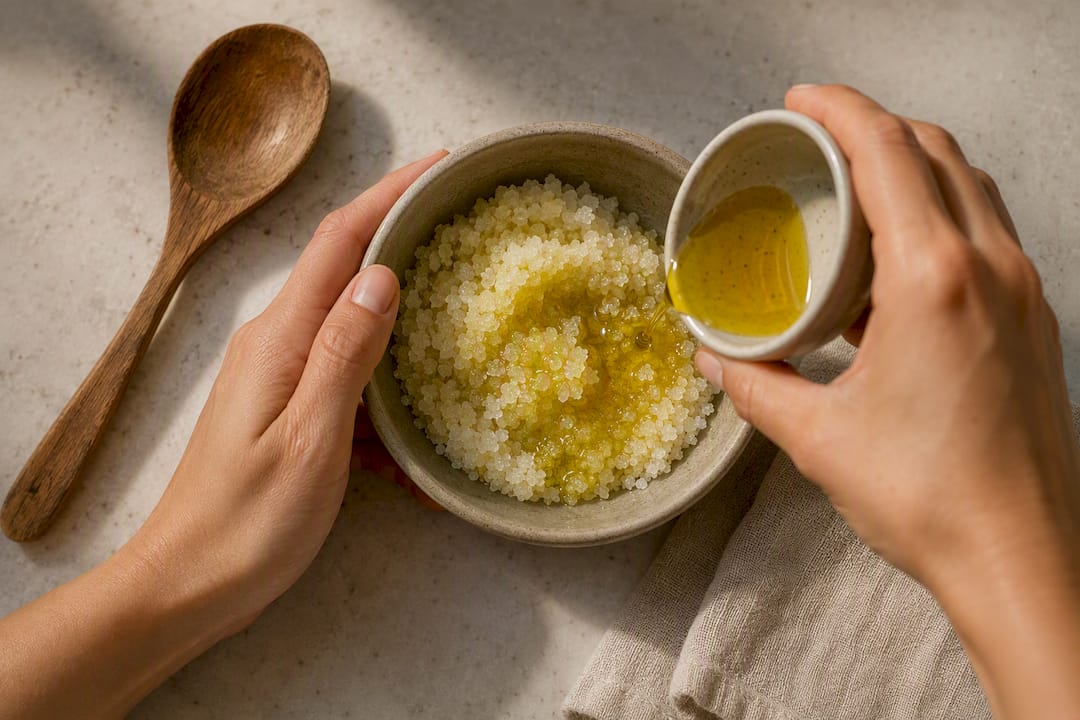
Simple, low-risk home options can genuinely help between proper moisturising sessions. A sugar or salt scrub mixed with olive or coconut oil removes flaking skin gently, and both oils double as light emollients afterwards. Petrolatum jelly, applied thickly overnight, works as a budget-friendly occlusive when you don’t have a body butter to hand. Healthline’s rundown of dry elbow remedies lists these among the safer, evidence-aligned DIY options for everyday dryness.
There are limits, though. Stop any scrub or exfoliation immediately if skin is cracked, bleeding, or shows signs of infection, such as redness spreading beyond the patch or warmth to the touch. Steer clear of undiluted essential oils and strong household acids like lemon juice or vinegar; both are common online “hacks” that irritate already-compromised skin rather than heal it.
Who’s behind this advice, and where can you learn more?
This routine was put together by Darnell, drawing on established dermatology guidance and practical, ingredient-level skincare knowledge rather than trend-driven shortcuts. Afterhoursbodybutter’s approach is built around vegan, chemical-free formulations designed for sensitive and reactive skin, and customer feedback consistently points to improved texture and better moisture retention when the butters are used as part of a routine like the one above.
A few things worth knowing before you commit to any product:
- No claim here is presented as a clinical guarantee; individual skin responds differently, and persistent problems still warrant a GP visit.
- If you’re also managing breakout-prone skin elsewhere on the body, our body moisturiser checklist for acne-prone skin is worth reading alongside this one.
- For the underlying science of why certain formulas outperform others, see what makes moisturiser effective.
- If you’d rather have a professional handle exfoliation and treatment directly, VÉLOURA’s at-home skincare services offer an in-person alternative to the DIY approach.
What actually moves the needle on dry elbows
Most advice on this topic overcomplicates a simple problem. The internet is full of elaborate seven-step “elbow care systems,” when the research genuinely points to two things mattering most: enough occlusion to stop water escaping overnight, and enough consistency to let the skin barrier actually rebuild between applications.
Where conventional advice falls short is treating moisturising as a single daily action rather than a layered one. A thin lotion applied once in the morning is fighting a losing battle against gravity, friction, and evaporation by evening. The humectant-emollient-occlusive layering approach, with a genuinely rich product reserved for nights, does more in a week than most people achieve in a month of half-hearted lotion use.
If you prioritise one thing from this entire routine, make it the overnight step. Daytime moisturising maintains; nighttime occlusion repairs. Skipping the richer product because it feels “too much” for daytime wear is the single most common reason elbow routines stall.
— Darnell
Get a ready-made dry elbows moisturizer that does the layering for you
Afterhoursbodybutter’s formulations are built specifically to do the emollient and occlusive work in one product, so you’re not juggling three separate bottles to get the layering right. The body butter is rich enough to use as your nightly occlusive step straight from the jar, and light enough with a smaller amount to double as your daytime moisturiser once elbows have calmed down.
Within the routine above, apply a generous scoop after your evening shower, while skin is still slightly damp, and let it sit under a loose sleeve overnight for the slugging effect. During the day, a smaller amount after washing keeps humectants and emollients topped up. If your elbows are severely cracked, a medicated urea cream a couple of nights a week alongside the body butter can bridge the gap while the vegan, chemical-free formula handles daily maintenance. Ready to try it on your own skin? Shop After Hours Body Butter and start the nightly occlusion step tonight.
Sources
For more clinical detail on causes and symptoms to watch for, read Medical News Today’s dry elbows overview. For remedy comparisons and DIY options, see Healthline’s dry elbows guide. To strengthen results long-term, our moisture barrier guide explains the repair process in more depth.
This article is general information, not a substitute for advice from a qualified doctor. Consult a qualified healthcare professional about your own circumstances before acting on anything here.
- Dry elbows: Pictures of symptoms, causes, treatment, and outlook
- Dry elbows: Remedies, Causes, and More
- Flexitol 10% Urea Cream for dry & rough skin - 150g