


Stop using the oil and wash the area with mild soap and cool water. That is the single most important step, whether you are dealing with a straightforward irritant reaction or the early signs of an allergy. According to the Tisserand Institute, mild irritant reactions typically settle once the oil is removed, but severe, spreading or persistent reactions need medical assessment.
The key distinction to know straight away:
- Irritant contact dermatitis appears quickly, often within minutes to an hour of contact, stays confined to the area touched, and usually clears within a day or two once exposure stops.
- Allergic contact dermatitis is delayed. Symptoms appear 24–72 hours after contact, can spread beyond the original site, and may persist for days or weeks.
Immediate steps:
- Stop using the product now.
- Remove any clothing that has the oil on it.
- Wash the affected area with mild soap and cool water for several minutes.
- Apply a cool, damp compress to ease redness and itching.
- Do not re-apply the oil or any other scented product to the area.
What to expect over time: Redness and stinging from an irritant reaction often ease within hours. An allergic rash may peak at 48–72 hours before it starts to settle. Phototoxic burns from citrus oils can take weeks to fade and may leave lasting pigmentation.
Key takeaways
Most essential-oil reactions are either irritant or allergic contact dermatitis, and stopping exposure immediately is the single most effective first step regardless of which type you have.
| Point | Details |
|---|---|
| Stop and wash first | Remove the oil, wash with mild soap and cool water; most irritant reactions settle within 24–48 hours. |
| Know irritant vs allergic | Irritant reactions appear within the hour; allergic reactions are delayed 24–72 hours and last longer. |
| Common culprits | Tea tree, lavender, ylang-ylang, peppermint, and citrus oils are the most frequently reported causes. |
| Dilute and store correctly | Use 1–2% dilution for general adult use; store in dark glass and discard old or oxidised oils. |
| Afterhoursbodybutter option | Fragrance-free, vegan body butters formulated for sensitive skin, made without essential oils or synthetic fragrance. |
Table of Contents
- Why do essential oils irritate skin and airways?
- What type of reaction are you having?
- Which essential oils most often cause reactions?
- What does a reaction look like, and how long does it last?
- How do clinicians diagnose essential-oil reactions?
- First aid and when to contact NHS 111, your GP, or 999
- How to reduce your risk: dilution, storage, and safe use
- What to do if you have eczema, rosacea, or repeat reactions
- “Natural” does not mean harmless
- Fragrance-free body care for sensitive skin
- Sources
Why do essential oils irritate skin and airways?
Essential oils are volatile, highly concentrated plant extracts. A single drop of peppermint oil, for example, contains the chemical equivalent of dozens of peppermint leaves. That concentration is exactly what makes them effective for fragrance and some therapeutic uses, and exactly what makes them capable of damaging skin.
Research published in PMC confirms that essential-oil exposure can cause irritant contact dermatitis, allergic contact dermatitis, phototoxic reactions, and respiratory or ocular irritation. The mechanism differs by reaction type. Irritant reactions occur when concentrated chemical constituents directly damage the skin barrier. Allergic reactions happen when constituents, or their breakdown products, act as haptens: small molecules that bind to skin proteins and trigger an immune response.
Key constituents that commonly cause problems include:
- Linalool (found in lavender, coriander, and many blends)
- Limonene (citrus oils, tea tree)
- Geraniol (rose, palmarosa, geranium)
- Eugenol (clove, cinnamon, ylang-ylang)
- Citral (lemongrass, melissa, citrus oils)
The British Association of Dermatologists and the NHS both recognise fragrance allergens, including those found in essential oils, as a leading cause of contact dermatitis in the UK.
Pro Tip: Oxidation is a hidden risk. When essential oils are exposed to air, heat or light, their constituents break down into peroxides and hydroperoxides that are significantly more allergenic than the fresh oil. An old, poorly stored bottle of tea tree or lavender can cause a reaction that a fresh bottle of the same oil would not. Always check the age and condition of your oils before use.
What type of reaction are you having?
Knowing which reaction type you are dealing with shapes both the treatment and the urgency.
Irritant contact dermatitis
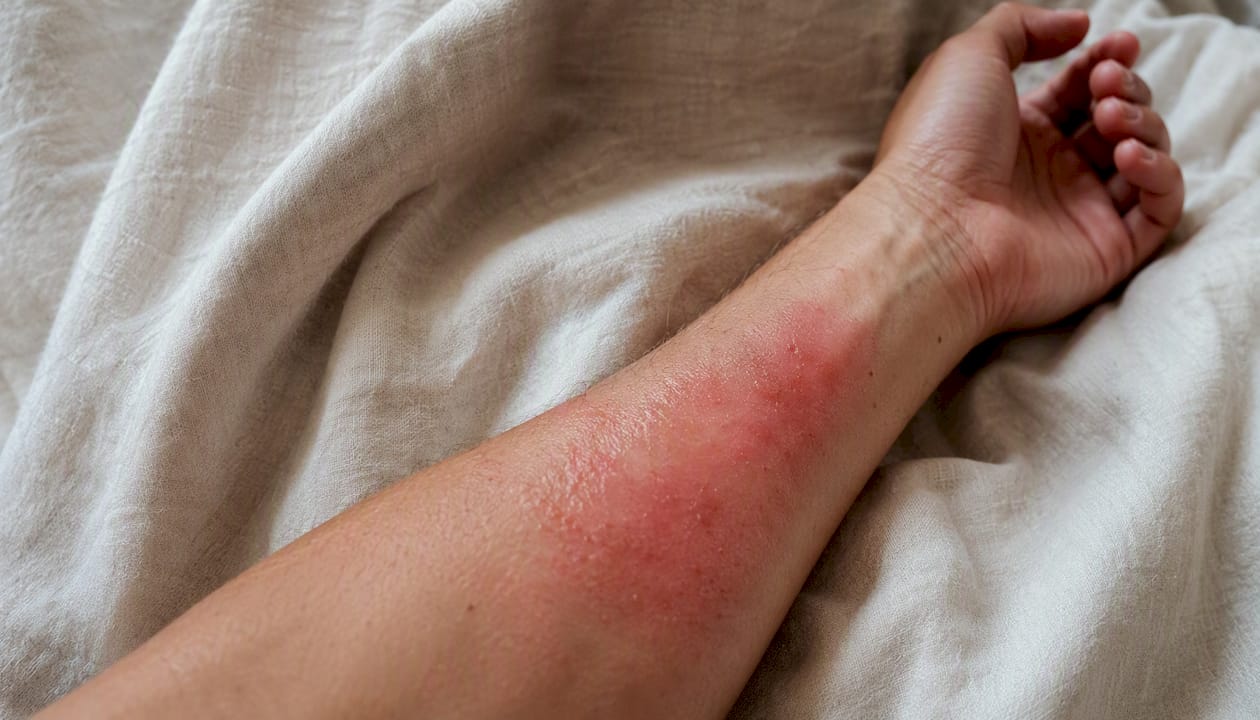
This is the most common response to undiluted or high-concentration essential oil use. Onset is rapid, typically within minutes to an hour. The skin at the contact site becomes red, stinging, and sometimes blistered. It does not spread. Remove the oil, wash the area, and symptoms usually settle within 24–48 hours.
Allergic contact dermatitis
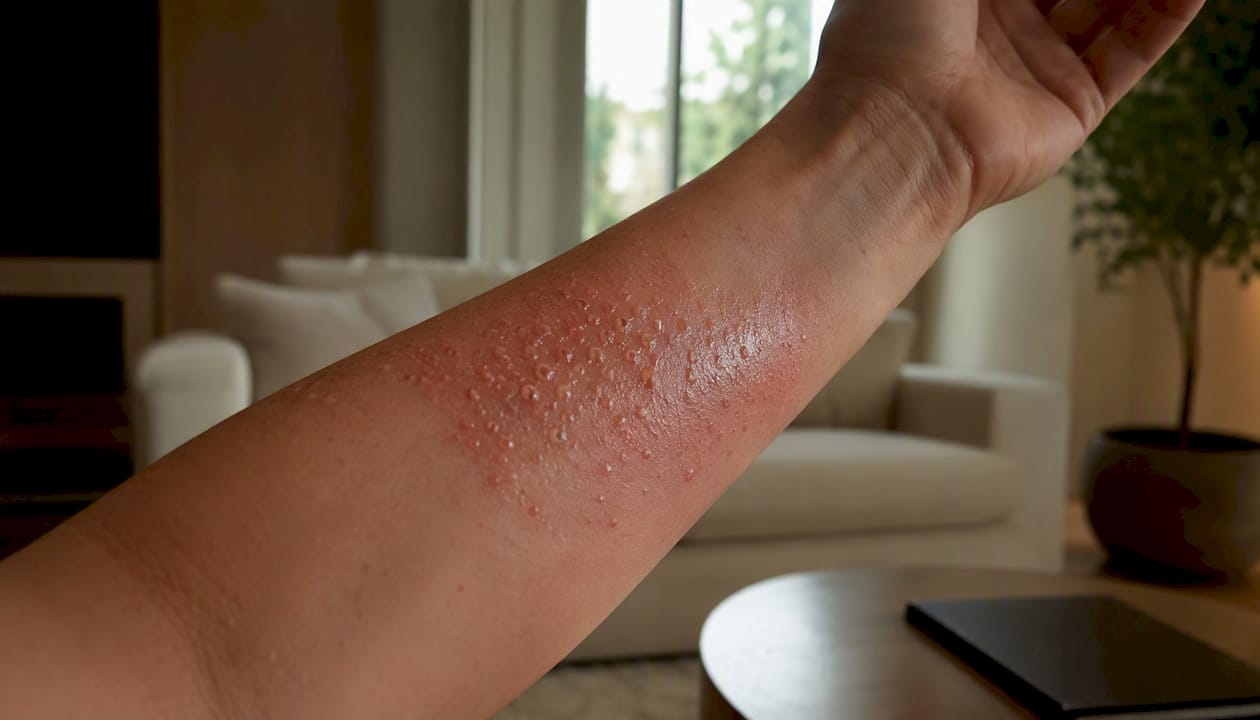
This is a type IV delayed hypersensitivity reaction driven by the immune system. Symptoms appear 24–72 hours after exposure, not immediately. The rash can spread beyond the original contact area, may involve papules, vesicles, and intense itching, and can persist for days to weeks. Once you are sensitised, even tiny amounts of the same allergen, or a related one, can trigger a reaction. Patch testing by a dermatologist is the only reliable way to confirm the diagnosis.
Phototoxic reactions
Certain citrus oils, particularly bergamot, lemon, and lime, contain furocoumarins. When skin treated with these oils is exposed to UV light, a chemical reaction causes blistering, redness, and, later, persistent dark hyperpigmentation. The PMC review identifies phytophotodermatitis from bergamot as a well-documented and avoidable harm. Avoid sun exposure for at least 12 hours after applying any citrus oil to skin.
Contact urticaria and systemic reactions
Immediate hives (urticaria) at the contact site, or spreading across the body, suggest an IgE-mediated reaction. This is rare but can escalate to anaphylaxis. Treat as a medical emergency if systemic symptoms develop.
| Reaction type | Onset | Appearance | Duration |
|---|---|---|---|
| Irritant contact dermatitis | Minutes to 1 hour | Redness, stinging, confined to contact site | Hours to 2 days |
| Allergic contact dermatitis | 24–72 hours | Papules, vesicles, spreading rash, intense itch | Days to weeks |
| Phototoxic reaction | Hours after UV exposure | Blistering, then hyperpigmentation | Weeks to months |
| Contact urticaria | Minutes | Hives, swelling | Hours; escalate if systemic |
Which essential oils most often cause reactions?
Most essential oils carry some risk, but certain ones appear repeatedly in clinical reports of contact allergy. DermNet NZ lists the most frequently implicated oils as tea tree (Melaleuca alternifolia), ylang-ylang, lemongrass, sandalwood, clove, and jasmine. Lavender, peppermint, and bergamot also feature regularly in UK dermatology referrals.
Commonly implicated oils:
- Tea tree oil (Melaleuca alternifolia): one of the most reported causes of allergic contact dermatitis in the UK; oxidised tea tree is particularly problematic.
- Lavender: widely used and widely misunderstood as gentle; linalool content and oxidation make it a frequent sensitiser.
- Peppermint: menthol can cause both irritant and allergic reactions, and is especially harsh near mucous membranes.
- Ylang-ylang: high eugenol and geraniol content; a recognised cause of fragrance allergy.
- Bergamot and other citrus oils: phototoxic risk from furocoumarins, plus limonene as an allergen.
- Clove and cinnamon bark: among the highest-irritancy oils due to eugenol and cinnamaldehyde content; should never be applied undiluted.
- Lemongrass: high citral content makes it a potent sensitiser.
Reactions are often to specific chemical constituents rather than the whole oil. Linalool, limonene, geraniol, eugenol, and citral are listed as 26 fragrance allergens that EU and UK cosmetic regulations require to be declared on product labels above certain concentrations. Check ingredient lists for these names, not just the oil name itself.
Blends, absolutes, and fragrance mixes complicate matters further. A product labelled “natural fragrance” may contain dozens of individual constituents, making it very difficult to identify which one triggered a reaction without formal patch testing.
What does a reaction look like, and how long does it last?
Skin findings to look for:
- Redness and warmth at the contact site
- Itching, burning, or stinging
- Dry, flaking, or scaling skin in the days after
- Small raised bumps (papules) or fluid-filled blisters (vesicles)
- Hives: raised, pale welts that appear and shift location
- Blistering followed by dark patches (phototoxicity)
Clinical evidence shows that adverse reactions, including itching and worsened eczema, are documented even in controlled trial settings, not just from home misuse.
Expected timelines:
- Irritant reaction: redness and stinging ease within hours; skin may feel dry for a day or two.
- Allergic contact dermatitis: symptoms peak at 48–72 hours, then gradually settle over 1–3 weeks with appropriate care.
- Phototoxic reaction: acute phase resolves in 1–2 weeks; hyperpigmentation can persist for months.
- Contact urticaria: hives usually resolve within hours, but any systemic involvement changes the picture entirely.
Seek medical review if the rash is spreading, the skin looks infected (warm, weeping, crusted), or symptoms are not improving after a week of self-care. Lymphangitic streaking (red lines tracking from the rash) is a sign of infection and needs same-day assessment.
How do clinicians diagnose essential-oil reactions?
A GP or dermatologist will start with a detailed history. Bring the following to your appointment:
- The product bottle or a photo of the full ingredient list.
- The dates when you first used the product and when symptoms appeared.
- Photos of the rash at its worst.
- A note of any other scented products you use: candles, diffusers, massage oils, cosmetics.
- Details of any previous skin reactions or known allergies.
The role of patch testing
Patch testing is the gold-standard method for confirming allergic contact dermatitis. A dermatologist applies small amounts of potential allergens to the skin under occlusive patches, usually on the upper back, and reads the results at 48 hours and again at 96 hours. For essential oils, clinicians often test both a standard fragrance series and the patient’s own product, because oxidation and formulation differences mean commercial test extracts can miss an allergen.
When will a GP refer to dermatology?
- The rash is not resolving with standard self-care after 2–4 weeks.
- You have had multiple reactions to different products.
- There is a suspected occupational exposure (aromatherapy, beauty therapy).
- The diagnosis is unclear and patch testing is needed to guide avoidance.
First aid and when to contact NHS 111, your GP, or 999
Step-by-step self-care:
- Stop using the product immediately and do not re-apply it.
- Remove clothing or jewellery that has the oil on it.
- Wash the area thoroughly with mild, unperfumed soap and cool water.
- Apply a cool, damp compress for 10–15 minutes to reduce heat and itching.
- Use a fragrance-free emollient to support the skin barrier as the reaction settles.
- For mild dermatitis, hydrocortisone 1% cream (available over the counter at UK pharmacies) can reduce inflammation; use for no more than 7 days on the face or 2 weeks on the body, and check with a pharmacist if you are pregnant, breastfeeding, or treating a child.
- For hives, a non-drowsy antihistamine such as cetirizine or loratadine can help; check age limits and interactions before use.
When to contact NHS 111 or your GP:
- The rash is widespread or spreading beyond the original contact area.
- Symptoms have not improved after 7 days of self-care.
- The skin looks infected: increasing redness, warmth, swelling, or discharge.
- You are unsure whether you need prescription treatment.
Call 999 immediately if:
- You have difficulty breathing or swallowing.
- Your face, lips, or tongue are swelling.
- You feel faint or lose consciousness.
- You develop widespread hives rapidly across the body.
These are signs of anaphylaxis. Do not wait to see if it improves.
How to reduce your risk: dilution, storage, and safe use
Preventing essential oils irritation is largely about dose and discipline. The Tisserand Institute is clear that undiluted (“neat”) application and repeated low-dose exposures are two of the most common pathways to sensitisation.
Practical prevention checklist:
- Never apply essential oils undiluted directly to skin.
- For general adult use, a dilution of 1–2% in a carrier oil is a widely used starting point (roughly 6–12 drops per 30 ml of carrier oil); use lower dilutions for long-term daily use or high-risk oils such as cinnamon and clove.
- Never add undiluted essential oils to a bath; they do not disperse in water and can cause concentrated skin or mucous membrane contact.
- Avoid phototoxic citrus oils on skin that will be exposed to sunlight within 12 hours.
- Keep oils away from the eyes, nostrils, and mucous membranes.
Storage and oxidation:
Poor storage is one of the most underappreciated risk factors. MDedge dermatology guidance confirms that oils stored poorly form peroxides that are more allergenic than the fresh oil. Store oils in dark glass bottles, in a cool location, with the lid tightly closed. Date each bottle when you open it and discard any oil that smells rancid, has changed colour, or is more than 1–2 years old.
Pro Tip: Patch test at home before using any new oil. Apply a small amount of the diluted oil to the inner forearm, cover loosely, and check twice daily for 7–10 days. A reaction at day 2–4 suggests allergy rather than irritation.
Special cautions:
- Pregnancy: several oils, including clary sage, rosemary, and clove, are generally avoided during pregnancy; seek advice from a midwife or GP before use.
- Children: children’s skin is more permeable and sensitive; use much lower dilutions and avoid oils such as peppermint and eucalyptus near the face of young children.
- Eczema and broken skin: avoid applying essential oils to compromised skin; the disrupted barrier increases absorption and sensitisation risk.
For a practical daily routine that accounts for sensitive skin, the body care routine for sensitive skin guide from Afterhoursbodybutter covers product selection and application steps.
What to do if you have eczema, rosacea, or repeat reactions
If your skin is already compromised, the calculus changes. The Pierre Fabre Eczema Foundation advises that people with atopic dermatitis are at higher risk of adverse reactions and are generally better off avoiding essential oils entirely, because they can aggravate barrier dysfunction and promote sensitisation.
A practical plan for reactive skin:
- Stop all essential-oil-containing products during a flare and for at least 4 weeks after.
- Switch to fragrance-free emollients as your primary moisturiser; these support the skin barrier without introducing potential allergens.
- Introduce one new product at a time, with at least 2 weeks between introductions, so you can identify any trigger.
- Keep a simple symptom diary: date, product used, and any skin changes. This is invaluable if you are referred for patch testing.
- Avoid products labelled “unscented” if they contain masking fragrances; look for “fragrance-free” as the more reliable label when shopping. The distinction between fragrance-free vs unscented matters: unscented products may still contain fragrance chemicals to neutralise odour.
Pro Tip: If you want to trial re-introduction of a specific oil after a period of avoidance, do this under dermatologist supervision, not at home. Sensitisation can mean a more severe reaction on re-exposure, even to a diluted product.
When selecting products, look for minimal ingredient lists, transparent sourcing, and formulations specifically designed for sensitive or reactive skin. The body moisturiser checklist for acne-prone skin from Afterhoursbodybutter offers a useful framework for evaluating low-irritant options.
“Natural” does not mean harmless
The assumption that plant-derived equals safe is one of the most persistent misconceptions in skincare. Essential oils are complex chemical mixtures. A single oil can contain hundreds of individual compounds, and the concentration at which they are used in aromatherapy or home blending is far higher than in most regulated cosmetic products.
The evidence is consistent on this point. Small behaviours, using an oil neat, skipping the patch test, keeping a bottle for three years, diffusing in an unventilated room, drive a disproportionate share of the reactions that end up in dermatology clinics. The risk is not theoretical; it is dose-dependent and largely preventable.
Caution is not a reason to avoid essential oils entirely if you use them safely. It is a reason to treat them with the same respect you would give any concentrated active ingredient, because that is precisely what they are.
Fragrance-free body care for sensitive skin
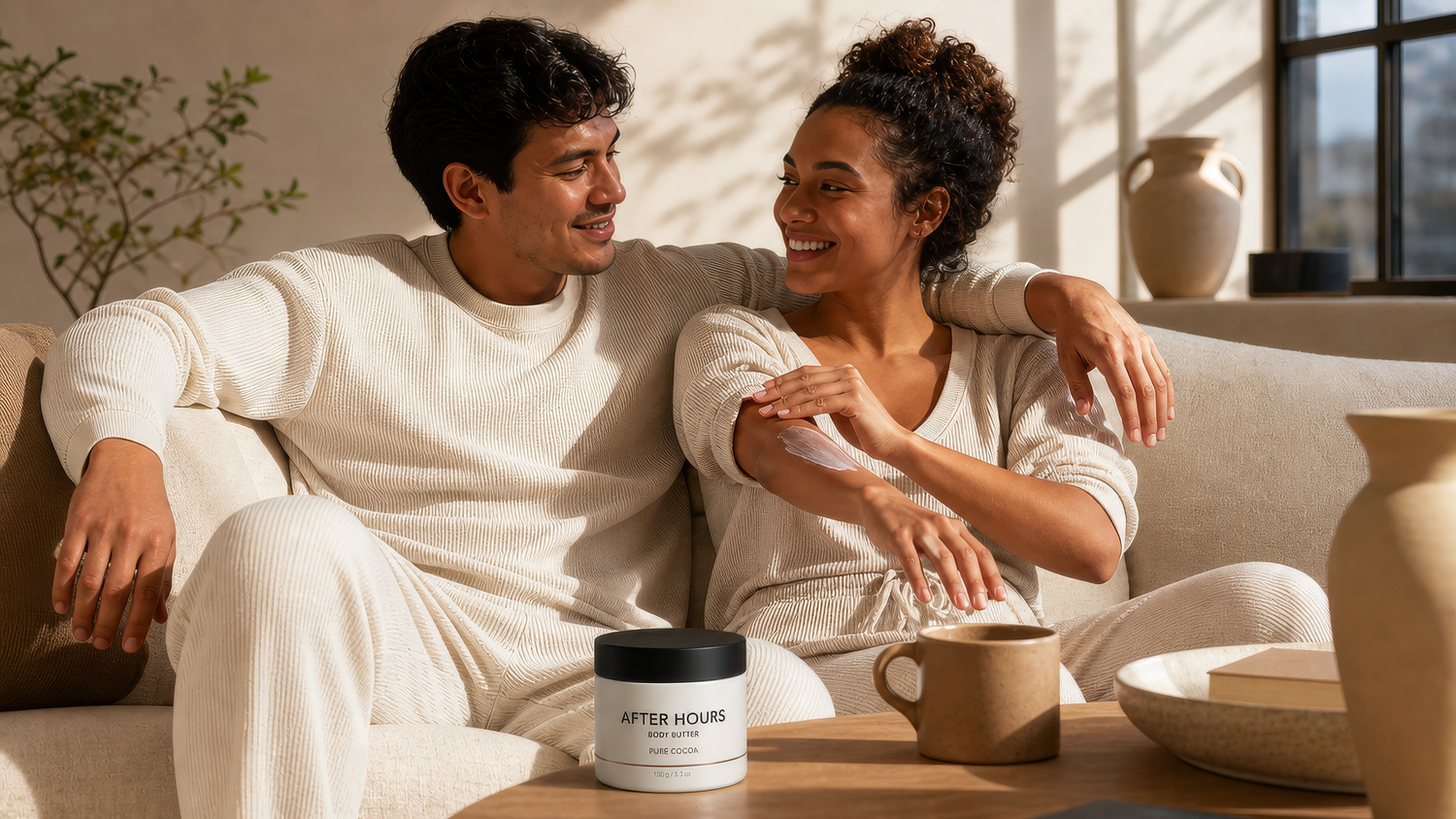
If you are managing a reaction or looking to reduce your overall fragrance exposure, switching to a fragrance-free, emollient-first body care routine is a practical first step. Products formulated without essential oils or synthetic fragrance remove one of the most common triggers for contact dermatitis and are suitable for daily use on sensitive or reactive skin.

Afterhoursbodybutter’s vegan body butters are made without added fragrance and are formulated with fat-soluble vitamins and natural, chemical-free ingredients to support the skin barrier. They are manufactured and packaged sustainably in the UK, and are designed specifically for people with sensitive skin or specific skin concerns. This is general product information, not medical advice; if you have active eczema or a confirmed contact allergy, consult your GP or dermatologist before introducing any new product.
Visit Afterhoursbodybutter to see the full range and find a fragrance-free option suited to your skin.
Sources
Trustworthy resources for further reading:
- Irritation and allergic reactions - Tisserand Institute
- Art of Prevention: Essential Oils - Natural Products Not … - PMC
- Allergic contact dermatitis to essential oils - DermNet NZ
- Eczema and essential oils | Eczema Foundation
- Essential Oils Debunked: Separating Fact From Myth | MDedge
For patch testing or persistent reactions, speak to your GP, who can refer you to an NHS dermatology service for formal patch testing if needed.
This article is general information, not a substitute for advice from a qualified doctor. Consult a qualified healthcare professional about your own circumstances before acting on anything here.