

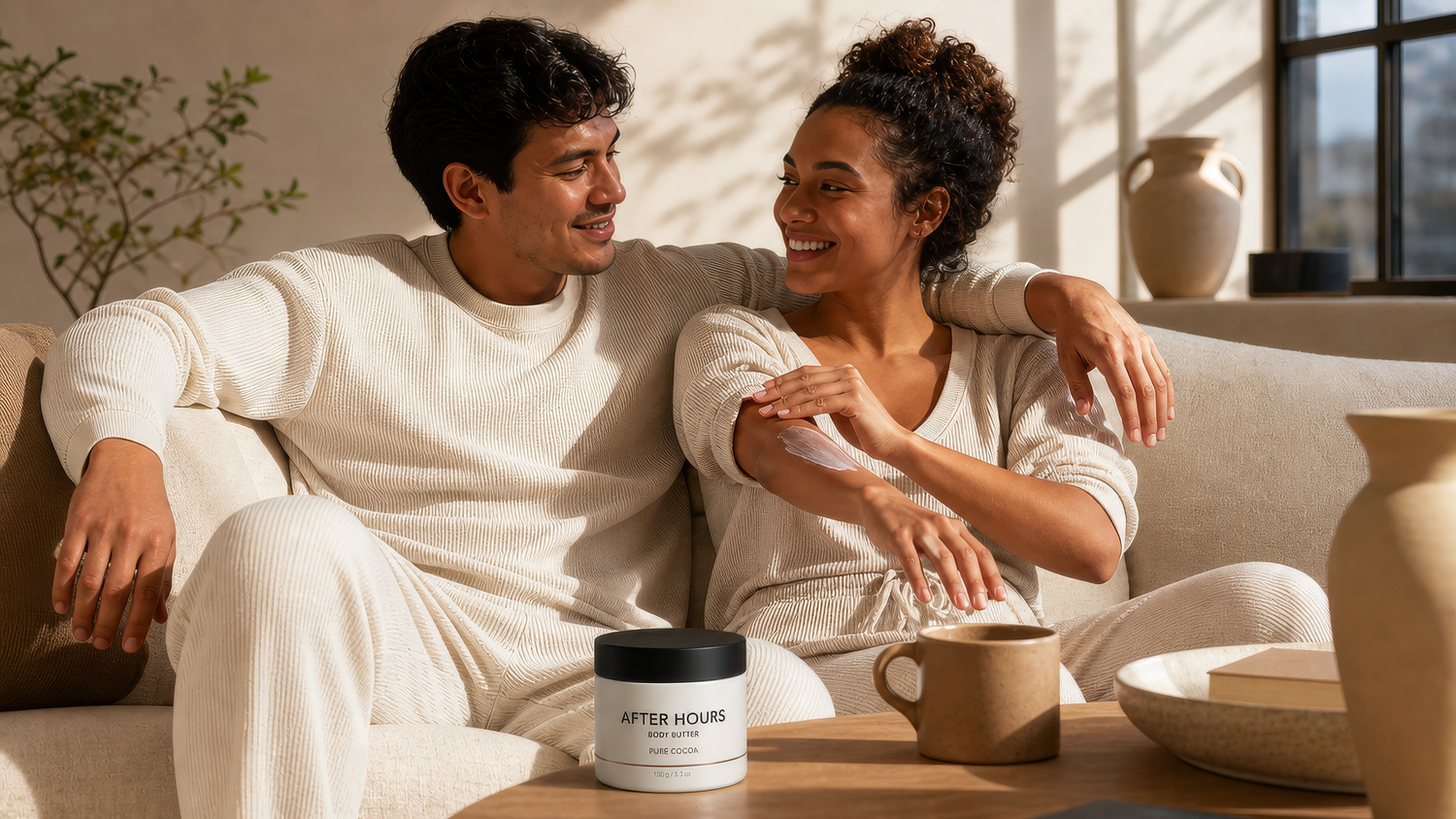

The best budget-friendly luxury ingredients for body butter
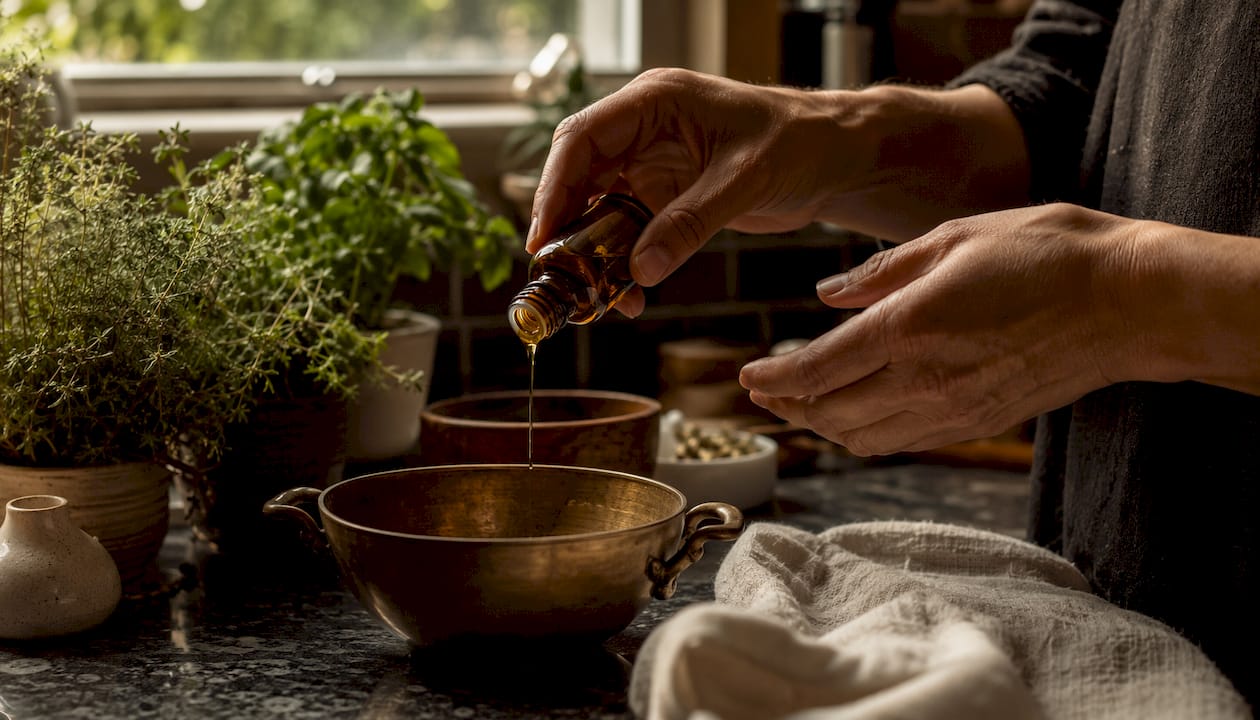
You do not need to spend a fortune to make a genuinely nourishing body butter. The ingredients that matter most, shea butter, cocoa butter, sweet almond oil, organic coconut oil, vitamin E, and arrowroot powder, are all widely available in the UK at prices that keep your total batch cost low. These are the same core components found in premium formulations. The difference is simply knowing what each one does and how to combine them well.
Here is what belongs in your formula:
- Shea butter — the primary base. Rich in triterpene esters and vitamin E, it buffers water loss and softens dry skin deeply. Unrefined shea has a faint nutty scent; refined is neutral.
- Cocoa butter — adds a waxy, protective layer that locks in softness for hours. Unrefined carries a natural chocolate scent. Use it at lower percentages to avoid a too-heavy finish.
- Sweet almond oil — a lightweight carrier oil that improves spreadability and absorbs without leaving residue. Good for most skin types, including sensitive skin.
- Organic coconut oil — adds glide and a subtle scent. Solidifies at room temperature, so it contributes to texture as well as moisture.
- Vitamin E (tocopherol) — included at around 1% of the formulation to protect oils from oxidation and extend shelf life.
- Arrowroot powder — added at roughly 3% of the formulation to absorb excess oil on the skin’s surface, giving a lighter, non-greasy finish.
These six ingredients cover every functional role a body butter needs: occlusion, emolliency, texture, antioxidant protection, and skin feel. Everything else is optional.
How each ingredient actually works on your skin
Understanding what each ingredient does helps you make better choices for your skin type. It also stops you spending money on additions that duplicate what you already have.
Shea butter is the workhorse of any body butter formula. Its fatty acid profile, dominated by stearic and oleic acids, creates an occlusive film on the skin that slows transepidermal water loss. The triterpene esters and cinnamic acid esters it contains contribute to its barrier-supportive properties, which is why it performs well on dry, flaky, or irritated skin. It sits high on the ingredient list in most well-formulated products for good reason.
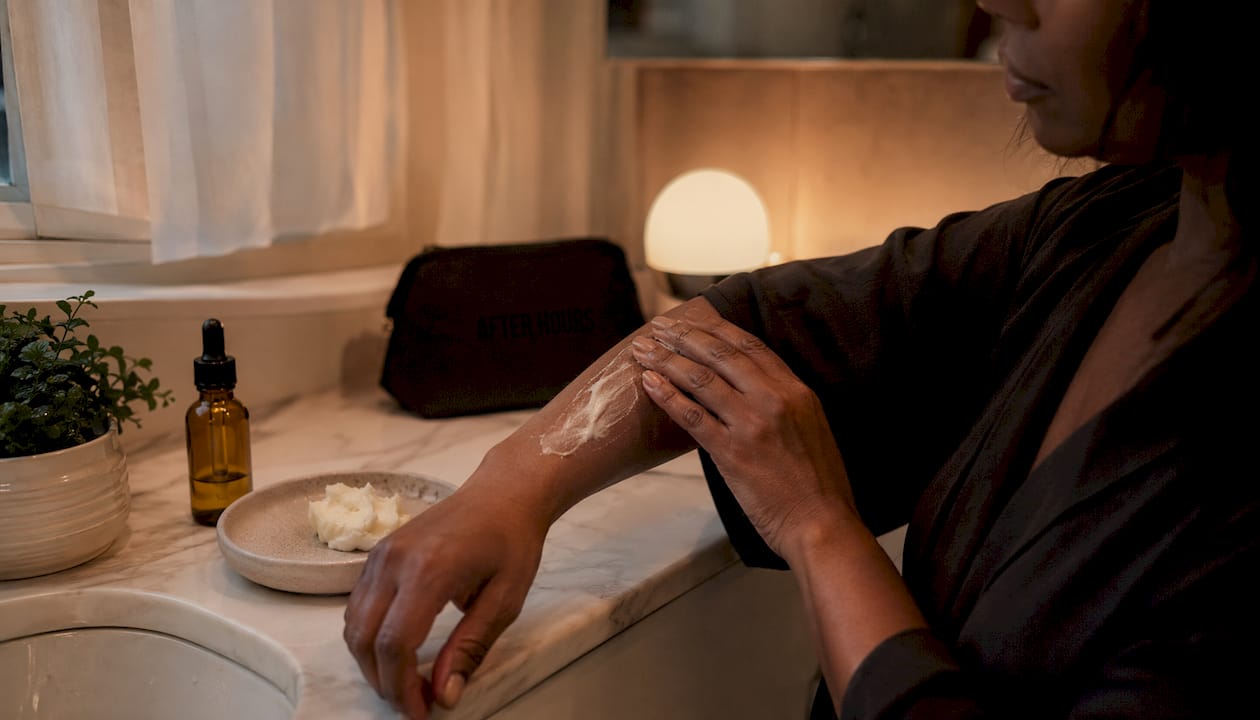
Cocoa butter behaves differently. Its higher melting point gives it a firmer, waxier texture that melts on contact with skin. It provides long-lasting softness and works particularly well on rough areas like elbows, knees, and heels. Used at moderate levels in a formula, it adds structure without making the product feel stiff.
Carrier oils do the lighter work. Sweet almond oil is rich in oleic and linoleic acids, which help soften skin and support the barrier without the heaviness of a pure butter. Coconut oil contributes lauric acid, which gives it a distinctive feel and contributes to the formula’s firmness at cooler temperatures. For a deeper look at how these oils interact with different skin types, the full guide to skin-nourishing butters covers the detail well.
| Ingredient | Primary function | Best for |
|---|---|---|
| Shea butter | Occlusive emollient, barrier support | Dry, sensitive, or irritated skin |
| Cocoa butter | Long-lasting softness, structure | Rough patches, elbows, heels |
| Sweet almond oil | Lightweight emolliency, spreadability | Most skin types |
| Coconut oil | Glide, texture, mild occlusion | Normal to dry skin |
| Vitamin E | Antioxidant, oxidation protection | All skin types |
| Arrowroot powder | Oil absorption, lighter skin feel | Oily or combination skin |
Arrowroot powder is the ingredient most home formulators skip, and it shows. Without it, a shea-heavy butter can feel greasy for the first few minutes after application. At 3%, it absorbs the surface oil quickly and leaves skin feeling smooth rather than coated. Vitamin E serves a dual purpose: it protects your skin from environmental damage and, critically, it slows rancidity in the oils and butters themselves.
DIY body butter recipes and ingredient proportions
Anhydrous formulations, meaning water-free, are the right starting point for home production. No water means no need for preservatives, which simplifies the process and reduces the risk of microbial growth. Every recipe here is water-free.
Basic starter recipe (all skin types)
- Weigh out 65g shea butter into a heatproof bowl.
- Add 20g cocoa butter.
- Melt both gently over a bain-marie or in short microwave bursts. Do not overheat.
- Remove from heat and add 10g sweet almond oil and 3g coconut oil.
- Add 1g vitamin E oil and 3g arrowroot powder. Stir well.
- Allow to cool until the mixture looks cloudy at the edges (roughly 25°C).
- Whip with a hand mixer for 3–5 minutes until light and fluffy.
- Transfer to a clean, dry jar. Store away from heat and direct sunlight.
This gives you a whipped body butter with a butter-to-oil ratio of approximately 3:1, which balances a thick texture with good spreadability.
Recipe variations by skin type
| Skin type | Butter base | Carrier oil | Notes |
|---|---|---|---|
| Very dry | 65% shea butter | 20% sweet almond oil | Reduce arrowroot to 1% |
| Normal | 65% shea butter, 20% cocoa butter | 25% sweet almond oil | Standard arrowroot at 3% |
| Oily or combination | 65% shea butter | 20% coconut oil, 20% sweet almond oil | Increase arrowroot to 5% |
| Sensitive | 65% shea butter | 25% sweet almond oil | Omit fragrance entirely |
Cost-effective substitutions: Mango butter is a lighter alternative to cocoa butter and costs a similar amount per 100g from most UK suppliers. It gives a less waxy finish, which suits people who find cocoa butter too heavy. Sunflower seed oil can replace sweet almond oil at a lower price point with a comparable fatty acid profile.
Pro Tip: Cool your melted butter mixture in the fridge for 15–20 minutes before whipping. A partially solidified base whips faster and holds more air, giving you a lighter texture without changing the recipe.
Where to source quality, affordable ingredients in the UK
The UK has a well-developed market for natural cosmetic ingredients, both online and on the high street. You do not need to import from specialist overseas suppliers to get good quality.
- Online UK specialists such as Gracefruit, Aromantic, and The Soap Kitchen stock unrefined shea butter, cocoa butter, and carrier oils in quantities from 100g upwards. These suppliers cater specifically to home formulators and label their products clearly with country of origin and processing method.
- Health food retailers including Holland & Barrett and independent health stores carry organic coconut oil and vitamin E capsules at accessible prices. Vitamin E capsules can be pierced and squeezed directly into your formula.
- Bulk buying reduces the per-gram cost considerably. Shea butter bought in 500g or 1kg quantities from an online supplier typically costs far less per gram than the same ingredient in a small retail tub.
- Organic and cruelty-free certification is widely available from UK suppliers. Look for the Soil Association organic symbol or Leaping Bunny certification on product listings. These align with the standards Afterhoursbodybutter applies to its own formulations.
- Arrowroot powder is available in the baking aisle of most supermarkets (Tesco, Sainsbury’s, Waitrose) as well as from cosmetic ingredient suppliers. The food-grade version works identically in body butter.
Pro Tip: Buy your shea butter unrefined if you can tolerate the scent. Unrefined shea retains more of its natural antioxidants and fatty acids. Refined shea is odourless but has been processed, which removes some of its beneficial compounds.
For a broader view of how to build a quality routine without overspending, the affordable luxury body care guide from Afterhoursbodybutter covers the full picture.
Expert insights on choosing the right ingredients
The gap between a mass-market body butter and a genuinely premium one often comes down to one or two specific ingredients rather than the entire formula. Specialty butters like cupuaçu are a good example. Cupuaçu can absorb up to 240% of its weight in moisture, which gives it a velvety slip that shea butter alone cannot replicate. It appears almost exclusively in higher-priced products because it is expensive to source, but a small percentage added to a shea-based formula makes a noticeable difference to skin feel.
For most home formulators, the practical approach is to use shea and cocoa butter as the base and allocate a small portion of the formula, perhaps 5–10%, to a single premium ingredient. Cupuaçu butter, pistachio oil, or argan oil each bring something distinct without requiring you to reformulate entirely. Pistachio oil, for instance, is rich in oleic acid and natural vitamin E, providing both conditioning and antioxidant function. It rarely appears in budget products due to cost, but a small addition to a home formula is affordable when you are buying at ingredient level rather than paying for a finished product.
The real measure of a luxury body butter is ingredient density, not price. An anhydrous formula built on high-quality butters and oils will outperform a water-heavy lotion at twice the price, because every gram of the product is doing moisturising work rather than diluting the actives. Focus on what is in the formula, not what is on the label.
Whipping technique also matters more than most guides acknowledge. Incorporating air into the butter base creates a lighter texture that spreads more easily and feels less heavy on the skin. The trade-off is that whipped body butter is more sensitive to temperature. Store it in a cool, dark place and keep it away from bathrooms where steam and heat fluctuate. A deflated or melted whipped butter can be re-whipped once it has cooled, but repeated melting degrades the texture over time.
For a broader perspective on how premium actives translate across different product categories, the luxury grooming actives guide from Ironwood Grooming covers the underlying ingredient science clearly.
Allergen awareness and ingredient safety
Several common body butter ingredients carry a real allergen risk, and it is worth knowing which ones before you formulate or buy.
Tree nut allergies are the most relevant concern. Shea butter comes from the shea tree nut, and while many people with tree nut allergies tolerate it without issue, a patch test is always the right first step. Sweet almond oil is derived from almonds, which are a common allergen. If you have a known nut allergy, substitute with sunflower seed oil or grapeseed oil, both of which have low allergen profiles.
Coconut oil is classified as a tree nut by the US Food and Drug Administration, though coconut allergy is less common than other tree nut allergies. People with multiple tree nut sensitivities should approach it with caution.
Fragrance is the single most common cause of contact dermatitis in body care products. If you are adding essential oils or fragrance blends to a home formula, keep the total fragrance load below 1% and avoid known sensitisers such as linalool, limonene, and eugenol in high concentrations. For sensitive skin, omit fragrance entirely.
Vitamin E (tocopherol) is generally very well tolerated, but tocopherol derived from soy or wheat germ may be a concern for people with those specific sensitivities. Look for sunflower-derived tocopherol if this applies to you.
Patch testing is straightforward: apply a small amount of your finished formula to the inner forearm, leave for 24 hours, and check for redness, itching, or swelling before using it more widely. This applies to both home-made and purchased products, particularly when trying a new formula for the first time.
Natural vs synthetic ingredients in budget body butters
The choice between natural and synthetic ingredients in a body butter is less clear-cut than marketing language suggests. Both have a place, and the best formulas often use both.
Natural ingredients like shea butter, cocoa butter, and plant oils bring a complex mix of fatty acids, antioxidants, and phytosterols that work together to support the skin barrier. Their profiles are harder to replicate synthetically, and they tend to perform well over extended use. The limitation is variability: the composition of unrefined shea butter can differ between harvests and suppliers, which affects both performance and scent.
Synthetic ingredients offer consistency and targeted function. Cetyl alcohol, for example, is a synthetic fatty alcohol that improves texture and stability in body butter without adding greasiness. Dimethicone provides a smooth, protective layer on the skin and is well-tolerated by most people, including those with sensitive skin. Neither of these replaces the nourishing function of a plant butter, but they contribute to a more reliable, stable product.
The practical position for a budget formula is this: use natural butters and oils as your base, and consider a small amount of a functional synthetic, such as cetyl alcohol at 2–5%, if you want a more stable texture in warm weather. Afterhoursbodybutter’s own formulations take a chemical-free, vegan approach, which means working exclusively with plant-derived ingredients. That is a valid and effective choice, particularly for sensitive skin, but it does require more attention to storage and shelf life.
Avoid formulas that list water (aqua) high on the ingredient list without a preservative system. Water-based body butters are not inherently inferior, but they require robust preservation to prevent microbial growth, and many budget products do not invest adequately in this. An anhydrous formula sidesteps this entirely.
How to store homemade body butter and how long it lasts
Homemade body butter has a shelf life that depends almost entirely on the oils you use and how you store it.
Most shea and cocoa butter-based formulas, made with vitamin E at 1%, will remain stable for 9–12 months when stored correctly. The limiting factor is usually the carrier oil: sweet almond oil and coconut oil are relatively stable, but oils high in linoleic acid, such as rosehip or hemp seed, oxidise faster and will shorten your formula’s shelf life to 3–6 months.
Storage conditions matter considerably. Keep your body butter in a cool, dark location, away from direct sunlight and heat sources. A bathroom cabinet is acceptable if your bathroom does not get very steamy. A bedroom drawer or kitchen cupboard away from the hob is better. Heat above roughly 30°C will melt a shea-based butter and, once it re-solidifies, the texture changes and the whipped structure is lost.
Use clean, dry hands or a spatula to scoop product from the jar. Introducing water into an anhydrous formula creates a risk of microbial contamination, even without a full water phase. A wide-mouth glass jar with a tight-fitting lid is the best container: it is easy to scoop from, non-reactive, and easy to sterilise before use.
If your butter develops an off smell, a rancid or crayon-like odour, discard it. Oxidised oils are not harmful in small amounts, but they are not beneficial either, and the smell is unpleasant. Vitamin E at 1% delays this significantly, which is why it belongs in every formula.
Key takeaways
Luxury body butter ingredients on a budget are achievable with six core components: shea butter, cocoa butter, sweet almond oil, coconut oil, vitamin E, and arrowroot powder, all widely available from UK suppliers at low cost.
| Point | Details |
|---|---|
| Anhydrous formulas are safest for home use | Water-free recipes need no preservatives, reducing spoilage risk and simplifying production. |
| Butter-to-oil ratio shapes texture | A 3:1 ratio of butters to oils gives a thick but spreadable whipped result. |
| Vitamin E at 1% extends shelf life | It protects oils from oxidation and keeps your formula stable for up to 12 months. |
| Arrowroot powder at 3% removes greasiness | It absorbs surface oil quickly, giving a lighter finish suitable for daily use. |
| Patch test every new formula | Apply to the inner forearm for 24 hours before full use, especially with nut-derived oils. |
Try a ready-made formula from Afterhoursbodybutter
If you want the results without the measuring and mixing, Afterhoursbodybutter’s Blueprint Aura Body Butter applies the same principles: natural, vegan ingredients, no synthetic chemicals, and a cruelty-free formulation designed for real skin concerns. Free UK delivery on orders over £30.