

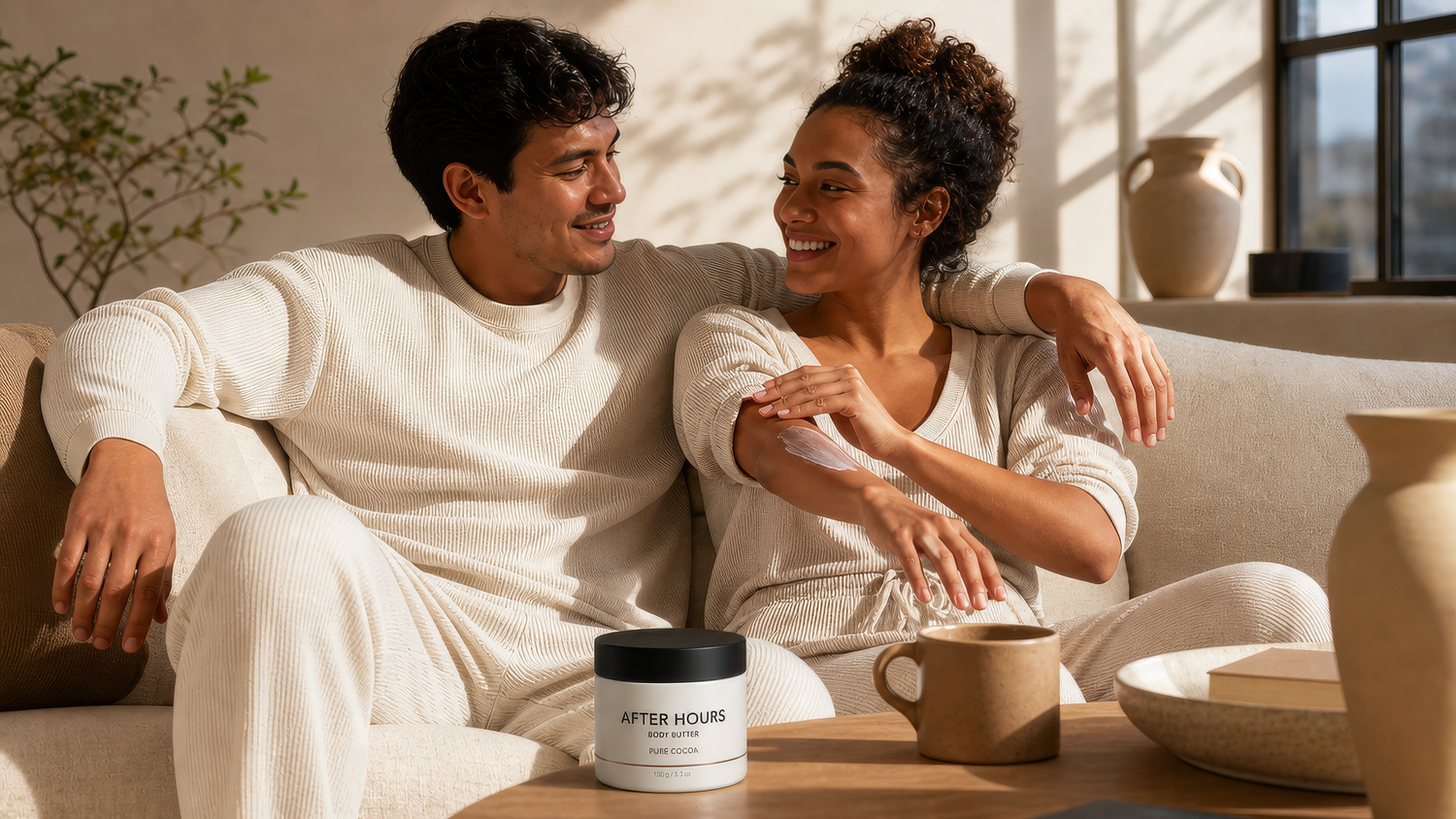

A DIY luxury body care ritual is a self-administered sequence of treatments using natural, nourishing ingredients to deliver spa-quality skin care and deep relaxation at home. The practice is defined by treatment order, ingredient quality, and consistent application. Professionals recognise that the sequence matters as much as the ingredients themselves. Natural components such as jojoba oil, Epsom salts, honey, and oats address specific skin concerns without synthetic additives. Afterhoursbodybutter builds its entire product range on this same principle: fat-soluble vitamins and natural nutrients applied correctly produce visible, lasting results. A well-structured home ritual costs a fraction of a professional spa visit while delivering comparable nourishment.
What do you need for a DIY luxury body care ritual?
The right ingredients and tools make the difference between a rushed wash and a genuine self-care ritual at home. Gather everything before you start so the session flows without interruption.
Core natural ingredients
Natural body care recipes rely on a small set of versatile pantry staples. Carrier oils such as jojoba and coconut oil form the base for scrubs, masks, and moisturisers. Jojoba oil closely mimics the skin’s natural sebum, making it suitable for most skin types. Coconut oil provides deep occlusive moisture and works well in body scrubs. Epsom salts draw out toxins and ease muscle tension in foot soaks and baths. Raw honey acts as both a humectant and an antibacterial agent. Oats soothe sensitive skin and form a gentle physical exfoliant. Essential oils such as lavender and peppermint add therapeutic scent and targeted skin benefits, but always require dilution before skin contact. Natural skincare ingredients like these are effective precisely because they work with the skin’s biology rather than against it.
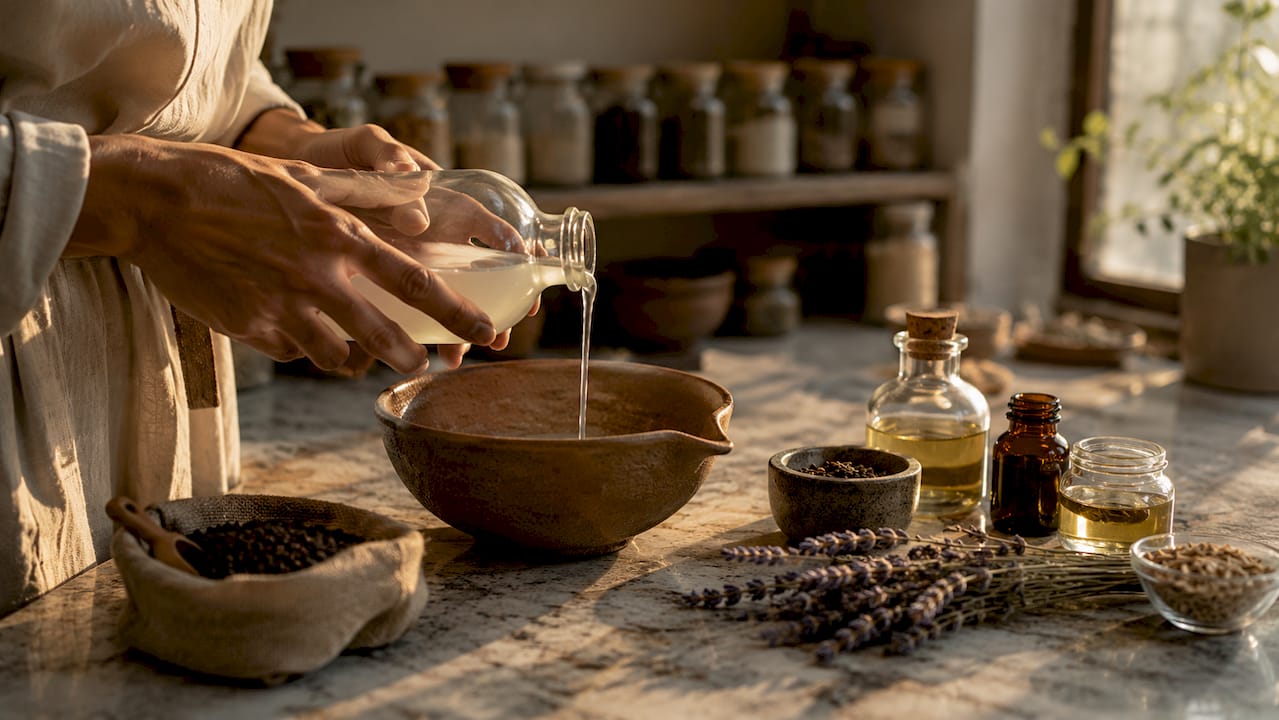
Pro Tip: Buy cold-pressed, unrefined carrier oils where possible. Refined versions lose a significant portion of their fat-soluble vitamins during processing, which reduces their nourishing effect on the skin.
Essential tools
You do not need specialist equipment. A set of glass jars stores pre-mixed scrubs and masks. Mixing bowls and silicone spatulas keep ingredients clean and easy to combine. A diffuser disperses essential oil blends throughout the room. Warm towels, a robe, and a timer complete the setup. The timer is more useful than it sounds: a complete ritual takes 90–120 minutes, and tracking each step prevents you from rushing.
| Tool or ingredient | Function |
|---|---|
| Jojoba or coconut oil | Carrier base for scrubs, masks, and moisturisation |
| Epsom salts | Muscle relaxation and detoxification in soaks |
| Raw honey | Humectant, antibacterial agent in masks |
| Oats | Gentle exfoliant and soothing barrier for sensitive skin |
| Essential oils (lavender, peppermint) | Therapeutic scent and targeted skin benefit, diluted only |
| Glass jars and spatulas | Hygienic storage and mixing of homemade formulations |
| Timer | Keeps each treatment on schedule across the full session |
How do you sequence a luxury body care ritual step by step?
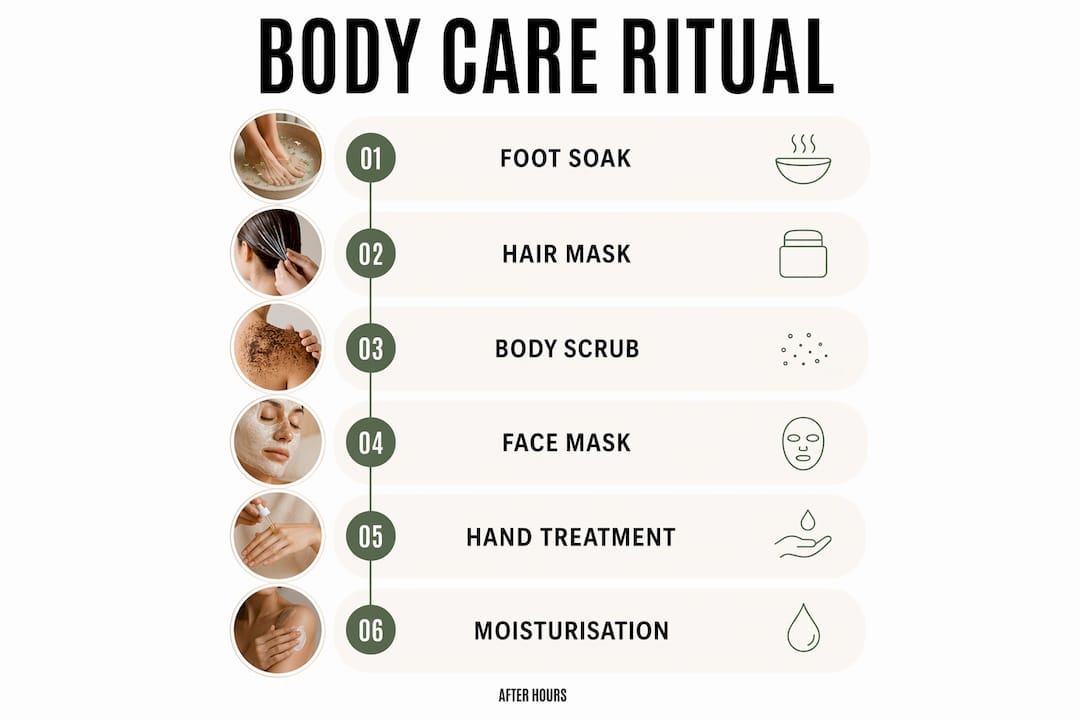
Treatment order is the single most important variable in a home spa session. Professionals recommend working from hair to body to face to nails. This optimal treatment sequence prevents cross-contamination between products and allows longer treatments to absorb while you complete shorter ones. Starting with hair and feet means those treatments work unattended while your hands are free for other steps.
The recommended sequence
-
Foot soak (15 minutes). Fill a basin with warm water, two tablespoons of Epsom salts, and three drops of peppermint essential oil pre-mixed into a teaspoon of carrier oil. Soak feet while you prepare the hair mask. This multi-tasking approach is central to keeping the session within the 90–120 minute window.
-
Hair mask (20–30 minutes). Mix two tablespoons of coconut oil with one tablespoon of honey. Apply from roots to ends, cover with a warm towel, and leave to absorb. The heat from the towel opens the hair shaft and allows the oils to penetrate more deeply.
-
Exfoliating body scrub (10 minutes). Coffee grounds combined with coconut oil make an effective luxury body scrub. Caffeine tightens skin and improves circulation, while the grounds provide physical exfoliation and the oil moisturises simultaneously. Apply in circular motions from ankles upward, then rinse thoroughly.
-
Face mask (15 minutes). An oatmeal and honey face mask soothes sensitive skin, locks in moisture, and provides antioxidant benefit. Oatmeal forms a protective barrier on the skin surface. Honey adds antibacterial and humectant qualities. Mix two tablespoons of fine oats with one tablespoon of honey and enough warm water to form a paste. Apply, leave for 15 minutes, then rinse with cool water.
-
Hand treatment (10 minutes). Combine one tablespoon of sugar with one tablespoon of jojoba oil and a drop of lavender essential oil. Scrub hands gently, then rinse and pat dry. Follow immediately with a generous layer of a rich nourishing butter and cover with cotton gloves if available.
-
Full body moisturisation (5–10 minutes). Apply your chosen body butter or carrier oil blend to still-damp skin. Damp skin absorbs moisture more readily than dry skin, so timing here matters. Work upward from feet to shoulders.
-
Relaxation period (15 minutes). Lie still, breathe slowly, and allow all treatments to settle. This step is not optional. Skipping it reduces the cumulative relaxation benefit of the entire session.
The order of operations is not a preference. It is a protocol. Hair treatments need time to absorb; face treatments need clean hands; moisturisation needs warm, open pores. Sequence is what separates a professional result from a rushed one.
| Step | Treatment | Approximate time |
|---|---|---|
| 1 | Foot soak | 15 minutes |
| 2 | Hair mask | 20–30 minutes |
| 3 | Body scrub | 10 minutes |
| 4 | Face mask | 15 minutes |
| 5 | Hand treatment | 10 minutes |
| 6 | Body moisturisation | 5–10 minutes |
| 7 | Relaxation | 15 minutes |
Pro Tip: Start the foot soak and hair mask simultaneously. Both are passive treatments that work without your attention, freeing you to prepare the scrub and mask ingredients during that time.
What mistakes should you avoid in a homemade body care session?
Most home rituals fall short not because of poor ingredients but because of avoidable errors in application and sequencing. Knowing what not to do is as useful as knowing the correct steps.
- Never add essential oils directly to bathwater. Undiluted essential oils float on water and concentrate on the skin surface, causing irritation or chemical burns. Always pre-mix them into a carrier oil, milk powder, or honey before adding to water.
- Do not combine strong actives in the same session. Applying an acid-based exfoliant and a retinol-adjacent ingredient in the same ritual causes irritation, particularly on sensitive skin. Keep each treatment focused on one function.
- Patch test every new ingredient. Apply a small amount to the inner arm 24 hours before your first full session. This is non-negotiable for anyone with reactive or sensitive skin.
- Do not rush the sequence. Cutting steps short to save time removes the relaxation benefit that makes the ritual effective. A partial session is less effective than a shorter, complete one.
- Adjust for your skin type. Oily skin benefits from clay-based masks rather than honey-heavy ones. Dry skin needs heavier carrier oils such as avocado or sweet almond rather than lighter options. Sustainable body care means choosing ingredients that suit your specific skin, not following a generic recipe without modification.
Patch testing is not just for people with known allergies. Natural ingredients can trigger reactions in anyone. One test before a full session prevents a ruined ritual and potential skin damage.
How do you set the atmosphere for a home spa treatment?
Sensory design amplifies the effectiveness of every treatment in the ritual. The physical environment signals to your nervous system that rest is permitted, which deepens the relaxation response and makes the skin more receptive to nourishment.
- Lighting. Swap overhead lights for candles, a salt lamp, or warm-toned fairy lights. Bright white light activates alertness. Warm, dim light does the opposite.
- Scent. Run a diffuser with a blend suited to your mood: lavender and chamomile for calm, eucalyptus and peppermint for clarity. Match the diffuser blend to the essential oils in your treatments for a coherent sensory experience.
- Sound. Choose lyric-free music or nature sounds. Lyrics engage the language-processing parts of the brain and reduce the depth of relaxation. Ambient or classical music keeps the mind quieter.
- Comfort accessories. Warm your towels in a low oven or on a radiator before use. A robe, an eye mask, and a cushioned bath mat all reduce physical discomfort that would otherwise interrupt the session.
- Hydration and light snacks. Herbal teas such as chamomile or peppermint complement the ritual’s calming effect. Avoid caffeine during the session. Light snacks such as fruit or nuts prevent hunger from becoming a distraction.
These details are not indulgences. They are functional inputs that determine how deeply you relax and, by extension, how well your skin responds to treatment.
Key takeaways
A DIY luxury body care ritual delivers professional-level results when you follow the correct sequence, use quality natural ingredients, and allow sufficient time for each treatment to absorb.
| Point | Details |
|---|---|
| Sequence is non-negotiable | Work hair to body to face to nails to prevent cross-contamination and maximise absorption. |
| Budget does not limit quality | Natural pantry ingredients deliver effective nourishment at a fraction of professional spa costs. |
| Timing matters | A complete session runs 90–120 minutes; rushing any step reduces both skin and relaxation benefits. |
| Safety first | Always dilute essential oils in a carrier before skin or water contact to prevent irritation. |
| Consistency beats frequency | Regular short rituals with quality natural ingredients outperform infrequent expensive treatments. |
Why I think most people get home rituals wrong
Most guides focus entirely on recipes and ignore the one thing that actually determines results: consistency. People treat a home spa session as a one-off event rather than a regular practice. That is the real problem.
Skin responds to repeated, sustained input. A single oat and honey mask does very little. The same mask applied fortnightly for three months produces a measurable difference in texture and moisture retention. Consistent natural ingredient use outperforms expensive, infrequent professional visits. That is not a preference. It is how skin biology works.
The second mistake is perfectionism. People skip the ritual entirely because they do not have 120 minutes, the right candles, or a specific ingredient. A 45-minute version with three steps and basic pantry ingredients still delivers real benefit. Imperfect consistency beats perfect infrequency every time.
My practical advice: schedule one session per fortnight, keep your ingredient jars pre-mixed and ready, and treat the atmosphere setup as a five-minute task rather than a production. The ritual should fit your life, not the other way around. When it fits, you do it. When you do it regularly, your skin shows it.
— Darnell
Afterhoursbodybutter’s cocoa body butter: the finishing step
The final step of any home body care session is moisturisation, and the product you choose here determines how long the nourishment lasts.
Afterhoursbodybutter’s Men’s Cocoa Body Butter is formulated with natural, vegan ingredients designed to lock in moisture after exfoliation and treatment. The cocoa base provides a rich texture that absorbs without greasiness, making it a practical choice for the full-body moisturisation step. It is free from synthetic chemicals and cruelty-free, which aligns with the natural ingredient principles that make a home ritual effective in the first place. If you are building a complete body care routine around natural ingredients, this is a straightforward finishing product to add.
FAQ
How long does a full DIY luxury body care ritual take?
A complete session covering foot soak, body scrub, hair mask, face mask, and hand treatment takes 90–120 minutes. Multi-tasking passive treatments such as hair masks and foot soaks keeps the session within that window.
Can I use essential oils directly in bathwater?
No. Essential oils added undiluted to bathwater float on the surface and can irritate or burn skin. Always mix them into a carrier oil, honey, or milk powder first.
What is the correct order for a home body care session?
Professionals recommend the sequence hair, body, face, and nails. This treatment order prevents cross-contamination and allows longer treatments to absorb while you complete shorter ones.
Which natural ingredients work best for a homemade body scrub?
Coffee grounds combined with coconut oil form an effective body scrub. The caffeine tightens skin and improves circulation, the grounds exfoliate physically, and the oil moisturises simultaneously.
How often should I do a luxury body care ritual at home?
A fortnightly session is sufficient for most people. Consistent, regular practice with quality natural ingredients produces better long-term skin results than occasional intensive treatments.