


The best natural humectants for deep hydration are glycerin, urea, hyaluronic acid, sodium lactate, and honey. Each one attracts and binds water to the skin’s outer layer, keeping it soft and supple without a heavy or greasy feel. For dry and sensitive skin, these ingredients work best when layered with an emollient and an occlusive to lock moisture in place.
- Glycerin: Draws water into the skin and improves the skin barrier. The most widely used humectant in skincare formulations.
- Urea: Relieves dryness and itching, and helps other ingredients absorb more readily into the skin.
- Hyaluronic acid: Available in multiple molecular weights to hydrate both the skin surface and deeper epidermal layers.
- Sodium lactate: A component of the skin’s own natural moisturising factor (NMF). Often considered more moisturising than glycerin and not sticky.
- Honey: Rich in vitamins, polyphenols, and enzymes. A gentle, natural option for sensitive skin.
Combining these with an emollient such as shea butter and an occlusive layer gives you lasting hydration, not just surface moisture.
How natural humectants actually work on your skin
Humectants are hydrophilic substances, meaning they attract water. In skincare, they pull moisture either from the air around you or from the deeper layers of your skin up to the stratum corneum, the outermost layer. Which source they draw from depends entirely on the humidity in your environment.
Humectants draw moisture from the air when humidity exceeds 70%. In drier conditions, which is most of the UK for much of the year, they pull water up from deeper skin layers instead. This is useful, but it also creates a risk: without an occlusive on top, that moisture can evaporate before your skin actually benefits.
Humectants are not the same as emollients or occlusives, though all three appear in most good moisturisers.
- Humectants attract and bind water.
- Emollients (such as squalane or ceramides) smooth and soften the skin by filling gaps between skin cells.
- Occlusives (such as shea butter or plant waxes) form a physical layer that slows water evaporation.
Used together, these three categories deliver lasting skin hydration that a single ingredient type cannot achieve alone.
The best natural humectants to use for deep hydration
Glycerin
Glycerin is the gold standard humectant. It is stable, compatible with almost every other skincare ingredient, and effective across all skin types. Derived from plant oils, it works at effective concentrations in leave-on products. Clinical studies confirm it improves both skin barrier function and hydration levels. Layering it with other humectants tailors the depth and feel of hydration further.
Urea
Urea is a natural component of the skin’s NMF. At appropriate concentrations, it relieves dry skin and itching and improves the skin barrier’s integrity. It also helps other topically applied ingredients penetrate more effectively. Products containing lipophilic urea have shown particular benefit for older skin prone to dryness.
Hyaluronic acid
Hyaluronic acid’s strength lies in its molecular weight variation. High molecular weight grades (above 1,000 kDa) sit on the skin surface and create an immediate plumping effect. Low molecular weight grades (below 50 kDa) penetrate into the upper epidermis for longer-lasting hydration. Combining both in one formula gives you surface and deeper hydration simultaneously. Hyaluronic acid also promotes wound repair by supporting new blood vessel formation and fibroblast activity.
Sodium lactate
Sodium lactate is a plant-derived liquid that is already present in the skin as part of the NMF. It is considered more moisturising than glycerin and has a non-sticky feel, making it practical in serums, toners, and body lotions. It also enhances skin elasticity over time.
Honey
Honey contains vitamins, polyphenols, and enzymes that support skin health. It functions as a gentle humectant and suits sensitive skin well. It works best in wash-off masks or rinse-off formulations, though it can be incorporated into leave-on products at low concentrations.
Betaine and sodium PCA
These two are highly effective yet underused. Betaine, sourced from sugar beet, acts as an osmoprotectant and blends well with glycerin and hyaluronic acid. Sodium PCA is a natural component of the skin’s own NMF with high water-binding affinity at low concentrations. Both are particularly suited to sensitive or compromised skin. Natural humectants, including glycerin, sodium lactate, panthenol, and propanediol, are safe, biodegradable, and well suited to natural skincare formulations.
The moisture sandwich: why humectants need a partner
Using a humectant alone, particularly in the UK’s frequently low-humidity conditions, can leave skin feeling drier than before. Without an occlusive pairing, humectants draw moisture up from deeper skin layers but cannot prevent it from evaporating at the surface.
The moisture sandwich approach solves this. Apply your humectant layer first, then follow with an emollient, then seal with an occlusive.
- Step 1 (humectant): Apply glycerin serum or a hyaluronic acid product to damp skin.
- Step 2 (emollient): Add a lotion or oil containing ceramides or squalane to smooth the skin and fill gaps in the barrier.
- Step 3 (occlusive): Finish with a butter or balm, such as shea butter, to form a protective layer and prevent transepidermal water loss (TEWL).
Shea butter is a particularly effective occlusive complement for dry and sensitive skin. It is rich in fatty acids and has demonstrated anti-inflammatory properties, making it a practical final layer for anyone prone to irritation.
Pro Tip: On damp skin after a shower, apply your humectant within 60 seconds, then layer your emollient and occlusive on top. This sequence traps the most moisture and is especially useful during UK winters when indoor heating drops humidity significantly.
Real results: how Afterhoursbodybutter approaches natural hydration
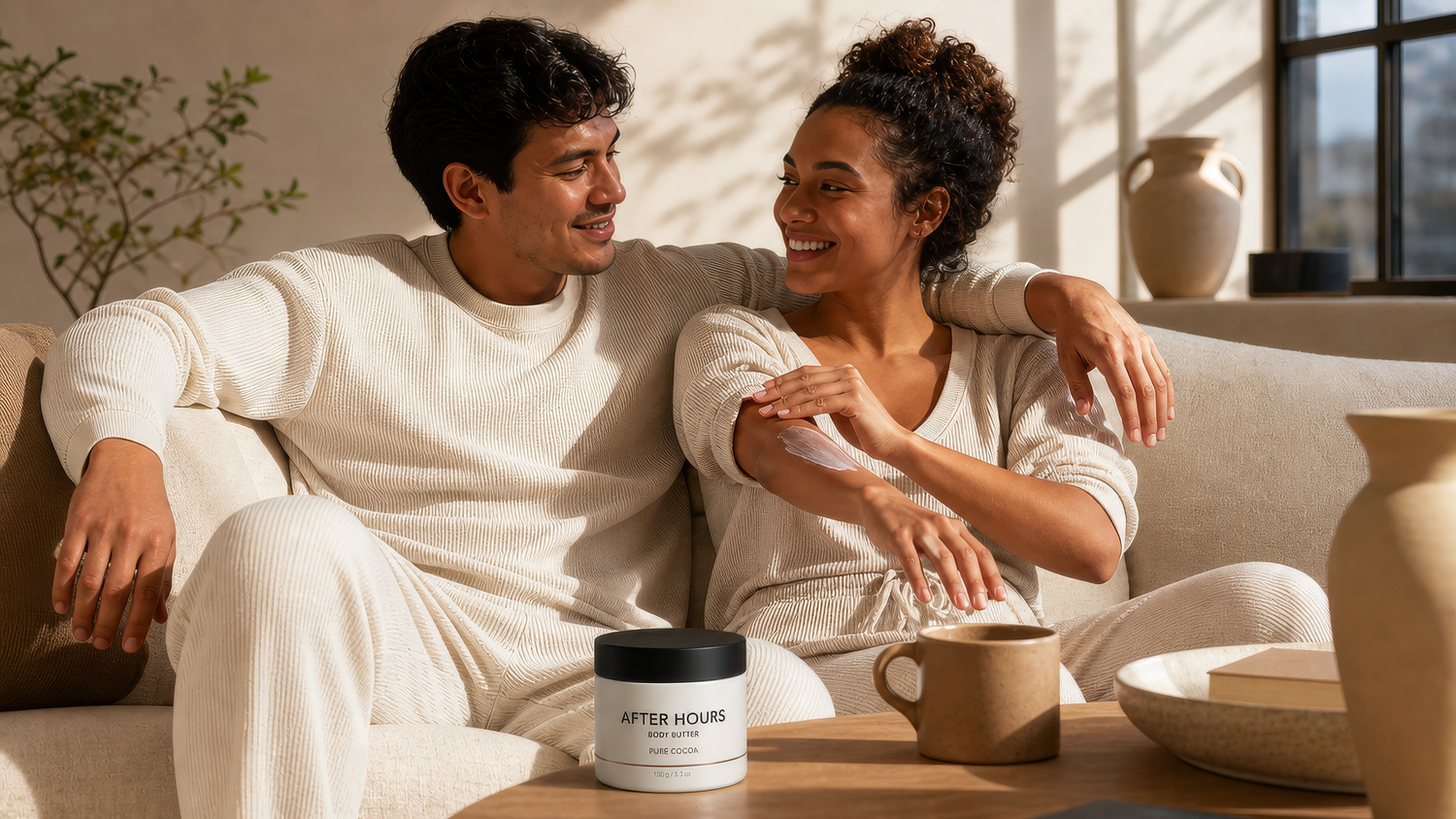
Afterhoursbodybutter is a premium, vegan body care brand built around natural ingredients and chemical-free formulations. Their products are cruelty-free and designed specifically for skin concerns including dryness and sensitivity. The brand’s approach puts humectants alongside emollients and occlusives in every formulation, which reflects exactly the moisture sandwich principle described above.
Their After Hours Body Butter combines natural occlusives and emollients to support the skin barrier while delivering sustained hydration. Customers with dry and sensitive skin report visible improvements in texture and moisture retention after consistent use.
Afterhoursbodybutter’s commitment to sustainable practices and transparency about ingredients makes it a practical choice for anyone seeking effective body care for sensitive skin without synthetic additives.
Understanding your skin type also matters when selecting humectant-rich products. Different skin types respond differently to humectant concentrations and formulation textures, and skin type considerations can guide you towards the right product weight and ingredient balance.
How to use natural humectants correctly
Getting the most from humectants comes down to a few consistent habits.
- Apply to damp skin. Humectants work best when there is already some moisture present. Pat skin dry after washing, leaving it slightly damp, then apply immediately.
- Layer correctly. Always follow with an emollient and an occlusive. Skipping this step, especially in dry or heated indoor environments, can draw moisture away from deeper skin layers.
- Watch your concentrations. Glycerin is effective at 2–10% in leave-on products. Sodium PCA performs well at 1–3%. Hyaluronic acid is effective at 0.1–2% depending on molecular weight.
- Patch test first. Even natural humectants can cause sensitivity in some people. Apply a small amount to the inner arm and wait 24 hours before using a new product on your face or body.
- Store correctly. Glycerin and hyaluronic acid are stable but can degrade if exposed to heat or direct sunlight. Keep products in a cool, dark place and check that formulations contain a preservative if they are water-based.
Pro Tip: In summer, UK humidity rises and humectants can draw moisture from the air more readily. In winter, indoor heating drops humidity sharply. Adjust by using a slightly richer occlusive layer from october through march to compensate.
Understanding what makes a moisturiser effective helps you pick the right product for each season rather than using the same formula year-round.
Key takeaways for natural deep hydration
Natural humectants work best when paired with an emollient and an occlusive, forming a moisture sandwich that attracts, smooths, and seals hydration into the skin.
| Point | Details |
|---|---|
| Top natural humectants | Glycerin, urea, hyaluronic acid, sodium lactate, and honey each attract and bind moisture to the skin. |
| Moisture sandwich approach | Layer humectant, then emollient, then occlusive to prevent water evaporation and maximise hydration. |
| UK climate consideration | Low humidity indoors and in winter means occlusives are not optional; they prevent humectants from drawing moisture out of deeper skin layers. |
| Concentration matters | Glycerin works at 2–10% in leave-on products; sodium PCA at 1–3%; hyaluronic acid at 0.1–2% depending on molecular weight. |
| Sensitive skin options | Betaine and sodium PCA are skin-identical humectants with excellent compatibility for sensitive or compromised skin. |