

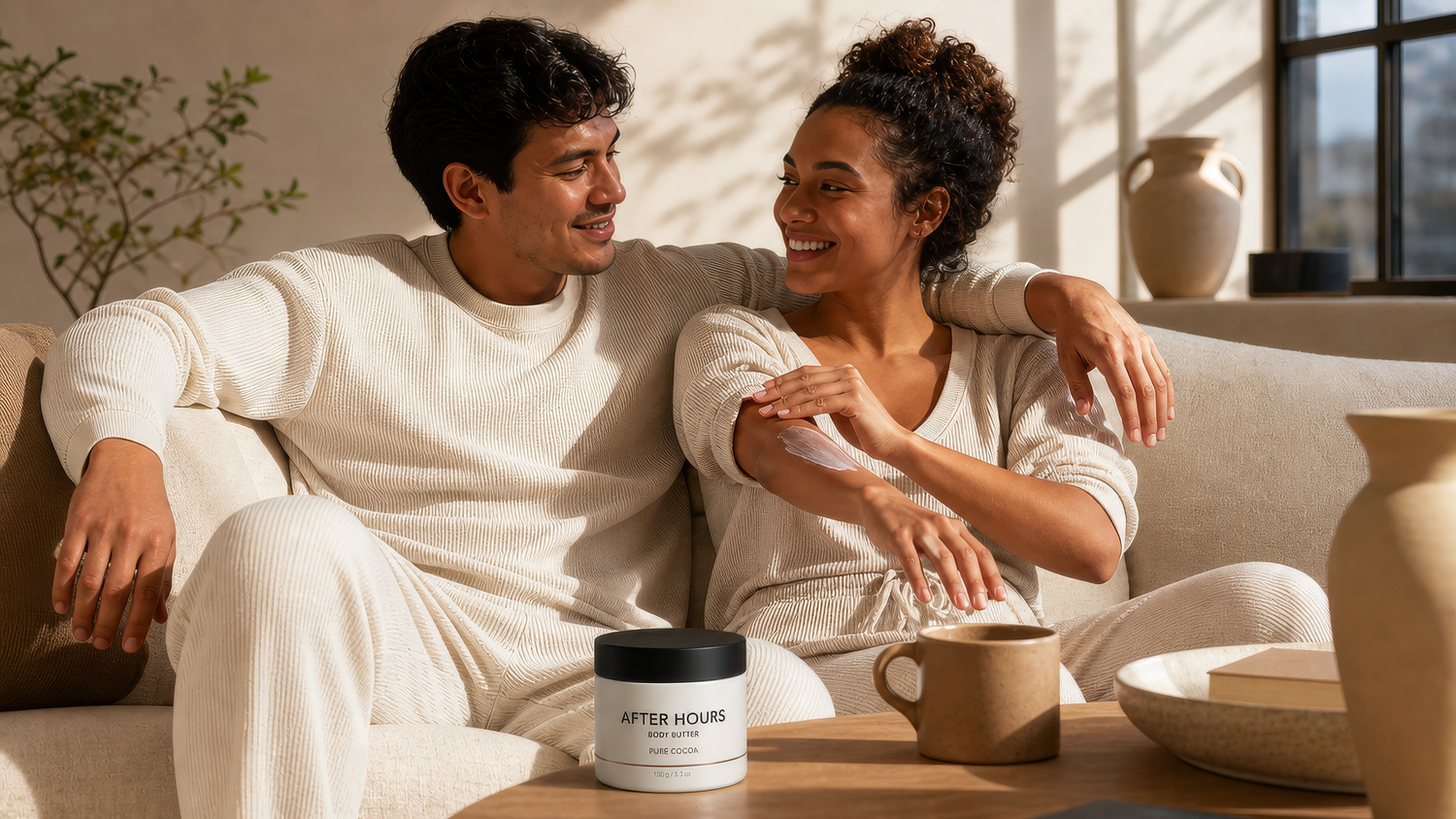

Yes. Apply body butter under sunscreen, always. Sunscreen must be the final step in any daytime body care routine. Applying it over moisturiser, including rich butters, keeps the SPF film intact on the skin’s surface where it can do its job. The British Association of Dermatologists and NHS sun-safety guidance both confirm that sunscreen applied correctly to exposed skin reduces UV damage. The rule is simple: lightest to heaviest, sunscreen last.
- Body butter: apply first, to damp skin
- Sunscreen: apply last, once the butter has absorbed
- Never mix sunscreen into your body butter or any other product
Pro Tip: Apply Afterhoursbodybutter’s rich vegan formula immediately after your shower, while skin is still slightly damp. This locks in moisture faster and leaves a less greasy surface for your SPF.
Key takeaways
Sunscreen must always be the final step in your daytime body care routine, applied after body butter has fully absorbed.
Table of Contents
- How do you layer body butter and sunscreen step by step?
- Why does sunscreen have to go on last?
- How long should you wait after body butter before applying SPF?
- Does the type of sunscreen change how you layer it?
- When should you skip body butter under SPF?
- Using Afterhoursbodybutter with sunscreen
- The part most layering guides get wrong
- Afterhoursbodybutter: vegan body butter that works under SPF
- Sources
How do you layer body butter and sunscreen step by step?
Follow this order every morning before going outside:
- Shower or bathe. Pat skin lightly with a towel, leaving it slightly damp.
- Apply body butter. Use a small, appropriate amount per limb. Massage in using upward strokes. Apply to damp skin for better absorption and less residue.
- Wait. Allow the butter to absorb for 5–10 minutes. Skin should feel soft but not slippery.
- Apply sunscreen. Use SPF 30 or higher, broad-spectrum. Apply generously to all exposed areas.
- Reapply SPF every two hours outdoors, or immediately after swimming or heavy sweating.
According to practitioner-level layering guidance, products must go on from lightest to heaviest so each layer absorbs properly. Body butter sits above lighter serums and lotions in that sequence, with sunscreen as the non-negotiable final step.
Pro Tip: If you are short on time, apply the butter to areas that need it most (elbows, knees, shins) and let those absorb while you dress. Apply SPF to exposed skin last, just before you leave.

Why does sunscreen have to go on last?
Sunscreen works by forming a continuous film on the skin. Chemical filters absorb UV rays; mineral filters (zinc oxide, titanium dioxide) reflect them. Either way, the film must sit on the outermost layer of skin to function. Applying anything on top of SPF after the fact dilutes or disrupts that film.
Occlusive products like body butter create a surface layer that can prevent sunscreen from bonding properly to skin if applied in the wrong order. Dermatology guidance is clear: for body routines, “sunscreen last” is the safest consumer rule, regardless of the formula type.
Never mix sunscreen with your body butter or any other product before applying. Mixing dilutes the active UV filters and makes the SPF value on the label unreliable. Apply each product separately, in the correct order.
Sun-safety campaigns, including those backed by broad-spectrum SPF guidance, recommend SPF 30 or higher on all exposed skin daily, paired with shade and protective clothing. Getting the application order right is what makes that protection count.
How long should you wait after body butter before applying SPF?
Timing depends on how rich the formula is.
- Light lotion or thin body cream: 2–3 minutes is usually enough. Skin absorbs these quickly.
- Standard body butter: wait several minutes to allow absorption. Press the back of your hand lightly to the skin. If it feels tacky or greasy, wait a little longer.
- Very occlusive or oil-rich butter: allow up to 15 minutes, or apply to a smaller area and let it fully sink in before moving to SPF.
Applying to slightly damp skin speeds absorption and reduces the greasy surface that can interfere with sunscreen coverage. Pat rather than rub when applying butter to freshly showered skin. Rubbing can lift the product before it has a chance to absorb.
Pro Tip: Press a clean tissue lightly against your forearm after applying body butter. If it comes away with visible grease, give it another two minutes. If it comes away clean, your skin is ready for SPF.
Does the type of sunscreen change how you layer it?
Yes, and the difference matters when you are using a rich body butter underneath.
Chemical sunscreens (containing filters such as avobenzone or octinoxate) need to absorb into the skin to activate. They generally spread more easily over a butter base, but still require the butter to be fully absorbed first.
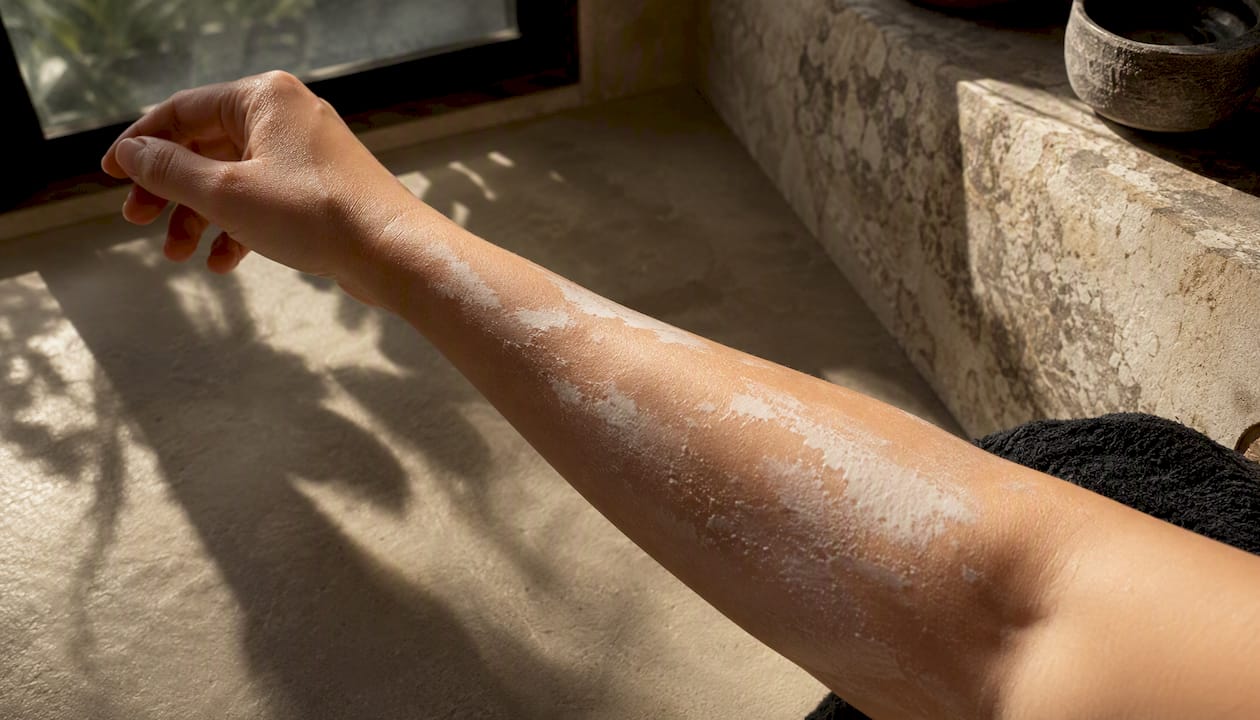
Mineral sunscreens (zinc oxide, titanium dioxide) sit on top of the skin and reflect UV. Applied over a thick, greasy butter layer, they can look patchy, pill, or leave a more pronounced white cast. Allow a longer absorption window before applying a mineral formula.
- Chemical SPF over body butter: wait 5 minutes minimum
- Mineral SPF over body butter: wait 10–15 minutes; apply in thin, even layers
- Both types: reapply every two hours outdoors
Some products combine hydration and SPF in one formula. Check the label carefully for the stated SPF value, broad-spectrum claim, and water-resistance rating before relying on a combined product as your sole sun protection.
When should you skip body butter under SPF?
Body butter under sunscreen works well for most people, most of the time. There are situations where a lighter approach is better.
- Active acne or very oily skin: rich, occlusive butters can block pores and worsen breakouts. Use a lighter, non-comedogenic moisturiser for acne-prone skin instead.
- Swimming or water sports: water washes away both butter and SPF quickly. Apply a water-resistant SPF 30+ directly to clean skin, skip the butter beforehand, and reapply SPF after towelling off.
- Heavy sweating: the same logic applies. A lighter lotion or no moisturiser at all before SPF keeps the sunscreen film more stable.
If you think your SPF has been compromised (after swimming, sweating heavily, or towelling off), do not just top up. Rinse the area, pat dry, and reapply a full layer of sunscreen from scratch.
For a body care routine built around sensitive skin, a lighter lotion or SPF-containing moisturiser applied as the final step is a practical alternative on high-activity days.
Using Afterhoursbodybutter with sunscreen
Afterhoursbodybutter’s vegan, chemical-free formula is designed to absorb without leaving a heavy residue, which makes it a practical choice under SPF. The brand’s recommended application technique is to apply to slightly damp skin post-shower, using a small amount and working it in with upward strokes.
- Focus on dry areas first: elbows, knees, and shins absorb product faster and benefit most
- Use a pea-to-50p-coin-sized amount per area to avoid over-application
- Wait 5–10 minutes before applying SPF on top
Because the formula is free from synthetic chemicals and made with fat-soluble vitamins, it absorbs cleanly without the heavy grease that causes pilling under mineral sunscreens. For readers with sensitive skin or specific skin concerns, the natural ingredient profile reduces the risk of irritation when layering with SPF.
Pro Tip: Apply Afterhoursbodybutter to your body while your face routine is drying. By the time you finish your face SPF, your body is ready for its sunscreen too.
The part most layering guides get wrong
Most advice on this topic stops at “sunscreen last” and leaves you to figure out the rest. That is fine as a rule, but it misses the detail that actually changes outcomes: the wait time and the sunscreen type.
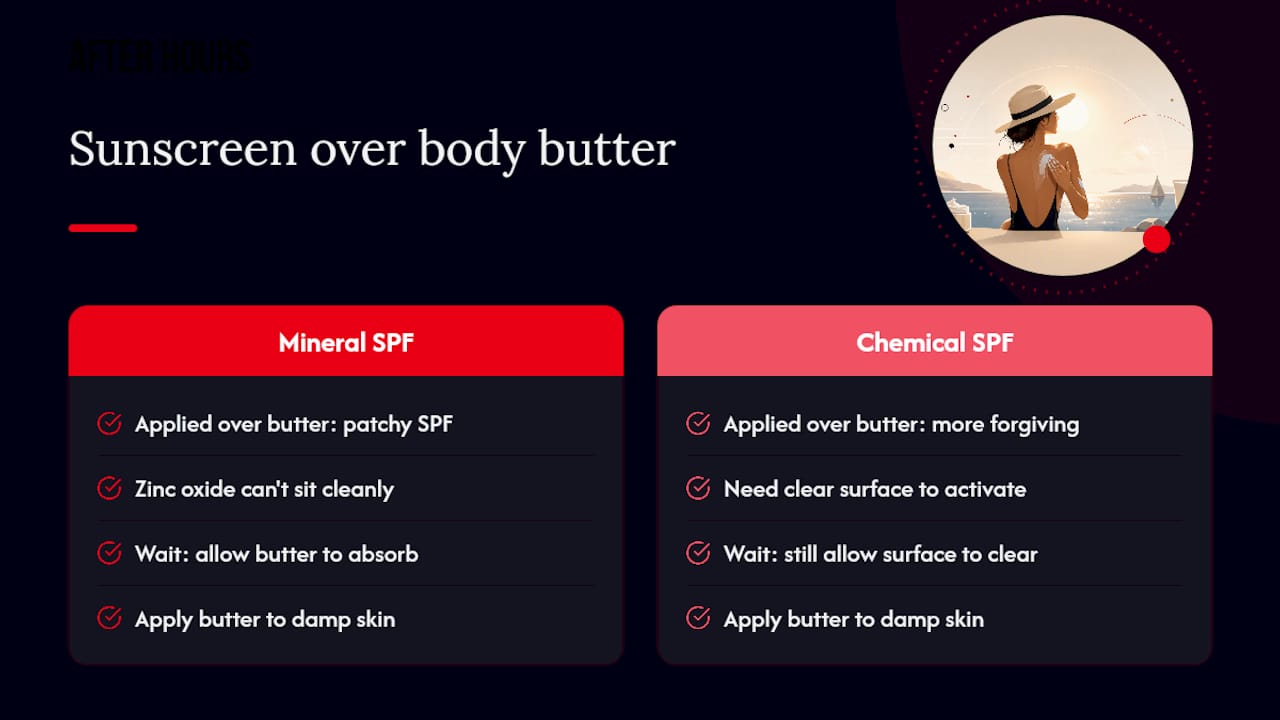
Mineral sunscreens applied straight over a rich butter without waiting are one of the most common causes of patchy, uneven SPF coverage. The butter has not absorbed, the zinc oxide has nowhere clean to sit, and you end up with gaps in protection you cannot see. Chemical sunscreens are more forgiving, but they still need a reasonably clear surface to activate properly.
The other thing guides understate: applying to damp skin is not just a hydration tip. It genuinely reduces the greasy surface layer that causes problems with SPF application. Two minutes after your shower makes a real difference to how evenly your sunscreen goes on.
For most people using a quality body butter like Afterhoursbodybutter, the routine is straightforward. Apply the butter to damp skin, wait, then apply SPF. The formula’s clean absorption profile means you are not fighting a greasy base when it comes to sunscreen time.
Afterhoursbodybutter: vegan body butter that works under SPF
Dry skin and sun protection do not have to compete. Afterhoursbodybutter’s natural, vegan body butters absorb cleanly into skin, leaving the surface ready for SPF without pilling or patchiness.
Made with fat-soluble vitamins and chemical-free ingredients, the formula suits sensitive skin and sits comfortably under both mineral and chemical sunscreens. Apply post-shower to damp skin, wait 5–10 minutes, then layer your SPF on top. Free UK delivery on orders over £30. Shop the full range at Afterhoursbodybutter and get your routine right from the first step.
Sources
- Sunscreen Before or After Moisturizer: Which Comes First?
- The right body care routine order: how to layer body care for smooth, hydrated skin
- The correct order to apply body care product