

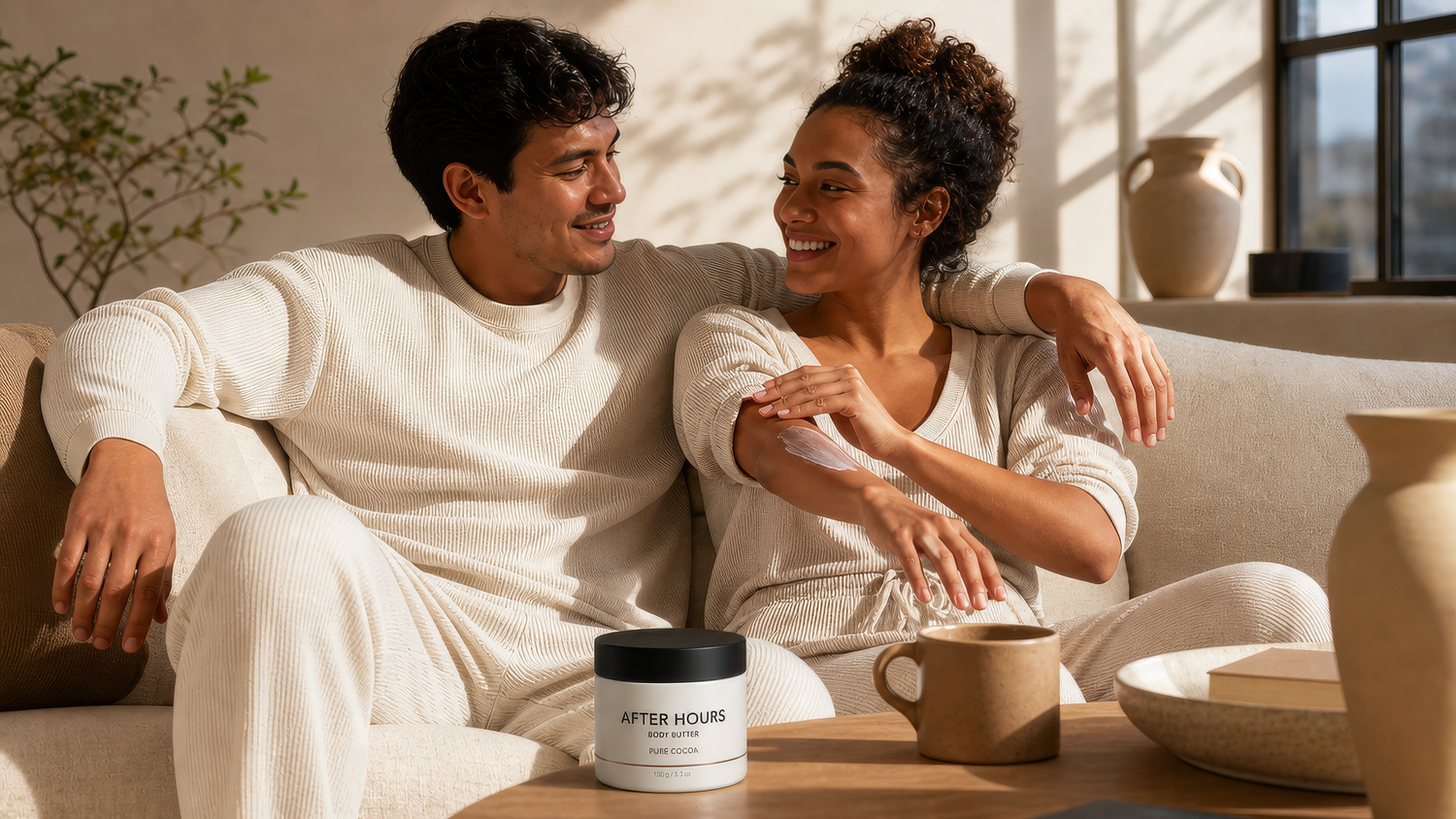

Chemical-free dry skin remedies are natural treatments that hydrate, protect, and repair your skin barrier without synthetic preservatives, artificial fragrances, or petrochemical additives. The most effective approach combines three ingredient types: humectants to draw water into the skin, emollients to smooth the surface, and occlusives to seal moisture in. Dermatological reviews in 2026 confirm this three-part combination is the foundation of effective barrier repair. Afterhoursbodybutter builds every formulation around this principle, using vegan, plant-derived ingredients to deliver visible results without harsh chemicals.
Which natural ingredients best hydrate and protect dry skin?
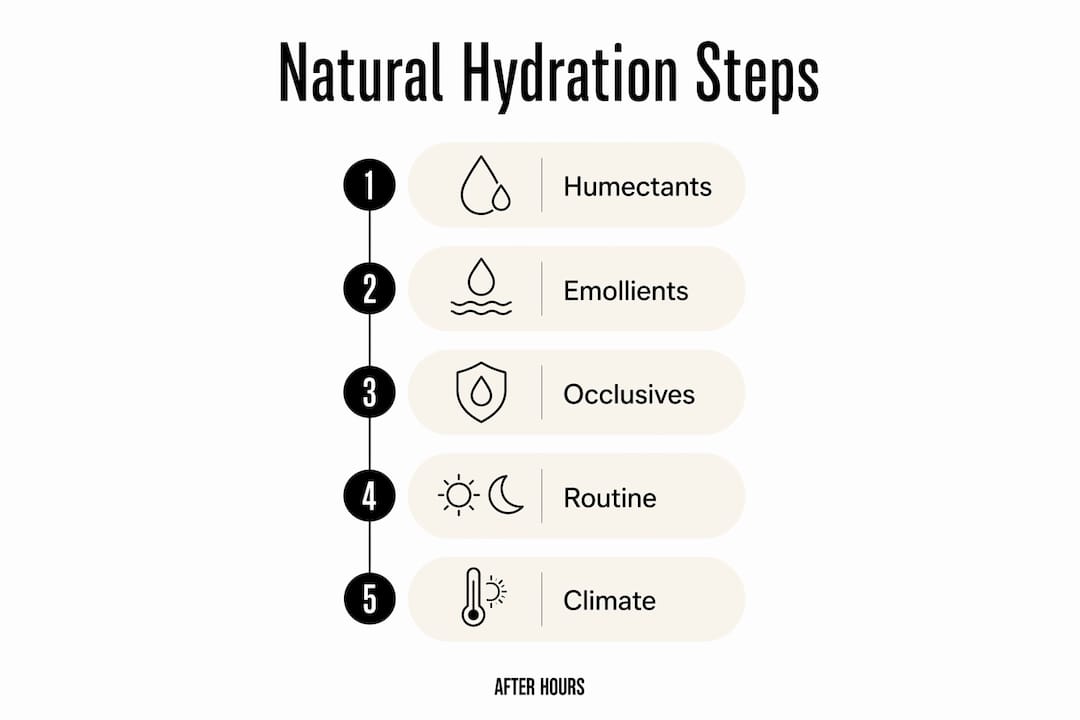
The right ingredients make or break any natural dry skin solution. Each ingredient type does a specific job, and using them together produces far better results than any single ingredient alone.
Humectants: drawing moisture in
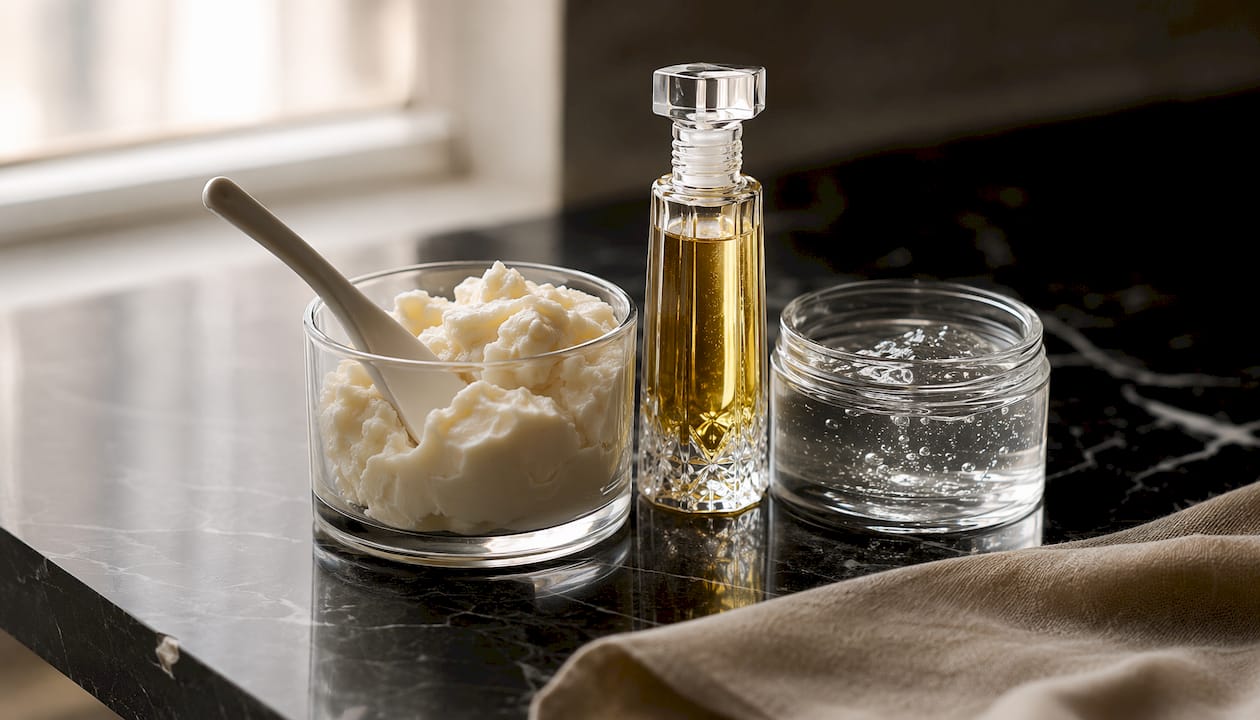
Humectants pull water from the air and from deeper skin layers up into the outer skin. Glycerin is the most studied natural humectant and works well across all skin types. Honey is a gentler alternative with additional antibacterial properties, making it useful for skin prone to irritation. Both work best when paired with an emollient or occlusive, which prevents the drawn moisture from simply evaporating.
Emollients: smoothing the surface
Emollients fill the gaps between skin cells, reducing roughness and flaking. Shea butter is one of the most effective plant-based emollients available. Sunflower seed, coconut, and argan oils all significantly improve skin hydration by reducing water loss and restoring the lipid barrier. Sunflower oil is particularly well suited to very dry or sensitive skin because it is lightweight and non-irritating. Olive oil, by contrast, contains oleic acid at levels that can disrupt the skin barrier in some people, making it a less reliable choice for daily use.
Occlusives: locking moisture in
Occlusives sit on top of the skin and physically prevent water from escaping. Beeswax is a widely used natural occlusive that forms a breathable film without clogging pores. Petrolatum remains the dermatological gold standard for sealing moisture, though many people prefer plant-based alternatives. Carnauba wax and tallow are two sustainable options that perform a similar function. Afterhoursbodybutter uses plant-derived occlusives in its formulations to meet both performance and ethical standards.
- Glycerin and honey act as humectants, drawing water into the skin
- Shea butter, argan oil, and sunflower oil smooth and nourish as emollients
- Beeswax and carnauba wax seal moisture as natural occlusives
- Fragrance-free labels are safer than “unscented” for sensitive skin
Pro Tip: Always check for “fragrance-free” rather than “unscented” on product labels. Unscented products can contain masking fragrances that still irritate sensitive skin.
How to build a daily chemical-free skin hydration routine
A consistent daily routine does more for dry skin than any single product. The sequence and timing of each step matter as much as the ingredients you choose. This is how to treat dry skin naturally with a routine that actually holds up over time.
-
Keep baths and showers short. Limit bathing to 5–10 minutes once daily using warm, not hot, water. Hot water strips the skin’s natural oils faster than warm water does.
-
Apply moisturiser within three minutes of bathing. Applying moisturiser immediately after bathing traps the residual moisture on your skin and significantly improves hydration. Pat your skin gently with a towel, leaving it slightly damp, then apply your moisturiser straight away.
-
Choose a gentle, hypoallergenic cleanser. Avoid cleansers containing alcohol, artificial fragrances, or sulphates. These ingredients remove the skin’s natural lipids and worsen dryness over time. A plain, pH-balanced cleanser is sufficient for daily use.
-
Use a plant-based moisturiser with all three ingredient types. Look for a product that contains a humectant, an emollient, and an occlusive. This combination addresses hydration at every level of the skin. A guide to daily moisture needs explains why each layer matters.
-
Match your moisturiser to your skin’s current condition. Lighter lotions work well when skin is only mildly dry or when the weather is warm. Richer creams and balms are better suited to severely dry skin or cold conditions. Switching between formulations as conditions change keeps your routine effective year-round.
-
Avoid over-exfoliation. Exfoliating more than once or twice a week removes the protective outer skin cells your barrier needs. Stick to gentle exfoliation only when skin is not already inflamed or cracked.
Pro Tip: If your skin still feels tight after moisturising, add a few drops of argan or sunflower oil on top of your regular moisturiser. This extra occlusive layer helps on particularly dry days without requiring a completely different product.
People with sensitive skin often find that simplifying their routine to three steps, cleanse, moisturise, and protect, produces better results than a complex multi-product approach.
Which homemade moisturisers work for dry skin?
Homemade skin moisturisers give you full control over every ingredient. The most reliable DIY formulations fall into two categories: anhydrous balms (oil and wax only) and water-containing lotions.
Anhydrous balms
Anhydrous balms contain no water, which means they do not need preservatives. A basic recipe combines shea butter, beeswax, and a plant oil such as coconut or argan. The beeswax acts as the occlusive, the shea butter as the emollient, and the oil adjusts the texture. These balms are stable at room temperature and last for several months when stored in a clean, sealed container away from direct sunlight.
Water-containing lotions
Water-containing lotions feel lighter on the skin and absorb more quickly, but they carry a real safety risk. Homemade lotions containing water require preservatives or refrigeration to prevent bacterial and mould growth. Broad-spectrum preservatives such as Geogard 221 are the most reliable option for home formulators. Without a preservative, a water-based lotion can become contaminated within days, even if it looks and smells fine.
| Formulation type | Preservative needed | Shelf life | Best for |
|---|---|---|---|
| Anhydrous balm | No | 3–6 months | Very dry, cracked skin |
| Water-based lotion | Yes | 1–3 months | Normal to mildly dry skin |
| Honey and oil blend | No | 2–4 weeks | Sensitive or reactive skin |
- Use fragrance-free carrier oils as your base. Essential oils such as cinnamon, clove, and citrus are common irritants and have no place in a remedy for dry skin.
- Store all DIY products in dark glass or opaque containers to prevent oxidation of plant oils.
- Label every batch with the date made. Discard anything that smells rancid or changes colour.
The nourishing properties of natural butters explain why shea and cocoa butter remain the most popular bases for homemade formulations.
How does climate affect your choice of natural remedy?
Climate is one of the most overlooked factors in dry skin care. The same moisturiser that works perfectly in summer may leave your skin feeling tight and flaky in winter. A 2026 clinical algorithm recommends adapting moisturiser weight to your environment to improve both results and consistency of use.
| Climate condition | Recommended formulation | Key ingredient focus |
|---|---|---|
| Cold and dry | Rich balm or cream | Occlusives (beeswax, carnauba wax) |
| Humid and warm | Light lotion | Humectants (glycerin, honey) |
| Centrally heated indoors | Medium cream | Emollients plus humectant |
| Windy and exposed | Barrier balm | High occlusive content |
Cold, dry air pulls moisture from the skin continuously. A richer balm with a high occlusive content creates the physical barrier your skin needs to retain water in these conditions. In humid or warm climates, a lighter lotion absorbs quickly and feels comfortable without leaving a greasy residue.
Indoors, central heating reduces air humidity significantly. A humidifier in your bedroom or living space helps maintain ambient moisture levels and reduces the rate at which your skin dries out. Cotton clothing sits more comfortably against dry skin than wool or synthetic fabrics, which can cause friction and irritation.
Pro Tip: Switch to your richer formulation in october and back to your lighter lotion in april. Matching your moisturiser to the season is one of the simplest adjustments you can make for consistently hydrated skin.
Avoiding hot showers, excessive air conditioning, and heavily fragranced soaps removes the most common environmental triggers for dry skin flare-ups. Small habit changes compound over weeks into a noticeably improved skin condition.
Key takeaways
Natural, chemical-free dry skin care works best when you combine humectants, emollients, and occlusives from plant-based sources and adapt your routine to your environment and skin condition.
| Point | Details |
|---|---|
| Use all three ingredient types | Combine humectants, emollients, and occlusives for full hydration and barrier repair. |
| Timing matters after bathing | Apply moisturiser within three minutes of washing to lock in residual moisture. |
| Match formulation to climate | Use richer balms in cold weather and lighter lotions in warm or humid conditions. |
| DIY lotions need preservatives | Any homemade product containing water requires a broad-spectrum preservative or refrigeration. |
| Choose fragrance-free, not unscented | “Fragrance-free” is the safer label for sensitive or dry skin. |
What I have learned from years of working with natural skin care
The biggest mistake I see people make is treating natural skin care as a single-ingredient fix. They find shea butter, or coconut oil, or honey, and expect one ingredient to do everything. Skin does not work that way. The three-part system of humectants, emollients, and occlusives exists because each one addresses a different part of the hydration problem.
The second mistake is impatience. Repairing a compromised skin barrier takes weeks, not days. I have seen people switch products after five days because they did not see instant results. Consistency over four to six weeks is what produces real, lasting change. The skin moisture barrier takes time to rebuild, and no product, natural or otherwise, bypasses that biological timeline.
The third thing I would say is this: “natural” does not automatically mean safe or effective. Olive oil, for example, is widely recommended in home remedy guides, but research shows it can disrupt the skin barrier in some people. Sunflower oil is a better choice for most. Read the evidence, not just the marketing.
What actually works is simple: a gentle cleanser, a well-formulated moisturiser with all three ingredient types, applied consistently, adapted to your climate and skin condition. That is it. The complexity people add rarely improves outcomes and often introduces new irritants.
— Darnell
Afterhoursbodybutter products for your natural skin routine
Afterhoursbodybutter formulates every product around the same three-part principle this guide covers: humectants, emollients, and occlusives from plant-based sources only.
The Blueprint Aura Body Butter delivers deep hydration for dry skin using a vegan, chemical-free blend designed to nourish and repair the skin barrier. For those who prefer a richer formulation, the Men’s Cocoa Body Butter combines cocoa butter with natural oils for long-lasting moisture without synthetic additives. Both products are cruelty-free, fragrance-free safe, and built for people who want results without compromise. Free UK delivery on orders over £30.
FAQ
What are chemical-free dry skin remedies?
Chemical-free dry skin remedies are natural treatments using plant-based humectants, emollients, and occlusives, such as glycerin, shea butter, and beeswax, to hydrate and protect skin without synthetic additives.
Which oils are best for dry skin?
Sunflower oil and argan oil are the most effective natural oils for dry skin. Both reduce water loss and restore the lipid barrier without irritating sensitive skin.
When should I apply moisturiser for best results?
Apply moisturiser within three minutes of bathing while skin is still slightly damp. This timing traps residual moisture and significantly improves hydration compared to applying to dry skin.
Are homemade skin moisturisers safe to use?
Anhydrous balms made with oils and waxes are safe without preservatives. Any homemade lotion containing water requires a broad-spectrum preservative or refrigeration to prevent bacterial contamination.
Does climate change which moisturiser I should use?
Yes. Richer balms and creams suit cold, dry climates where occlusives are needed to prevent moisture loss. Lighter lotions work better in warm or humid conditions where heavy formulations feel uncomfortable.