


Coconut oil is widely rated comedogenic on facial skin, scoring 4 out of 5 on published comedogenic scales because of its high concentration of lauric and myristic acids, saturated fats that stay solid at room temperature and sit heavily on skin.
TL;DR:
- Coconut oil’s comedogenic rating of 4 suggests a high risk of pore blockage, especially on oily, acne-prone facial skin within two to six weeks of use.
- Its occlusive effect results from dense saturated fats that thicken the skin’s lipid layer, preventing sebum and dead skin cell shedding and potentially causing fungal folliculitis.
- Clinical evidence supports coconut oil’s benefits for dry and eczema-prone body skin but provides no proof of efficacy for treating facial acne.
- Lower-risk alternatives include squalane, jojoba oil, and glycerol-based moisturizers, which offer hydration with minimal pore-clogging risk.
- For safe testing, apply coconut oil to a small skin patch for two weeks, and consider formulated body products designed to hydrate without blocking pores.
Table of Contents
- What does a comedogenic rating actually mean?
- How coconut oil physically blocks your pores
- Lab claims versus clinical results: what actually holds up
- Who should avoid coconut oil, and who might tolerate it
- How to trial coconut oil safely, and what to use instead
- Where Afterhoursbodybutter stands on oils and pore risk
- The real problem isn’t coconut oil, it’s blanket advice about oils
- When a body butter beats raw coconut oil in your routine
- Sources
What does a comedogenic rating actually mean?
The comedogenic scale traces back to research by Kligman and Fulton, who tested substances on rabbit ears and human backs to see how readily they blocked follicles. It runs from 0 (won’t clog pores) to 5 (highly likely to clog pores), and coconut oil consistently lands at 4 on that scale, according to ingredient-rating databases.
That rating comes with a real caveat: rabbit-ear testing and human facial skin don’t always behave the same way, and individual sebum production varies enormously. Still, a 4/5 score is a meaningful signal, not a footnote.
In practice, this translates to:
- A tendency to form visible comedones within two to six weeks of regular leave-on use
- Higher risk in sebum-rich zones: forehead, nose, chin, and upper back
- Greater impact when the oil is unrefined and applied in its whole, solid form
The chemistry behind that score isn’t complicated. Coconut oil is roughly half lauric acid, a saturated fatty acid with a long molecular chain that packs densely and solidifies below 24°C, which is exactly why a jar of coconut oil turns solid in a cool bathroom. That same density is what makes it sit on skin rather than absorb into it.
How coconut oil physically blocks your pores
Coconut oil is made up largely of medium-chain triglycerides, with lauric acid and myristic acid forming the bulk of its fatty-acid profile. Once applied, these saturated fats mix with your skin’s own sebum and can thicken the combined lipid layer sitting inside the follicle. Follicular keratin, the protein lining the pore, doesn’t shed efficiently through that thickened layer, so dead skin cells and oil compact together instead of clearing.
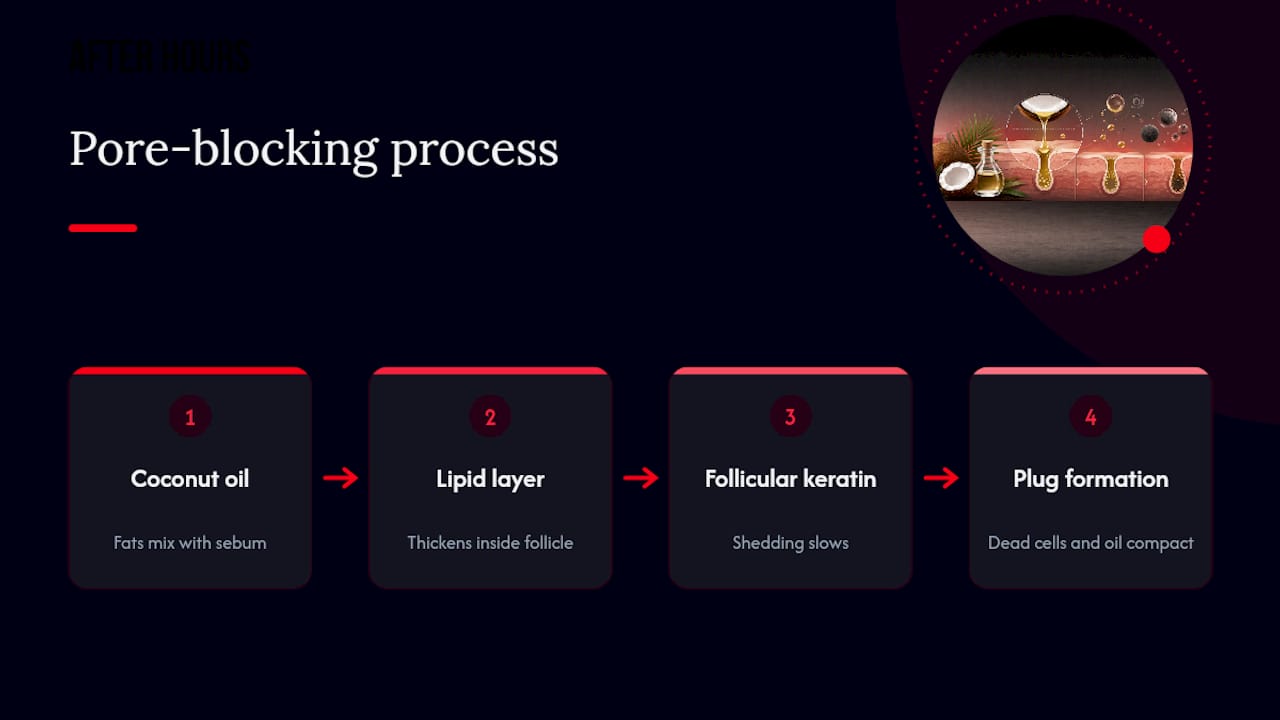
That’s occlusion: mechanical blocking, not irritation. It’s a different mechanism from an irritant reaction, where an ingredient inflames or stings skin without necessarily creating a physical plug. Coconut oil can technically do both, but the pore-clogging effect is the dominant concern for most users.
There’s a secondary risk worth naming: fungal folliculitis. Malassezia, the yeast responsible for pityrosporum folliculitis, feeds on certain lipid substrates found in richer oils, and research on lipid-rich topical products notes that susceptible individuals can see flare-ups after applying oils that supply the right fuel. If your “breakouts” are small, itchy, uniform bumps rather than classic spots, this mechanism, not straightforward comedogenic blocking, may be the real culprit.
Lab claims versus clinical results: what actually holds up
Isolated lauric acid genuinely does fight Cutibacterium acnes in vitro. That finding gets repeated constantly in coconut-oil skincare content, and it isn’t wrong. It’s just incomplete.
Isolated fatty-acid activity in a test tube is not the same as proven benefit from smearing whole coconut oil on an acne-prone face. The gap between “kills bacteria in a dish” and “clears breakouts on skin” is where most of the marketing around coconut oil quietly falls apart.
Healthline’s review of the acne evidence makes the same point: no clinical trial has demonstrated that applying whole coconut oil to acne-prone facial skin reduces breakouts. The antimicrobial data exists at the molecular level, not the whole-oil, real-face level.
Where coconut oil does have genuine clinical backing is dry and eczema-prone skin. A randomised controlled trial (PMID 24320105) compared virgin coconut oil against mineral oil in children with atopic dermatitis and found a measurable improvement in SCORAD severity scores with coconut oil. That’s a real result, but it comes from a different population with a different skin problem, on body skin rather than acne-prone faces.
Put those two strands together and the honest conclusion is this: coconut oil has plausible antimicrobial potential and demonstrated benefit for dry, eczema-affected skin, but no clinical evidence supports it as an acne treatment for the face, and its comedogenic rating suggests real caution is warranted there.
Who should avoid coconut oil, and who might tolerate it
Skin type determines almost everything here. If you have oily, acne-prone, or combination skin, coconut oil’s occlusive, pore-blocking tendency works directly against you. Anyone prone to fungal acne should be equally cautious, since the lipid profile can feed Malassezia overgrowth rather than calm it.
Lower-risk scenarios do exist:
- Very dry patches on elbows, heels, or knees, where skin is thick and pore density is low
- Some eczema-affected body skin, backed by the clinical trial data above, though not a universal fix for every eczema case
- Short-term, small-area use where you can monitor the skin’s response closely
Formulation changes the calculus too. Fractionated coconut oil has had its longer-chain saturated fractions removed and stays liquid at room temperature, making it generally less comedogenic than unrefined virgin coconut oil. Rinse-off use in a cleanser also carries far less risk than a leave-on application, and lower concentrations in a blended formula behave differently to the pure oil straight from the jar.
Pro Tip: If you’re testing any coconut-oil-containing product on your face, apply it to a small patch behind your ear or along the jawline for a full week before committing to broader use. Comedones often take longer than a couple of days to show up.
How to trial coconut oil safely, and what to use instead
If you want to test coconut oil despite the risk profile, structure the trial properly:
- Apply a small amount to one confined area (jawline or behind the ear) for 7 to 14 days.
- Watch for small bumps, blackheads, or texture changes; stop immediately if they appear.
- If using it as a makeup remover or cleansing oil, always follow with a water-based cleanser. A single oil cleanse alone can leave residual lipids behind, which raises occlusive risk rather than lowering it.
- Reassess after two weeks before deciding whether to continue.
For most people wanting facial hydration without the gamble, other ingredients do the job with far less comedogenic baggage:
| Ingredient | Best suited for | Why it works |
|---|---|---|
| Squalane | Oily, acne-prone, combination skin | Lightweight, mimics natural sebum, near-zero comedogenic rating |
| Jojoba oil | Normal to dry skin | Structurally similar to sebum, absorbs without heavy residue |
| Glycerol-based moisturisers | Sensitive, dehydrated skin | Draws in water rather than sitting occlusively on top |
See a dermatologist if breakouts persist beyond two to three weeks after stopping any oil, or if you notice cystic, painful lesions rather than surface-level comedones.
Where Afterhoursbodybutter stands on oils and pore risk
The brand formulates with vegan, chemical-free ingredients chosen partly to manage comedogenic risk while still delivering the fat-soluble vitamins skin needs for hydration. Rather than relying on a single heavy oil in isolation, formulations balance concentration and ingredient pairing so richness doesn’t automatically mean blocked pores. Some customers with sensitive or acne-affected skin have reported visible improvements in texture and reduced irritation, which influences formulation decisions.
The real problem isn’t coconut oil, it’s blanket advice about oils
The conventional wisdom on this topic swings too hard in both directions. Coconut oil enthusiasts point to lauric acid’s lab-tested antimicrobial power as though it settles the argument. Sceptics dismiss coconut oil entirely, ignoring that it has genuine, trial-backed value for dry and eczema-prone body skin.
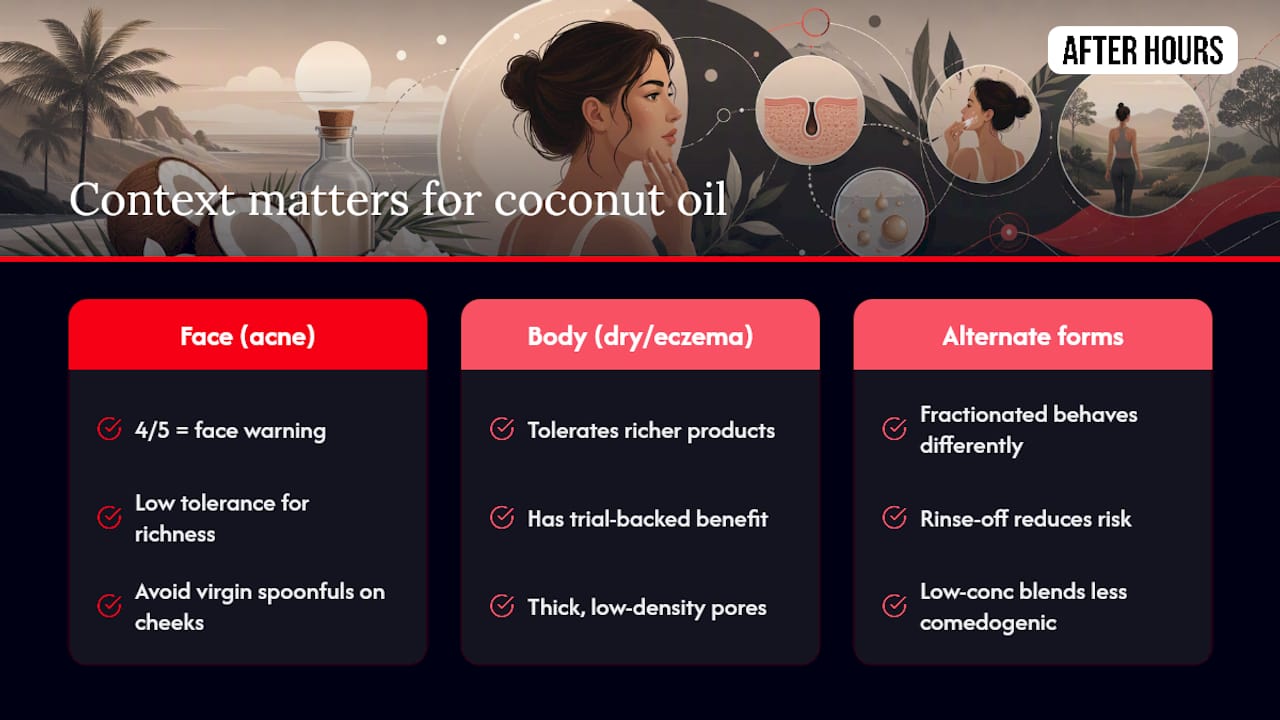
Both camps skip the actual variable that matters: where on your body you’re using it, and in what form. A 4/5 comedogenic rating is a face-skin warning, not a universal verdict on the ingredient. Fractionated versions, rinse-off formats, and small concentrations in a blended body product behave nothing like a spoonful of virgin coconut oil smeared across acne-prone cheeks.
If you take one thing from the evidence, take this: match the ingredient to the job. Body skin with thick, low-density pores tolerates richness that facial skin, particularly oily or acne-prone facial skin, simply won’t. Chase clinical relevance over lab-bench headlines, and treat “natural” as a description, not a safety guarantee.
— Darnell
When a body butter beats raw coconut oil in your routine
Raw coconut oil earns its comedogenic reputation on facial skin, but the same richness that causes problems on your face can be genuinely useful on the body, provided it’s formulated with pore-clogging risk in mind rather than used straight from the jar. That’s the gap Afterhoursbodybutter’s range of body butters is built to fill: vegan, chemical-free formulations designed to hydrate without the occlusive overload of pure coconut oil.

To be clear about limits: none of this is a substitute for treating active facial acne, and raw coconut oil has no place there regardless of formulation elsewhere. For body and sensitive-skin moisturising, though, a body moisturiser suited to acne-prone skin offers a more considered starting point than reaching for the coconut jar. Browse the current range and pick a formulation matched to your skin’s actual needs, rather than its marketing.
Sources
This article is general information, not a substitute for advice from a qualified doctor. Consult a qualified healthcare professional about your own circumstances before acting on anything here.