

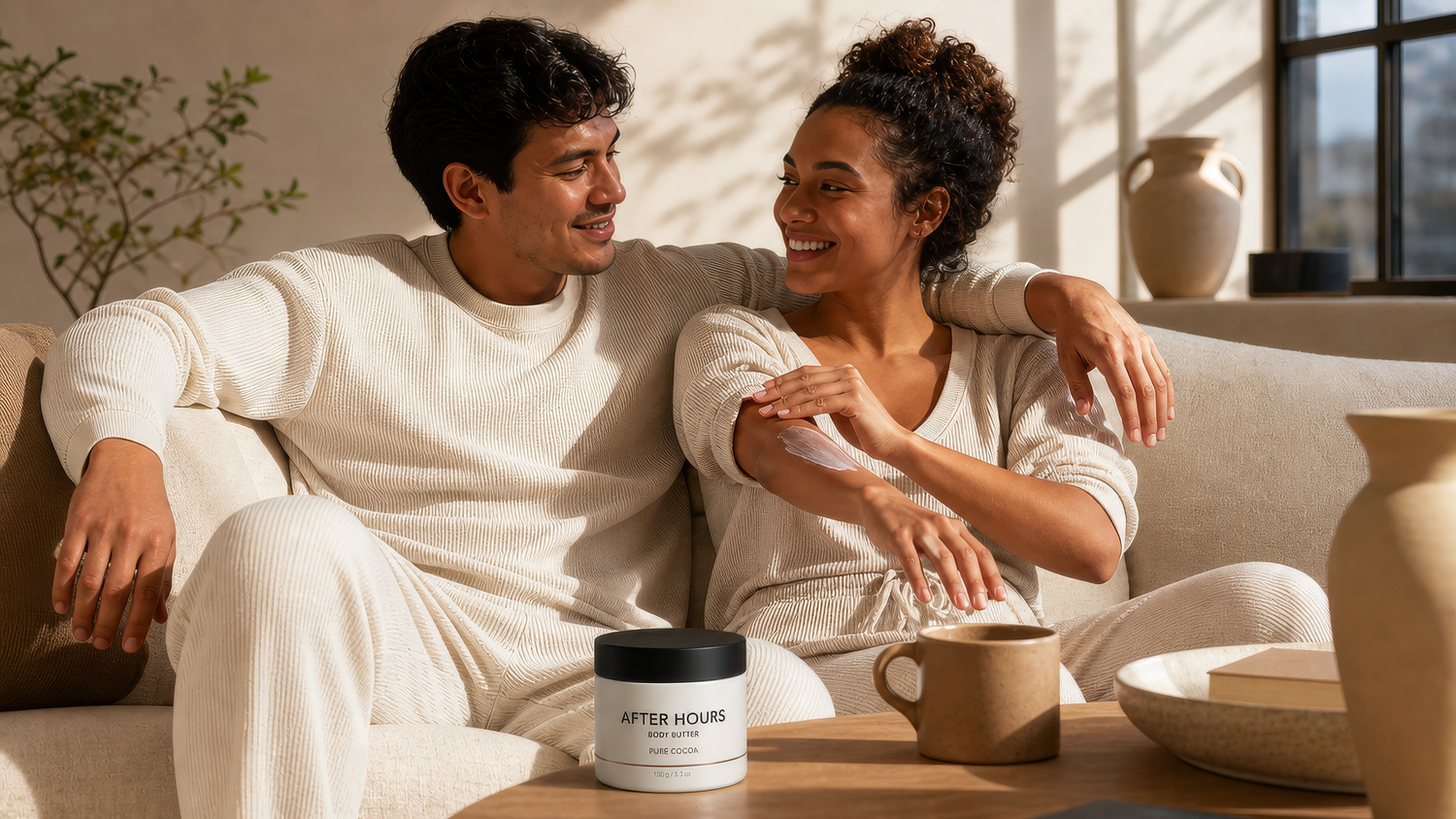

Emollients are essential to treating contact dermatitis, not optional extras. Choose fragrance-free creams or ointments over lotions when skin is dry or cracked, and apply them liberally straight after washing, as recommended in this selection of gentle skin-care products. If the rash spreads, weeps, or shows signs of infection, see a GP rather than relying on moisturiser alone.
TL;DR:
- Use fragrance-free ointments or creams with ceramides, glycerin, and petrolatum, especially during active dermatitis or when skin is very dry or inflamed.
- Apply moisturizers within three minutes of bathing and reapply several times daily, especially after handwashing or if dermatitis affects the hands.
- Patch-test any new moisturizer on the inner forearm for three to five days to check for adverse reactions before wider use.
- Combine moisturizers with short ingredient lists and avoid known sensitisers such as preservatives, botanical extracts, and fragrances.
- Seek medical advice for stubborn, spreading, or infected dermatitis, and avoid relying on moisturizers alone once inflammation worsens.
Table of Contents
- Why moisturisers matter for contact dermatitis
- How do I choose the right moisturiser?
- When and how should I apply moisturiser?
- When is moisturiser not enough?
- Which ingredients should I check for on the label?
- Why simpler formulations win, most of the time
- Finding a moisturiser that fits this approach
- Sources
Why moisturisers matter for contact dermatitis
Emollients aren’t just about comfort. They slow water loss through the skin, form a protective film over damaged barrier tissue, and calm the itch that drives the scratch-damage cycle in dermatitis. The NHS lists emollients as a first-line treatment, used far more often than steroid creams because they’re safe for daily, long-term use.
Formulation matters more than most people realise:
- Ointments carry the highest lipid content and sting least on broken or very dry skin.
- Creams balance barrier support with a texture people can tolerate wearing under clothes or at work.
- Lotions absorb fastest but offer the thinnest barrier, making them a weaker choice for active dermatitis.
The clinical evidence backs this up. A randomised multicentre trial of 312 people with irritant contact dermatitis found that twice-daily use of a specialised moisturising cream over four weeks produced statistically significant improvements in scaling, dryness, redness, and itch (p<0.001). That’s not a marginal effect. It’s one of the clearer demonstrations that the right cream, used consistently, changes the course of the rash rather than just masking it.
How do I choose the right moisturiser?
Look past the marketing copy on the front of the pack and check three things: the fragrance claim, the texture, and the ingredient list.
- Choose “fragrance-free” or “perfume-free,” not “unscented.” Unscented products often still contain masking fragrances added to cover the smell of raw ingredients, and those can sensitise skin just as readily as a perfume would.
- Match texture to the skin’s condition. Very dry, non-inflamed patches respond best to a thick cream or ointment. Actively inflamed, weeping areas usually tolerate a lighter cream better, since heavy oils can trap heat and irritation.
- Favour ceramides, glycerin, and petrolatum. Small clinical studies show skin-identical ceramide creams improve hydration and reduce dermatitis severity scores, which points to a real barrier-repair effect rather than a purely cosmetic one.
- Avoid known sensitisers if you’ve reacted before, including certain preservatives and botanical extracts, even ones labelled “natural.”
Before committing to a full-size tub, patch-test anything new. Apply a small amount to the inner forearm twice daily for three to five days. No redness, itching, or bumps means it’s likely safe for wider use.
Pro Tip: Keep a note on your phone of every product that’s caused a reaction, including the exact ingredient list. Patterns emerge fast once you’ve had two or three flare-ups, and that list becomes the fastest way to rule out repeat offenders at the shelf.
When and how should I apply moisturiser?
Timing and technique matter almost as much as the product itself.
- Apply within about three minutes of bathing, while skin is still slightly damp. This is the “soak and seal” method, and it locks in moisture that would otherwise evaporate within minutes of leaving the bath or shower, according to dermatology guidance on eczema care.
- Use a generous amount and smooth it on rather than rubbing it in. Rubbing generates friction, which irritates already-compromised skin.
- Reapply several times a day, and always after handwashing if the dermatitis affects your hands. Keep a small tub or tube at the kitchen sink, bathroom sink, and desk so reapplication doesn’t depend on remembering to walk to the bedroom.
- Use clean hands or a spatula to scoop from tubs, since fingers introduce bacteria that can contaminate the product over weeks of use.
For more stubborn flares, wet-wrap therapy, applying moisturiser then covering the area with damp bandages, can boost hydration and help topical treatments penetrate. It’s worth doing under a clinician’s guidance rather than improvising, particularly for children or large affected areas.
When is moisturiser not enough?
Emollients treat the skin barrier. They don’t treat active inflammation once it’s taken hold, and that’s where a lot of people stall out, reapplying cream for weeks without improvement.
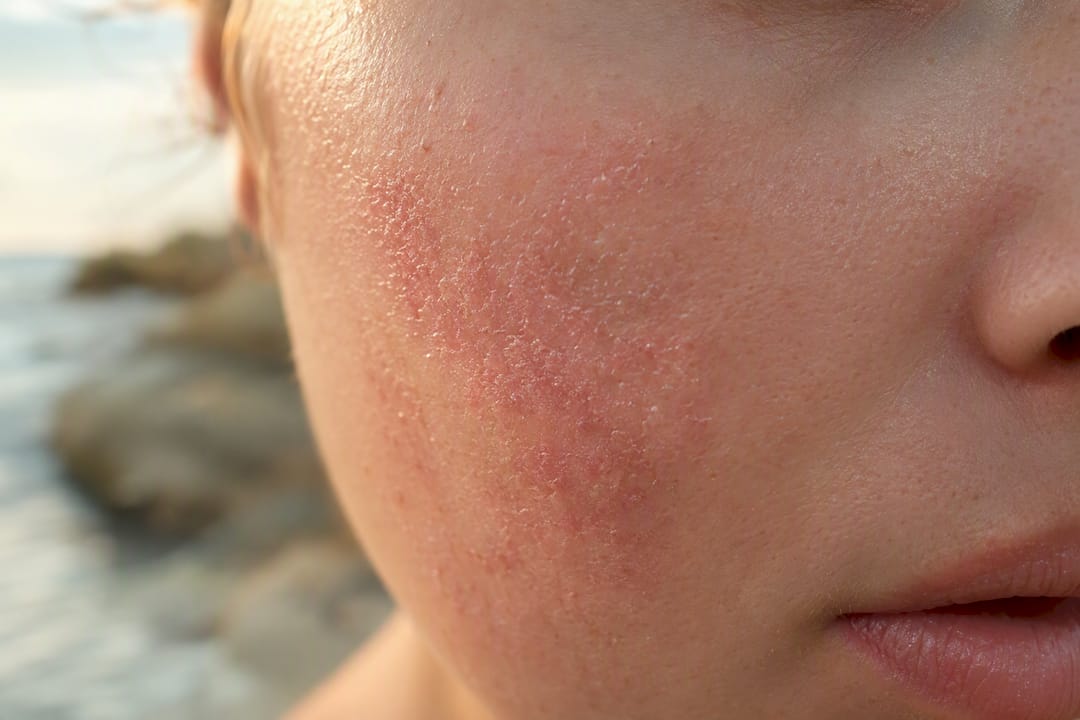
Over-the-counter 1% hydrocortisone can ease itch during a short flare, typically used for no more than a week without medical advice. For more inflamed or persistent patches, a GP may prescribe a stronger topical steroid. The rule here is simple: moisturisers continue alongside prescribed treatment, never instead of it, and steroid courses should follow the duration your clinician sets rather than being extended informally.
See a GP or dermatologist if you notice:
- A rash that keeps spreading despite avoiding the suspected trigger.
- Signs of infection, such as pus, increasing pain, or spreading warmth.
- Severe pain, blistering, or any systemic symptoms like fever.
If the trigger isn’t obvious, a clinician may recommend patch testing to identify the specific allergen, which matters most for recurring or unexplained flares that don’t settle with basic avoidance and moisturising.
Which ingredients should I check for on the label?
A handful of ingredient groups account for most allergic reactions to moisturisers, and knowing them saves a lot of trial and error.
- Fragrance, listed as “parfum” or “fragrance,” even in trace amounts within “unscented” products.
- Preservatives, particularly methylisothiazolinone and formaldehyde-releasing agents, which are among the most common culprits in contact allergy.
- Certain emulsifiers, lanolin, and botanical extracts, which sensitise a meaningful minority of users despite their “natural” reputation.
Simplified, skin-identical formulations with short ingredient lists carry lower sensitisation risk than complex blends, since each additional ingredient is another potential allergen sitting on already-compromised skin.
Why simpler formulations win, most of the time
Most advice on contact dermatitis treats “natural” and “gentle” as interchangeable. They’re not. Plenty of the sensitisers dermatologists see most often, certain botanical extracts, essential oils, lanolin, arrive in products marketed specifically as gentle or natural. The safer signal isn’t the word “natural” on the front of the pack. It’s the ingredient count on the back.
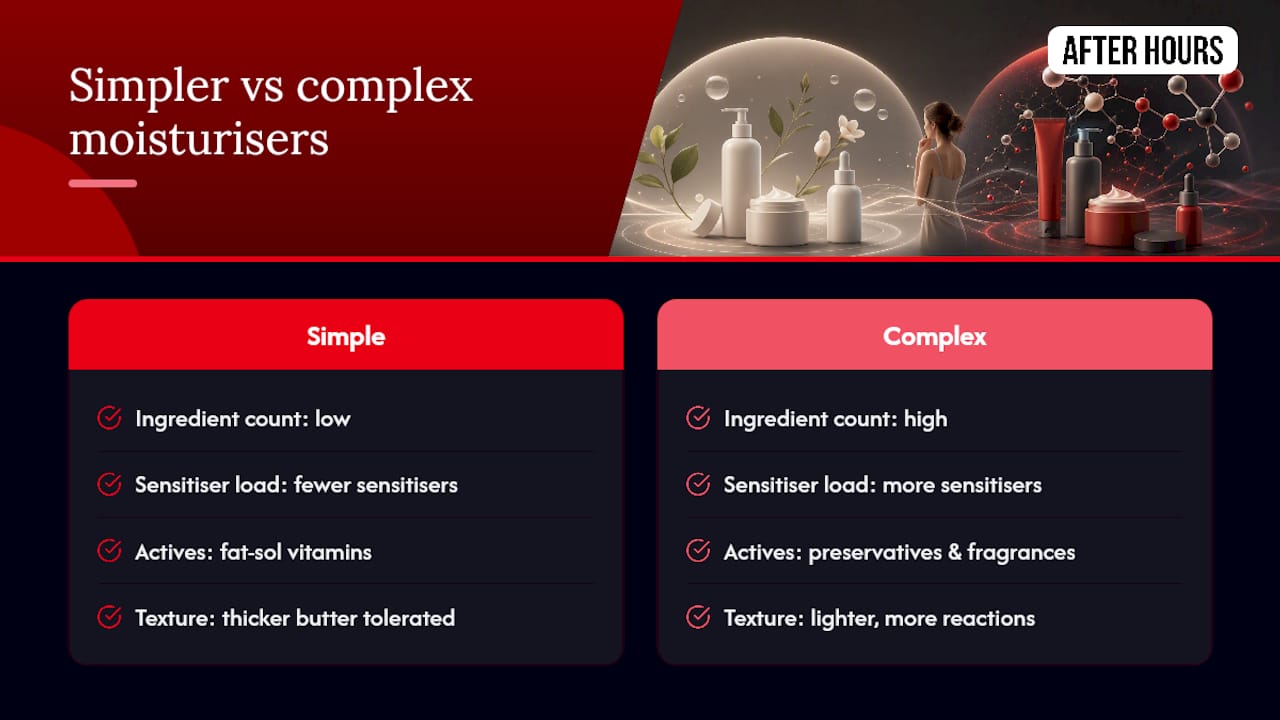
Afterhoursbodybutter builds its vegan, chemical-free formulations around that principle: fat-soluble vitamins and nutrients doing the barrier-repair work, without the long preservative and fragrance lists that cause most reactions. Customers with sensitive or acne-prone skin tend to tolerate the thicker butter-based textures well precisely because there’s less in the jar to react to, not more.
This isn’t the whole picture, though. Formulation choice matters, but so does the discipline of patch-testing anything new and knowing when a rash has moved past what moisturiser alone can fix.
— Darnell
Finding a moisturiser that fits this approach
If you’ve read this far, you already know what to look for: fragrance-free, short ingredient lists, and a texture that matches how dry or inflamed your skin actually is. That’s precisely the brief Afterhoursbodybutter builds to. Its vegan, cruelty-free body butters skip the fragrance and filler ingredients that trigger most reactions, relying instead on fat-soluble vitamins and nutrients to support the skin barrier, made and packaged sustainably in the UK.
Trial any new product the same way you would trial a pharmacy moisturiser: patch-test on the inner forearm for three to five days before applying it more widely. If your dermatitis is actively inflamed, weeping, or spreading, that’s a job for a clinician and a prescribed treatment first, with a maintenance moisturiser added once things calm down. For everyday barrier support and long-term dryness, check the full range of body butters and start with a smaller size to test how your skin responds before committing to a full tub.
Sources
- Contact dermatitis - Treatment NHS
- Skin-identical ceramide complex cream study PMC
- Multicentre trial of moisturiser efficacy SAGE
- Contact dermatitis - Diagnosis and treatment Mayo Clinic
This article is general information, not a substitute for advice from a qualified doctor. Consult a qualified healthcare professional about your own circumstances before acting on anything here.