


The most reliable sustainable routes for body butter are refillable jars with recyclable inner pods and mono-material aluminium or tin containers, chosen only after formula compatibility testing. High-oil formulations need barrier-tested solutions, not just “green” claims. End-of-life outcomes depend heavily on local recycling infrastructure and consumer behaviour, so clear disposal labelling or take-back options matter as much as the material itself.
TL;DR:
- Refillable jars with recyclable inner pods or mono-material aluminium tins are the most reliable options, but they require compatibility testing with oil-rich formulas.
- Glass is best as a refillable outer shell due to its recyclability, but it is heavy and fragile, making it less suitable for single use.
- Refill systems like Gx CyClic® and clear disposal instructions significantly improve actual packaging recovery, especially when paired with proper consumer guidance.
- Packaging must include barrier coatings and design considerations to prevent oil degradation, migration, and staining, or the product’s shelf life is compromised.
- Simply claiming recyclability or compostability can be misleading without supporting infrastructure and proper disposal instructions, making refillability a safer sustainability bet.
Table of Contents
- Sustainable body butter packaging: comparing the materials
- Refill systems: which ones work for body butter?
- Protecting the formula: barrier and design checks
- Where packaging actually ends up
- Supplier examples and what to ask them
- How Afterhoursbodybutter approaches packaging
- The gap between sustainable claims and sustainable results
- Sources
- FAQ
Sustainable body butter packaging: comparing the materials
Choosing sustainable skincare packaging for a high-oil product means weighing recyclability against how the material actually behaves once it meets a thick, oil-rich butter. Not every eco-friendly material survives contact with shea, cocoa, or mango butter without degrading, staining, or leaking.
- Glass: infinitely recyclable and it looks premium on a shelf, but it’s heavy, breakable, and costly to ship. Glass works best as the outer shell in a refillable system rather than a single-use jar, since the environmental cost of one glass jar only pays off across multiple refill cycles.
- Aluminium and tin: offers a strong barrier against oxygen and light, both of which degrade oils over time. Mono-material aluminium tubes, like the design REN Clean Skincare uses, avoid mixed-material laminates that confuse recycling streams. The catch is that small metal items sometimes slip past municipal optical sorters undetected.
- PCR plastics (PET, HDPE): cut virgin plastic use and can be genuinely recyclable, but only when built from a single polymer and accepted by local kerbside schemes. A PP jar with a PET lid often ends up in general waste because sorting facilities can’t separate them economically.
- Bio-based paper and PLA: carries strong low-plastic appeal, and Albéa’s Metamorphosis paper tube shows how FSC-certified fibre can replace much of a tube’s plastic body. But raw paper and oil don’t mix well; without a barrier layer, oil migration causes staining and weakens the structure.
Mono-material design is the thread running through every viable option here. Laminates, mixed caps, and multi-polymer builds might look sustainable on the label, but they create friction at the recycling stage that undoes the benefit. A single-material jar or tube, even if it’s a less exotic material, usually beats a clever composite that no facility can actually process.
Refill systems: which ones work for body butter?
Refillability changes the maths on sustainable packaging entirely, because it means the primary environmental cost, the outer jar, gets amortised across many uses rather than one. For body butter specifically, three systems dominate the conversation.
- Reusable outer jar with a replaceable pod. Gerresheimer’s Gx CyClic® system pairs a jar containing up to 40% PCR glass with a recyclable inner pod, and it’s a strong template for premium body-care brands. The mechanics matter as much as the materials here: a fiddly refill mechanism gets abandoned after one or two cycles.
- Refill pouches. Lighter to ship and lower in transport emissions than rigid refills, but body butter is thick and often needs decanting rather than squeezing, so seal quality and clear instructions are non-negotiable.
- Pre-filled recyclable pods versus concentrated refills. Pods are less messy for the customer but add packaging weight; concentrates cut shipping weight but ask more of the user. Neither is universally “better”, it depends on your customer’s patience for a bit of DIY.
Pro Tip: Test refill mechanics with real customers, not just your team. A click-in or tab-release pod that seems obvious in the office can baffle someone opening it for the first time at home, and that first impression decides whether they ever buy a refill again.
Behind the scenes, refill systems change your operations too. Inventory splits between outer jars and refill units, returns logistics get more complex, and minimum order quantities on pods are often higher than brands expect from a standard jar run.
Protecting the formula: barrier and design checks
A sustainable material that ruins the product inside it isn’t sustainable, it’s a returns problem. Oil-rich body butters are particularly demanding on packaging because oils are chemically reactive with certain plastics and can permeate uncoated paper or fibre-based structures over time.
- Barrier coatings and cosmetic-grade liners are essential for anything that isn’t glass or properly treated metal. Agropak’s bio-composite jar, made from coconut shell powder and bamboo fibre, uses an inner barrier coating specifically to handle this.
- Jar and tube geometry affects more than aesthetics. Wide-mouth jars suit thick butters that need scooping, while narrow-neck tubes demand a softer formulation and different fill-line automation.
- Closure choice carries recycling consequences: screw-tops are easy to recycle if mono-material, airless pumps often mix plastics and metal springs, and inner pod seals need to separate cleanly from their housing.
- Testing checklist: migration testing (does the oil interact with the packaging polymer?), accelerated shelf-life testing, and drop or compression testing for jars destined for shipping. Shelf-life research on oil-only versus water-based formulations shows how much the base recipe itself dictates which packaging will actually protect it.
Skip any of these checks and you risk discovering the problem only after a batch of returns tells you the answer.
Where packaging actually ends up
Marketing a jar as “recyclable” or “compostable” means little if the claim doesn’t match what happens in a real household bin. Kerbside recycling systems struggle with small items, mixed materials, and anything that hasn’t been rinsed clean, and body butter residue is exactly the kind of stubborn contamination that gets a whole load rejected.
- Small-format aluminium or plastic components can pass straight through optical sorters unrecovered, which is why take-back schemes improve actual recovery rates far more than kerbside collection alone for these formats.
- “Compostable” needs a qualifier. Industrial compostable packaging requires facilities most councils don’t operate, while home compostable materials break down in a garden bin. Confusing the two on your label sets customers up to fail at disposal.
- Label copy should tell people exactly what to do: “rinse and recycle,” “return pod by post,” or “compostable at industrial facilities only.” Vague green iconography without instructions gets ignored.
- When in doubt, favour refillability over a compostable claim. A refill system removes packaging from the waste stream entirely for several cycles, which is a more certain lifecycle win than betting on a customer’s local composting access.
Supplier examples and what to ask them
A handful of named suppliers illustrate the range of solutions actually available to brands today, rather than concepts still stuck in a lab.
- Gerresheimer’s Gx CyClic® for glass refill jars with recyclable pods, useful where you want a premium reusable system.
- Albéa’s Metamorphosis paper tube for brands wanting to cut plastic content in a tube format, though check oil compatibility first.
- Agropak’s bio-composite jars, built from coconut shell powder and bamboo fibre with a barrier coating, independently verified by TÜV SÜD for bio-based carbon content and drop performance.
- Sulapac, a materials specialist that stresses balancing sustainability with premium aesthetics and formula stability, a useful reminder that a beautiful jar that leaks isn’t a sustainability win.
- REN Clean Skincare’s mono-material aluminium tubes as a working example of single-polymer design at commercial scale.
When you talk to any of these suppliers, ask for barrier compatibility evidence specific to high-oil formulations, PCR or FSC certification documents, minimum order quantities, lead times, and whether a sample or evaluation kit exists. Run a small pilot batch before committing to a full production run, and insist on independent test data rather than a supplier’s own marketing claims.
How Afterhoursbodybutter approaches packaging
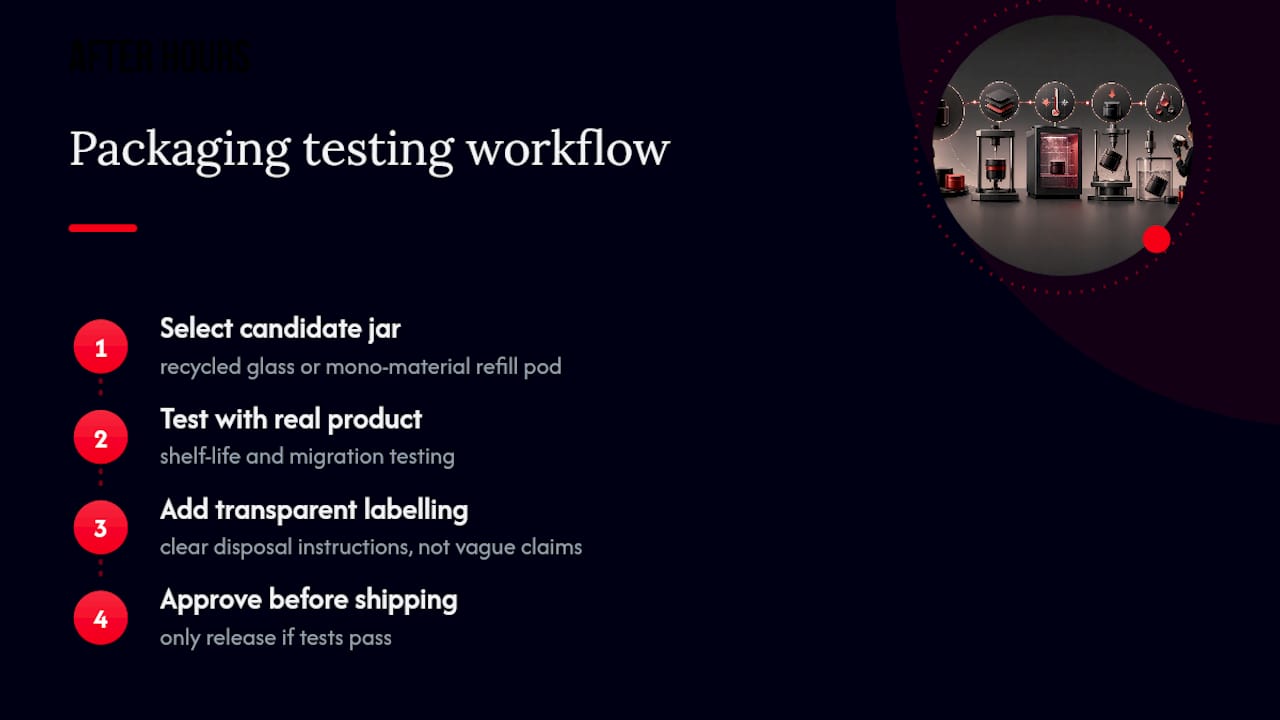
Afterhoursbodybutter’s products are formulated and packaged sustainably in the UK, which shapes every packaging decision around what a fat-soluble, oil-rich formula can actually tolerate. A realistic path for a brand like this means testing a candidate jar, whether recycled glass or a mono-material refill pod, against real product for shelf-life and migration before it ever reaches a customer. Transparent labelling on disposal, rather than vague green claims, keeps that testing meaningful once the jar leaves the warehouse.
The gap between sustainable claims and sustainable results
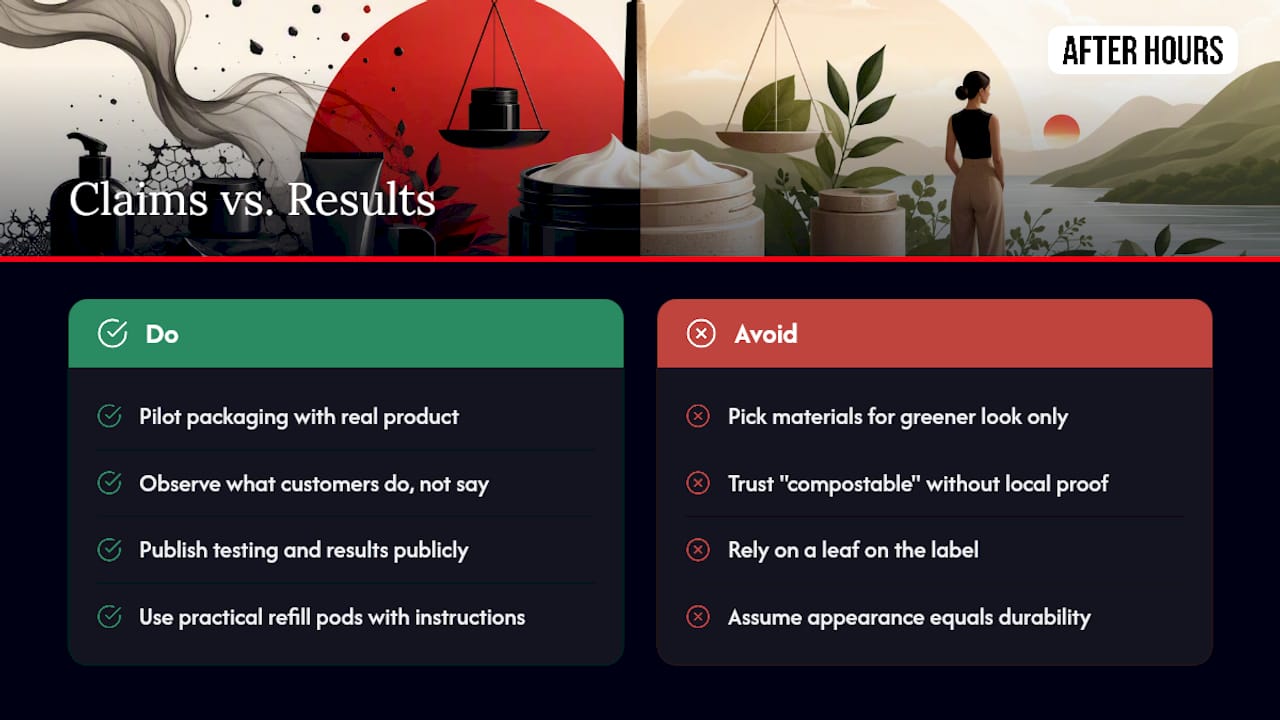
Sustainability in packaging gets treated as a checkbox: pick the greener-sounding material, print a leaf on the label, move on. That approach fails body butter specifically, because the formulation punishes shortcuts. A paper tube that looks wonderfully plastic-free but stains within three months isn’t sustainable, it’s a product that gets thrown away twice.
What actually works is unglamorous. Pilot the packaging with real product, listen to what customers do with it rather than what they say they’ll do, and publish the testing you’ve run rather than the claim you’d like to make. A refill pod with clear “post it back” instructions will often beat a compostable jar that nobody’s council can actually compost.
— Darnell
Sources
- REN Clean Skincare mono-material aluminium tubes (case example)
- Gx CyClic® refill jar — Gerresheimer
- Agropak bio-composite cosmetic jars
- Sulapac
FAQ
What is the most sustainable packaging for body butter?
Refillable jars paired with recyclable inner pods, or mono-material aluminium tins, currently offer the strongest balance of recyclability and formula protection. The right choice always depends on passing barrier and migration testing against your specific formulation first.
Can body butter go in compostable packaging?
Only if the compostable material has a barrier layer that withstands oil contact, since uncoated paper and fibre packaging can stain or degrade when exposed to high-oil formulas. Industrial compostable claims also require facilities most households don’t have access to, so check local infrastructure before making that promise.
Is glass or aluminium better for body butter jars?
Glass is infinitely recyclable and suits refillable outer jars, but it’s heavier and breakable in transit. Aluminium offers a strong barrier against light and oxygen and works well as a mono-material tube, though small aluminium items can be missed by standard recycling sorters.
Why does mono-material design matter for skincare packaging?
Mixed-material laminates and multi-polymer caps are difficult and often uneconomical for recycling facilities to separate. A single-material jar or tube, even in a less exotic material, is far more likely to actually get recycled than a mixed-material design marketed as eco-friendly.
How do refill systems reduce packaging waste?
Refill systems spread the environmental cost of the outer jar across multiple uses instead of one, cutting new packaging production per purchase. Systems like Gx CyClic® show that intuitive click-in or tab-release mechanics are what actually drive customers to keep refilling rather than buying a new jar each time.