

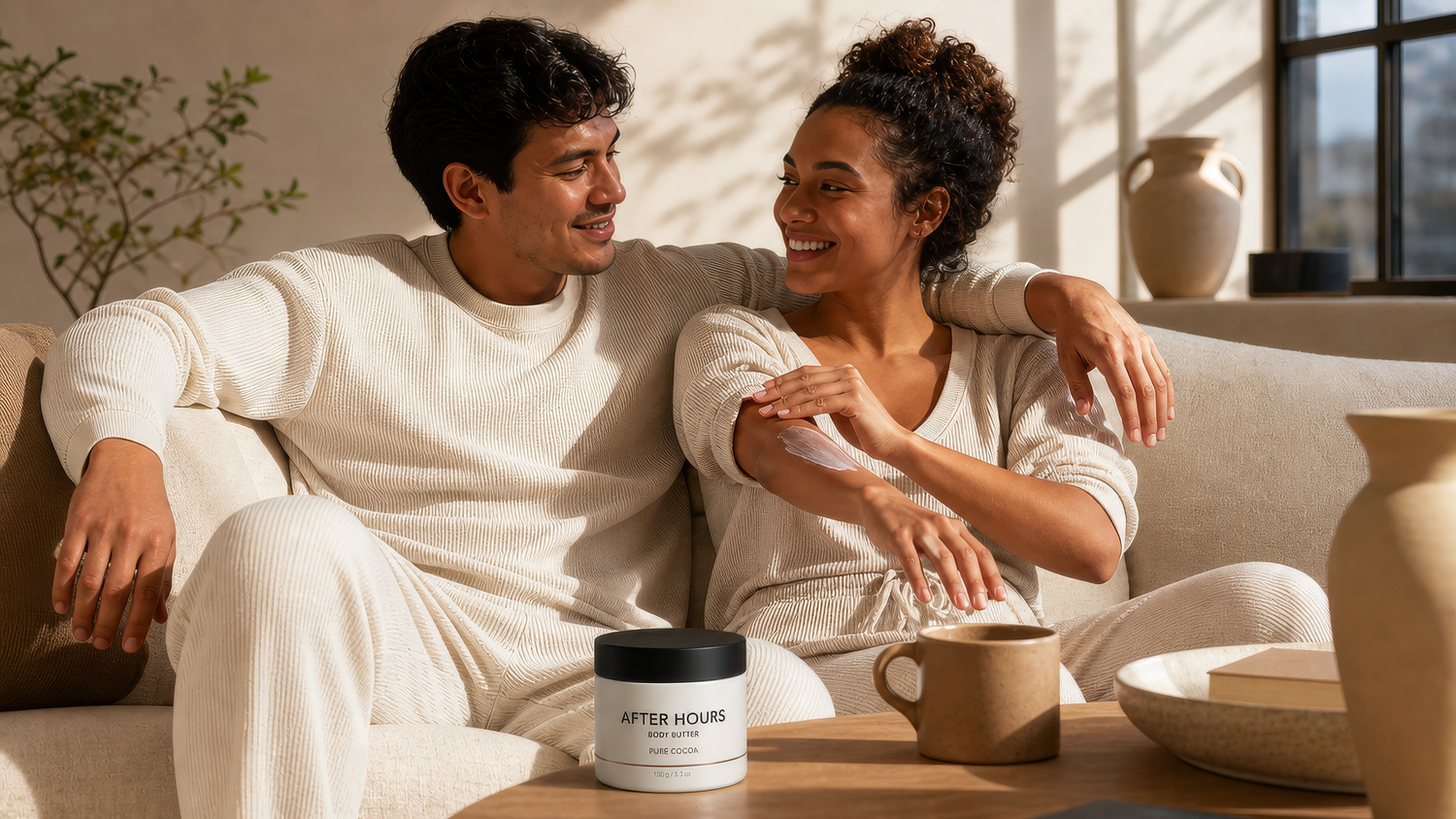

For sensitive or irritated skin, choose a fragrance-free moisturiser built on colloidal oat or ceramides, and reach for a rich vegan body butter on very dry patches. This combination repairs the skin barrier while avoiding the fragrance and alcohol irritants that trigger flare-ups. After Hours Body Butter’s fragrance-free, chemical-free formulas fit this brief directly.
TL;DR:
- Fragrance-free, barrier-supporting moisturisers with active ingredients like ceramides, colloidal oat, or niacinamide are most effective for sensitive and irritated skin.
- Lighter formulas such as gels and lotions suit warm weather and oily skin, while richer butters are best for winter dryness, eczema, or severe cracking.
- A calming moisturizer should contain anti-irritants, humectants, and emollients working together, with fragrance and essential oils avoided due to their irritant potential.
- Consistent application after bathing, on damp skin, and twice daily enhances long-term repair and reduces persistent redness or cracking.
- After Hours Body Butter offers vegan, chemical-free options that meet these criteria, supporting skin barrier health and reducing irritation symptoms.
Table of Contents
- Which format of calming body moisturizer should you use?
- What makes a moisturiser calming, chemically speaking?
- How to choose a calming moisturiser for sensitive skin
- How to apply a calming moisturiser for the best results
- What the evidence says about calming ingredients
- Why After Hours Body Butter fits this checklist
- Which calming moisturiser suits your specific skin condition?
- Why the “more ingredients equals better” myth persists
- Get the calming body butter that matches this checklist
- Sources
Which format of calming body moisturizer should you use?
Skin type, season, and how irritated the skin currently is should decide the format, not the marketing on the front of the bottle. A lightweight lotion on cracked, weeping skin does little; a heavy butter on oily, acne-prone skin in July can clog pores and make things worse.
Gels and lotions absorb fast and suit warmer months, oilier skin, or anyone who wants a moisturiser they can apply and dress over within minutes. Retailer buying guides consistently point shoppers toward lighter formulas in summer and richer textures in winter, because drier air and central heating pull more moisture from skin during colder months.
Creams sit in the middle. They carry more oil than a lotion but still spread easily, making them a sensible everyday choice for normal-to-dry skin that isn’t in active crisis.
Body butters and balms are the heavyweights. Their high fat content forms an occlusive layer that seals in water, which is exactly what cracked heels, eczema-prone elbows, or winter-ravaged shins need. Product listings for calming formulations often separate gel options for fast absorption from richer butters reserved for occlusion on very dry skin.
Here’s a quick way to match format to need:
- Lightweight gel or lotion: oily or normal skin, warm weather, mild dryness, or you want fast absorption before getting dressed.
- Cream: everyday dry skin without active irritation, all-round moisturising.
- Rich body butter or balm: eczema-prone patches, cracked heels, winter dryness, or skin that feels tight within hours of moisturising.
- Fragrance-free versions of any format: sensitive, reactive, or currently inflamed skin, regardless of season.
- Lightly fragranced natural formulas: only for skin that tolerates botanicals well and shows no current irritation.
For immediate soothing, look for colloidal oat or aloe on the label. For longer-term repair, ceramides do the heavier structural work. Many people need both: a soothing agent to calm the itch now, and a barrier ingredient to stop the itch coming back.
What makes a moisturiser calming, chemically speaking?
“Calming” isn’t a regulated term, so it helps to know what’s actually happening in the formula. A genuinely calming body moisturiser combines an anti-irritant active, a humectant to draw in water, and an emollient or occlusive to lock that water in. Each does a different job, and a good product needs all three working together rather than one flashy ingredient carrying the label.
Colloidal oat, aloe vera, bisabolol, and panthenol (provitamin B5) are the actives most associated with immediate calming. Colloidal oat contains avenanthramides, compounds that have a long history of use in reducing itch and redness, which is why Aveeno’s Calming Relief range and similar formulations build entire product lines around it. Bisabolol, derived from chamomile, and panthenol both help reduce the sensation of tightness and irritation without adding fragrance load.
Barrier-repair ingredients work on a slower timeline but matter more for lasting results. Ceramides, fatty acids, cholesterol, and niacinamide rebuild the lipid matrix that holds skin cells together, the same structure that dry, cracked, or eczema-affected skin has lost. Editorial reviews of soothing body creams consistently favour formulas built around ceramides, niacinamide, or cica-style actives over ones led purely by fragrance or trend ingredients, because barrier repair produces results that outlast a single application.
Editorial consensus: reviewers assessing soothing body creams consistently rank barrier-repair actives like ceramides and niacinamide above trending botanicals, because repaired skin stays calm long after the moisturiser has absorbed.
Texture matters too. Humectants such as glycerin and hyaluronic acid pull water into the skin’s surface but need an occlusive layer (shea butter, squalane, petrolatum-alternatives) to stop that water evaporating straight back out. A gel-only formula with no occlusive can leave dry skin feeling temporarily hydrated, then tighter than before within the hour.
Fragrance, including “natural” essential oils, is the most common irritant in this category. Reviewers testing body moisturisers for dry or sensitive skin repeatedly flag fragrance and essential oil content as a reason otherwise good formulas fail for reactive skin, even when marketed as gentle. A trace of a naturally derived scent can be fine for skin that isn’t currently inflamed, but active irritation calls for fragrance-free, full stop.
Watch for label claims that sound scientific but say nothing: “dermatologist recommended,” “clinically tested,” and “hypoallergenic” have no fixed regulatory definition. What matters is the actual INCI list, not the front-of-pack promise.
How to choose a calming moisturiser for sensitive skin
A short checklist beats scanning marketing copy for reassuring words. Run any potential moisturiser through these five questions before it goes in your basket:
- Is it fragrance-free? Not “unscented” (which can mean masking fragrance), but genuinely free of added perfume.
- Is the INCI list short and recognisable? Fewer, purposeful ingredients generally means fewer chances to react.
- Does it contain at least one barrier or calming active? Ceramides, colloidal oat, niacinamide, aloe, or panthenol should appear in the first half of the list.
- Is it non-comedogenic if you’re prone to body acne or breakouts? Heavy mineral oils and certain silicones can clog pores on the back, chest, and shoulders. A dedicated checklist for acne-prone skin covers this in more depth.
- Does it carry credible trust signals? Dermatologist-tested claims and stated moisturisation duration (commonly 24 to 48 hours on manufacturer pages) are worth more when paired with full ingredient transparency, not instead of it.
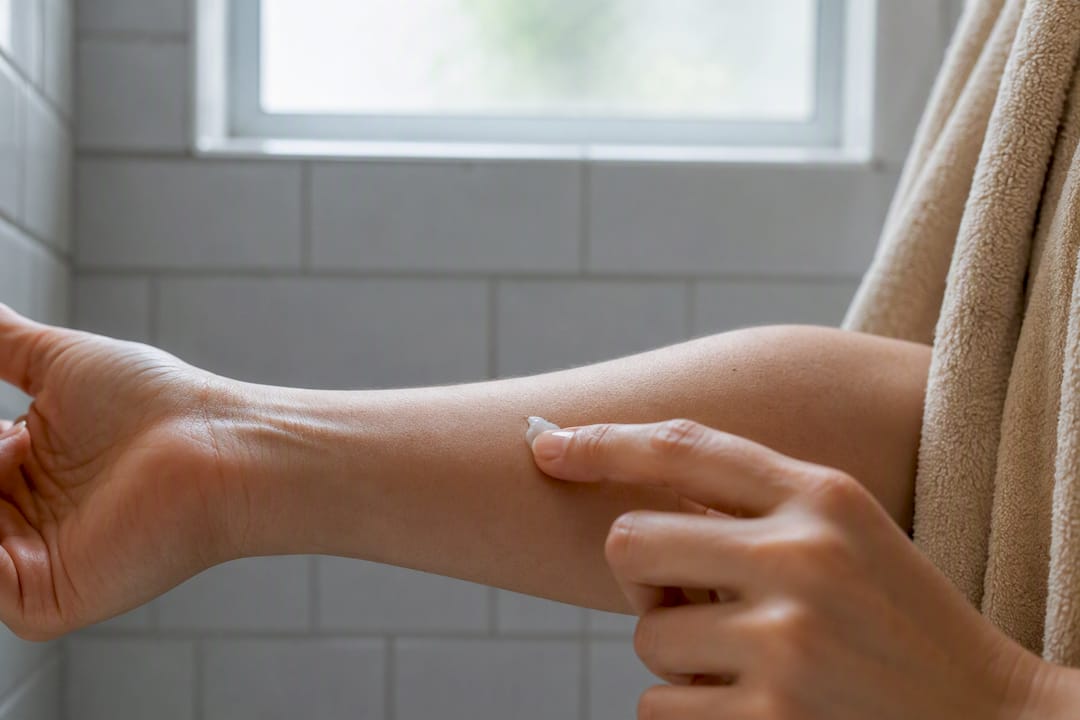
Pro Tip: Buy trial or travel sizes when testing a new formula on already-irritated skin. Apply a small amount to the inner forearm for three consecutive nights before using it anywhere near a flare-up. Reactions to fragrance and preservatives often show up within 48 to 72 hours.
A few red flags should send you back to the shelf. High essential-oil concentration near the top of the INCI list is the most common one, since fragrance load correlates directly with irritation risk. Alcohol denat listed early in the ingredients (rather than near the bottom) signals a drying, potentially irritating formula rather than a calming one. And “natural fragrance” is a vague term with no fixed meaning. It can still contain the same allergenic compounds as synthetic fragrance; it simply comes from a plant source.
Preservative-free formulas deserve a closer look too. They sound appealing for sensitive skin, but a product with no preservative system needs to be used quickly and stored carefully, or it risks microbial contamination that causes far more irritation than any preservative would. Fragrance-free and preservative-free are not the same decision, and conflating them is a common buying mistake.
How to apply a calming moisturiser for the best results
Application technique changes how much calming benefit you actually get from a good formula. Skin absorbs moisturiser most efficiently while still slightly damp, which is why brand guidance on applying body butter consistently recommends moisturising straight after washing rather than once skin has fully dried and tightened.
- Pat skin partially dry after a shower or bath, leaving it damp rather than soaked or bone-dry.
- Use roughly two palm-sized amounts for a full body application, more if you’re targeting particularly dry areas like shins, elbows, or heels.
- Massage lotions and creams in small circular motions until absorbed; for thick body butters, warm a small amount between your palms first so it spreads without dragging on the skin.
- Apply a second, thicker layer to problem patches immediately after the full-body pass, while skin is still receptive.
- Moisturise at least twice daily, with the evening application mattering most, since skin repairs itself overnight and a rich layer left on undisturbed does more barrier-building work than a quick morning swipe.
Pro Tip: Pair your moisturiser with a fragrance-free, non-stripping cleanser. A harsh soap undoes most of what a calming moisturiser is trying to fix, because it strips the same lipids you’re trying to restore. A full sensitive-skin body care routine walks through how cleansing, moisturising, and product layering fit together across a week.
What the evidence says about calming ingredients
Colloidal oat has among the longest track records of any calming active in this category. It works largely through avenanthramides, plant compounds with anti-irritant properties, and manufacturer product pages commonly cite 24 to 48 hours of moisturisation when it’s formulated at effective concentrations, typically in the low single-digit percentages. It suits eczema-prone and generally reactive skin particularly well.
Aloe vera and panthenol work faster but more superficially. Aloe provides an immediate cooling, soothing sensation, useful for sunburn or freshly irritated skin, though its effect is shorter lived than oat’s. Panthenol supports the skin’s own moisture retention and is well tolerated across almost all skin types, including skin currently reacting to something else.
Editorial roundups of soothing body creams treat barrier-repair actives, ceramides, niacinamide, and cica-derived ingredients, as the ones worth paying for, because they address the structural cause of ongoing irritation rather than just the symptom.
Ceramides and niacinamide sit in a different category: repair rather than relief. Ceramides replace lipids the skin has lost, while niacinamide supports the skin’s own barrier proteins and can reduce redness over time. Expect visible improvement in texture and resilience over two to four weeks of consistent use, not overnight.
Fragrance and essential oils remain the most predictable irritant pathway in body care. Reactions typically show through redness, stinging, or small bumps within one to three days of repeated use, which is why a forearm patch test over 48 to 72 hours catches most problems before they reach already-compromised skin.
Persistent inflammation, cracking that doesn’t improve with moisturising, or a rash that spreads is a signal to stop self-treating and see a dermatologist or GP. Over-the-counter calming products are designed for maintenance and mild irritation, not for diagnosing or managing conditions like active eczema flares, psoriasis, or infected skin.
Why After Hours Body Butter fits this checklist
After Hours Body Butter formulates every product as vegan, chemical-free, and cruelty-free, sourcing fat-soluble vitamins and nutrients that support skin barrier function directly rather than masking irritation with fragrance. Products are manufactured and packaged sustainably in the UK, which matters to the eco-conscious buyers who make up a large part of the brand’s customer base.
Customers with sensitive skin and specific concerns, including acne and persistent dryness, have reported measurable reductions in irritation and improvements in skin texture after switching to these formulas. That outcome tracks with what the checklist above demands: barrier-supporting nutrients, no unnecessary fragrance load, and ingredient transparency instead of vague marketing claims.
Readers who want the fuller picture on fragrance-free formulation can read the brand’s breakdown of fragrance-free body butter options, or the deeper explainer on rich, nourishing butters for anyone deciding between a cream and a proper occlusive butter.
Which calming moisturiser suits your specific skin condition?
Not every irritated skin type needs the same formula, and treating eczema like general dryness (or the reverse) often explains why a “good” moisturiser hasn’t helped.
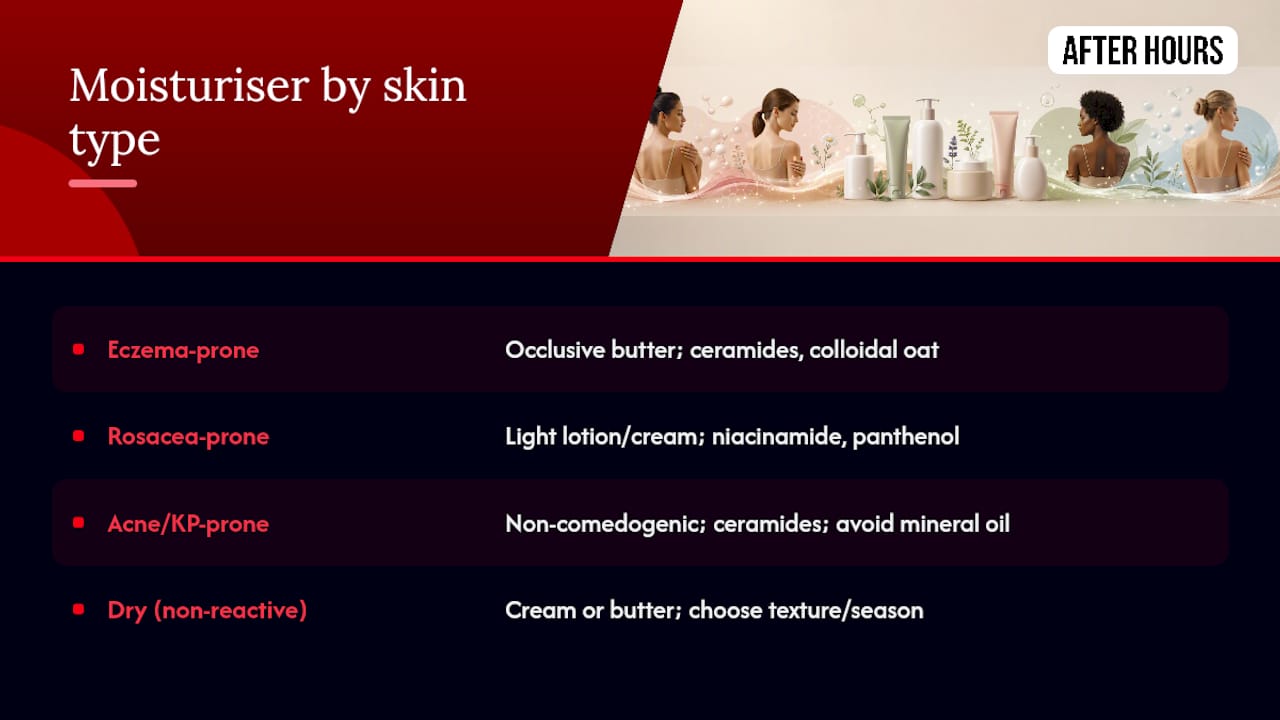
Eczema-prone skin typically responds best to rich, occlusive body butters carrying ceramides and colloidal oat together. The occlusive layer prevents transepidermal water loss, which is the mechanism behind most eczema flare-ups, while oat calms the itch that drives scratching and further barrier damage.
Rosacea-prone skin needs a lighter hand. Heavy, warming massage and thick occlusive layers can trigger flushing, so a fragrance-free lotion or light cream with niacinamide and panthenol tends to work better than a dense butter, applied gently rather than rubbed in vigorously.
Body acne or keratosis pilaris-prone skin does best with non-comedogenic formulas that still deliver barrier support, avoiding heavy mineral oils while keeping ceramides and niacinamide in the mix.
Generally dry but not reactive skin has the widest choice: creams or butters, fragrance-free or lightly scented, chosen mainly by season and personal texture preference rather than active irritation.
Why the “more ingredients equals better” myth persists
Most calming moisturiser advice online focuses on chasing the newest trending active, snail mucin one year, “cica” the next, while ignoring the far more boring factor that actually determines results: consistency of a simple, well-matched formula over weeks, not days.
The conventional wisdom oversells fragrance as harmless when it’s “natural” and undersells how much barrier repair depends on patience. Ceramides and niacinamide don’t work in a single application; they work because you use them nightly for a month. A moisturiser that gets used consistently because it feels pleasant, absorbs well, and doesn’t sting will outperform a theoretically superior formula that sits in a bathroom cabinet after one irritating use.
If there’s one thing worth prioritising first, it’s tolerance, not potency. Choose the fragrance-free, short-INCI, barrier-supporting formula you’ll actually apply twice daily, then judge results over a full month rather than a week. Persistent redness or cracking that doesn’t respond to that consistent routine is the point to involve a dermatologist, not a reason to keep switching products.
— Darnell
Get the calming body butter that matches this checklist
Everything in this checklist, fragrance-free, short ingredient list, barrier-supporting actives, vegan formulation, points directly at what After Hours Body Butter already makes. Its body butters use fat-soluble vitamins and nutrients rather than fragrance or fillers, which means less guesswork reading labels and more consistency in your routine.
The richer body butter formats suit eczema-prone patches, cracked heels, and general winter dryness, while lighter options in the range fit everyday use without clogging pores on acne-prone skin. Every formula stays cruelty-free, chemical-free, and manufactured sustainably in the UK, so ingredient transparency isn’t a marketing line, it’s on the label. Visit the After Hours Body Butter shop to match a formula to your skin’s current needs, and start with a smaller size if you’re testing it on recently irritated skin.
Sources
- AVEENO® Daily Moisturising Lotion Calming Relief
- The 9 Best Soothing Body Creams to Calm Stressed-Out Skin
- The best body moisturisers for every skin need
- 10 best body moisturisers for hydrated skin, tried and tested