

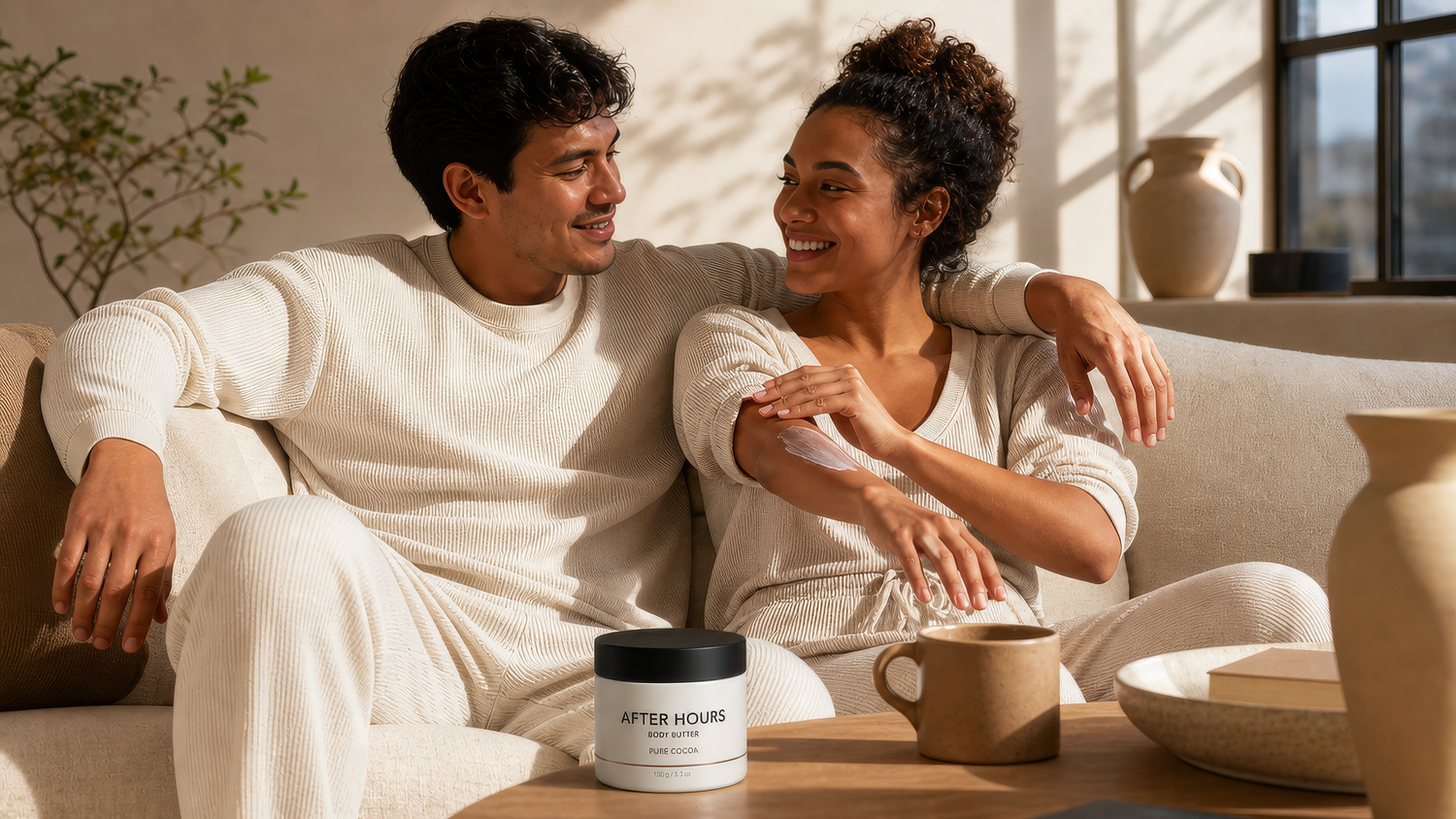

Unopened, oil-only body butters typically last 12 to 36 months, thanks to their lack of water. Once opened, or if the formula contains water, that window shrinks fast, often to 6 to 12 months. Formulation, storage and how clean your hands are decide which end of that range your jar lands on.
TL;DR:
- Oil-only body butters can last between 12 to 36 months unopened, depending on storage conditions, but once opened, their shelf life drops to 12 to 24 months.
- Formulations with water phases need preservatives and generally only last 6 to 12 months after opening, with visible spoilage signs like mould or sour smell indicating they should be discarded.
- Oxidation causes oil-based butters to smell sour or sharp over time, while microbial spoilage in water-containing formulas may produce mould, separation, or slimy textures.
- Higher-melt-point butters like shea, cocoa, and kokum tend to resist oxidation better than softer oils, especially if stored in dark, cool, airtight containers.
- Proper storage, including avoiding light, heat, and exposure to fingers, can extend product lifespan, but formulas containing water should be discarded if they show any signs of spoilage or unusual odours.
Table of Contents
- Body butter shelf life: unopened vs. after opening
- What makes body butter go off?
- Do some butters last longer than others?
- How should you store body butter to make it last?
- What does credible stability testing actually look like?
- When should you actually throw it out?
- The safety-first view on body butter longevity
- Where to check the details yourself
- Sources
- FAQ
Body butter shelf life: unopened vs. after opening
The number on the label only tells half the story. What matters more is whether water was ever added to the mix.
Anhydrous (oil-only) body butters, made purely from butters, oils and waxes with no water, are naturally hostile to bacteria. Unopened and stored well, these commonly hold up for 12 to 36 months, and some brands default to a flat 2 to 3 year guideline when no other expiry is printed on the packaging. Water changes everything. Any cream, lotion, or whipped butter with a water phase needs a preservative system to stop mould and bacteria taking hold, and even with one, the realistic after-opening window drops to 6 to 12 months.
To find your product’s after-opening window, check the Period After Opening (PAO) symbol on the packaging, an open jar icon with a number and “M” inside it. A “12M” symbol means the product is good for twelve months once opened.
- Unopened anhydrous butter: several years
- Unopened water-containing cream: usually 24 to 36 months, per label
- Opened anhydrous butter: 12 to 24 months from first use
- Opened water-containing product: 6 to 12 months, sometimes less
- Batch or “born-on” codes near the barcode help you track the manufacture date when no PAO symbol appears
What makes body butter go off?
Two very different processes cause spoilage, and confusing them leads to either throwing out a perfectly good jar or keeping one you shouldn’t.
Oxidation hits oil-only butters hardest. Fats react with oxygen over time, and the tell-tale sign is a smell shifting from your original scent to something sour, sharp, or like a wax crayon. The texture might feel slightly gritty or the colour dulls, but the giveaway is almost always the nose.
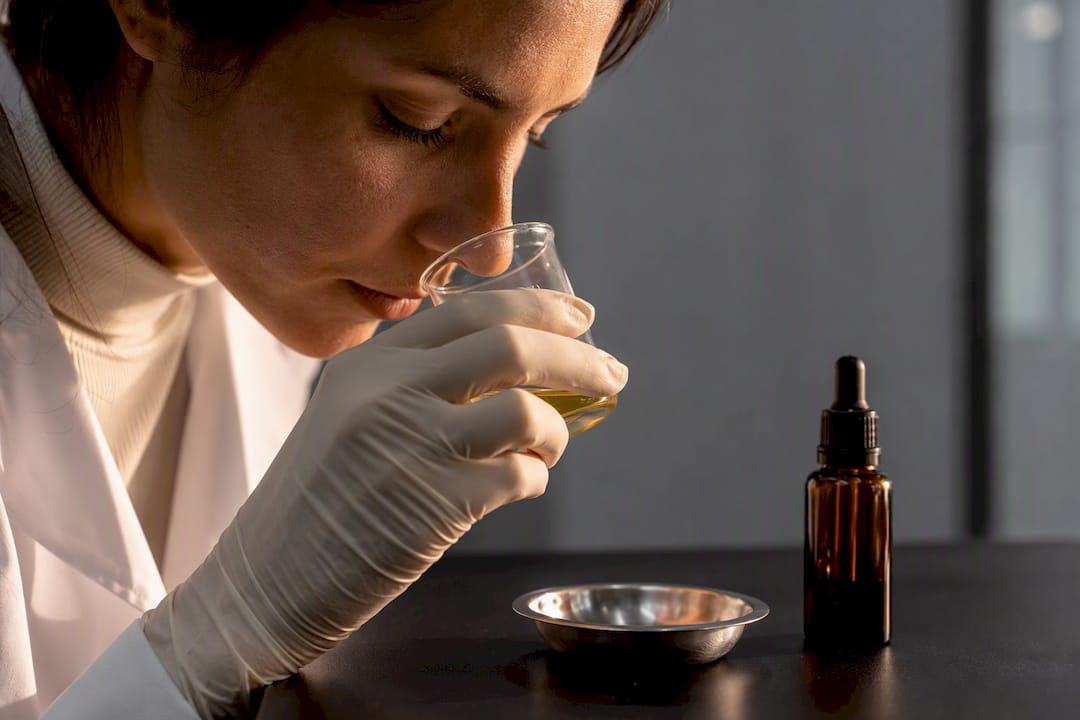
Microbial spoilage is the bigger risk in water-containing formulas. Watch for visible mould (fuzzy spots, usually white, green, or black), an unusual slimy texture, or a product that has separated into layers that won’t recombine when stirred.
Not every change means trouble. Graininess or small white crystals can appear in shea or cocoa butter through temperature swings, a cosmetic quirk rather than spoilage. Common consumer red flags worth memorising: a sour or “play-dough” scent, visible mould, a significant colour shift, or separation that stays permanent no matter how much you mix it.
Statistic to note: passing a 12-week accelerated heat test at 40°C commonly correlates with roughly two years of stability at room temperature, though the correlation model varies by formulation and manufacturer.
Do some butters last longer than others?
Base ingredient choice changes the maths more than most people realise. Higher-melt-point butters generally resist oxidation better than softer, more liquid oils, simply because their fatty acid profile is less reactive to air.
- Shea butter (unrefined): commonly cited around 24 months when stored correctly
- Cocoa butter: high melt point, generally stable, often matching or exceeding shea
- Kokum butter: firm and dense, tends to hold up well against rancidity
- Mango butter: softer than shea or cocoa, slightly more prone to going off sooner
Antioxidants like tocopherol (vitamin E) slow oxidation in oil-based formulas, but they are not preservatives. They mop up free radicals attacking fats; they do nothing to stop bacteria or mould growing in a water-based product. That distinction trips up a lot of home formulators. Read more on how different base butters behave before assuming “natural” automatically means “long-lasting”. Adding fresh botanical extracts or essential oils, especially citrus oils, can actually shorten shelf life, since some accelerate oxidation rather than fighting it.
How should you store body butter to make it last?
Storage habits matter as much as the formula itself. Get these right and you can extend a jar’s usable life by months without changing a single ingredient.
- Keep the jar in a cool, dark cupboard, not on a sunlit windowsill or a steamy bathroom shelf.
- Choose opaque, airtight containers over clear or loosely lidded ones. Light and air both speed up rancidity.
- Pick a jar size that closely matches your product volume. Smaller headspace above the product means less oxygen sitting on top, which slows oxidation in anhydrous formulas.
- Use a small spatula instead of fingers when scooping. Skin oils and bacteria transfer straight into the jar otherwise.
- Close the lid immediately after use. A jar left open for even an hour on a warm day loses ground.
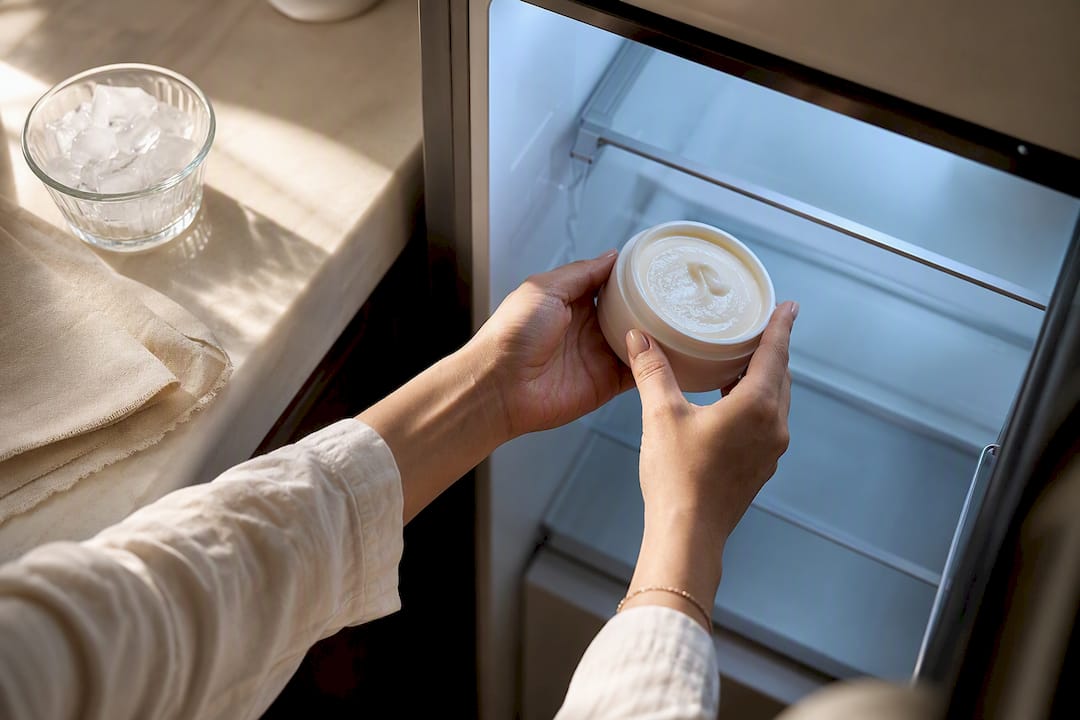
- In hot climates or during summer, refrigeration can help preserve a product, particularly whipped butters that soften easily. If chilling firms it up too much, warm a small amount between your palms rather than microwaving the whole jar.
Glass or opaque plastic both work, provided the seal is tight; see how packaging choice affects stability if you are decanting into your own containers.
Pro Tip: If your body butter has melted or gone soft from heat, don’t panic. Let it cool undisturbed at room temperature, or pop it in the fridge for 20 minutes, and it will usually firm back up close to its original texture, provided it hasn’t been sitting in direct heat for days.
What does credible stability testing actually look like?
Reputable formulators don’t just guess at a shelf-life number. They run accelerated stability tests, exposing samples to heat, freeze-thaw cycles, and light to force degradation faster than it would happen naturally, then cross-check results against slower real-time studies that track the same product for months or years under normal conditions. Passing both is what turns a shelf-life claim from marketing into something defensible.
What should appear on a trustworthy product page or label:
- A PAO symbol or a clear “use within X months of opening” statement
- Storage instructions (cool, dark, dry) rather than silence on the topic
- A batch code or manufacture date near the barcode
- Named antioxidants or preservative systems in the ingredient list, not a vague “natural preservation” claim
Some brands formulate with these signals in mind, listing full ingredients so shoppers can check for antioxidants and preservative systems themselves rather than taking a marketing claim on faith.
When should you actually throw it out?
Safety comes before sentimentality here, even for an expensive jar. A few clear rules make the decision easier:
- Discard immediately for any sour, rancid, or crayon-like smell, visible mould of any colour, or separation that will not remix after stirring.
- Cosmetic-only changes, like slight graininess or surface crystals with no odour change, are usually safe to keep using, though they signal it is time to use the product up soon.
- When in doubt, don’t apply it to broken or irritated skin. A borderline jar is a bigger risk on compromised skin than on healthy skin.
- Dispose of expired product in household waste rather than pouring melted butter down a sink, where it can solidify in pipes.
The safety-first view on body butter longevity
Preservative-free does not mean risk-free, and I think too many buyers treat “natural” as a synonym for “safe indefinitely.” It isn’t. If a formula contains no water, oxidation is your main enemy and good storage buys you real time. If it contains water and no preservative, the clock runs faster than most labels admit.
Three things to do today: check for a PAO symbol on anything currently open in your bathroom, swap to a spatula if you’re still using fingers, and move your jars off the windowsill into a cool cupboard.
— Darnell
Where to check the details yourself
For the PAO symbol and what the numbers mean, see the Wikipedia entry on period-after-opening labelling. For how brands test and justify shelf-life claims, LAEYO Labs covers heat, freeze-thaw, and light testing in detail, while COSSMA explains headspace and packaging effects on stability.
Sources
- Period-after-opening symbol — Wikipedia
- Body care stability testing: heat, freeze–thaw, light and real-time studies — LAEYO Labs
- Headspace protection — COSSMA
FAQ
Does body butter have an expiry date?
Many jars carry a PAO symbol rather than a fixed expiry date, since the countdown starts when you open it, not when it’s made. Some brands print a flat 2 to 3 year guideline when no specific date is required.
Can you use 10-year-old body lotion?
It’s not advisable. A water-containing lotion that old has almost certainly outlived any preservative system, and even oil-only formulas will have oxidised well beyond their intended stability window by then.
Can you use body butter two years after the expiration date?
If it’s an anhydrous, oil-only butter that smells and looks normal, it may still be usable, since these can naturally last 12 to 36 months and sometimes longer with good storage. If it smells sour, rancid, or shows mould, discard it regardless of how it looks.
Can shea butter last five years?
Unrefined shea butter is commonly cited as lasting around 24 months when stored correctly, and five years pushes well past that guidance for most jars. Correct storage (cool, dark, airtight) can extend it somewhat, but five years is not a realistic expectation for most unrefined shea butter.