

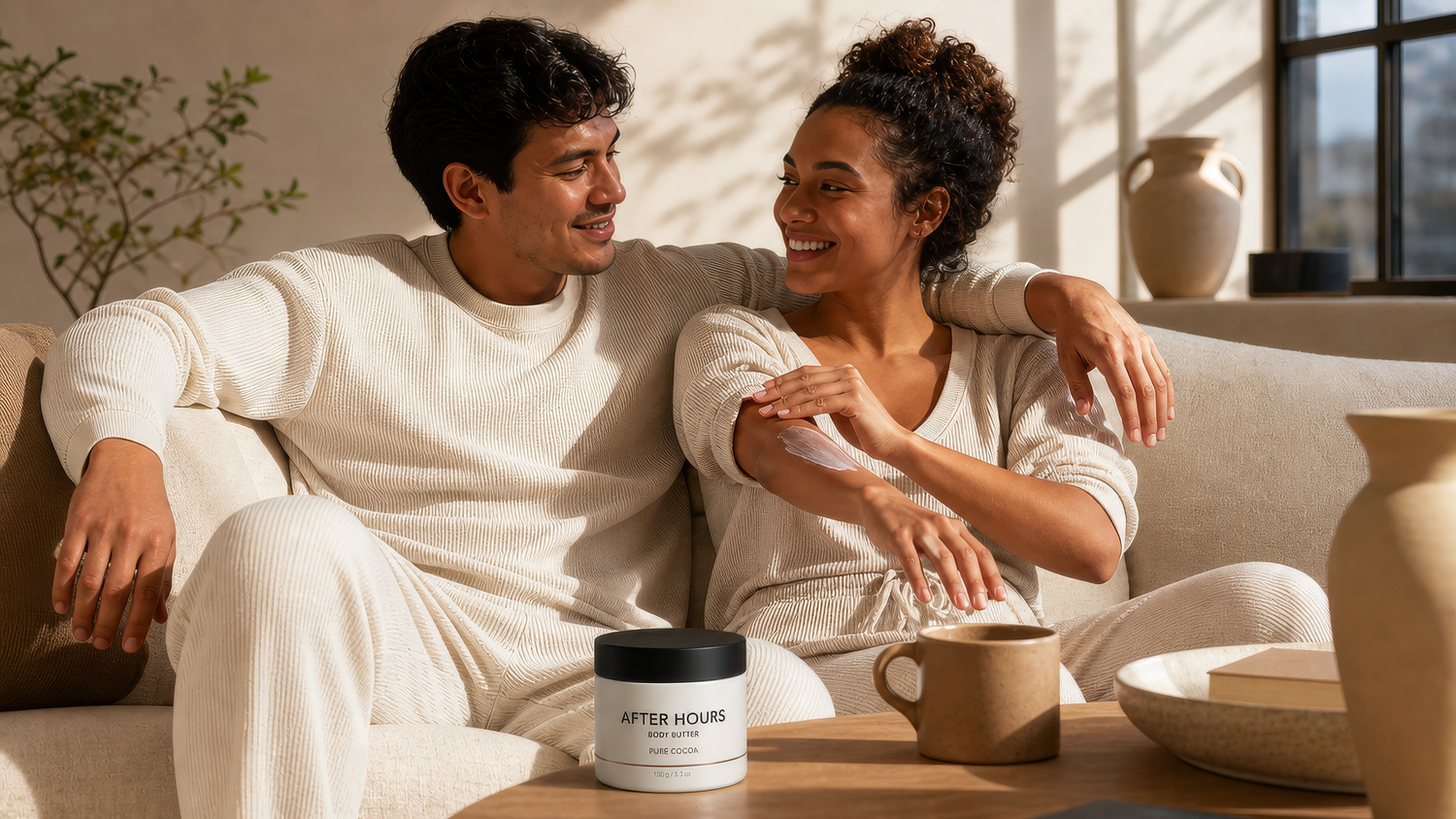

Apply water-based treatments, like serum or lotion, to slightly damp skin first, add oil if you use one, then seal everything with body butter last. The one exception: a glycerin-rich natural butter can do both jobs at once, so one product alone on damp skin often replaces the lotion step entirely. Either way, body butter’s occlusive strength is what makes it the finishing move, not the starting one, and a well-formulated option like After Hours Body Butter is built to work either as that final seal or as a standalone step.
TL;DR:
- Using a glycerin-rich body butter alone can replace the lotion step for those in humid or summer climates, but layering remains essential in dry or cold conditions.
- Applying treatments on damp skin and waiting 30 to 60 seconds between layers maximizes absorption, especially for serum and lotion steps.
- Heavier oils work best on top of body butter to add shine and softness, while lightweight oils can be applied before sealing to boost hydration.
- Most people should reserve body butter for sealing the skin rather than as the first or only product, particularly if they have dry, flaky, or eczema-prone skin.
- Consistency, patience, and adjusting according to skin response are key; over-application or incorrect layering can cause greasiness or ineffective hydration.
Table of Contents
- A quick checklist for what to apply and when
- How to layer each product for maximum absorption
- Do you need to layer, or is body butter alone enough?
- Adjusting the routine for your skin type
- When and how often should you apply each layer?
- How After Hours Body Butter fits into this routine
- Keep the routine simple and adjust from there
- Try a routine built around one reliable step
- Sources
- FAQ
A quick checklist for what to apply and when
Getting the order wrong is the single biggest reason people find layering greasy or ineffective. Follow this sequence and adjust only where your skin type calls for it.
- Cleanse in the shower or bath, using lukewarm rather than hot water to avoid stripping natural oils.
- Exfoliate occasionally (once or twice a week) if your skin is rough or flaky, so treatments that follow can penetrate evenly.
- Apply serum or treatment to skin that’s still slightly damp, pressing rather than rubbing it in.
- Follow with a humectant lotion, waiting roughly 30 to 60 seconds for it to absorb before moving on.
- Add oil, if you use one, focusing on areas that need extra shine or softness.
- Seal with body butter, warming a small amount between your palms first to make it easier to spread.
A five-pence-sized amount is usually enough for one leg or arm. Using more won’t speed up hydration; it just sits on the surface and takes longer to sink in.
How to layer each product for maximum absorption
Each layer has a job to do, and the technique you use affects whether it does that job properly.
Start with cleansing, then decide on exfoliation. Frequency matters here: exfoliating daily can compromise the skin barrier, while doing it once or twice weekly clears away the dead cells that otherwise block treatments from penetrating. Vogue’s skincare experts point to a similar order for winter routines: exfoliate, then serum, then lotion, then oil, then butter, with the final layer sealing everything underneath.
Serums and humectant lotions work best pressed into damp skin using flat palms rather than dragged across it. Focus on areas prone to dryness first, shins and elbows especially, since these zones absorb slower than softer skin on the stomach or thighs.
Oil placement depends on its weight. A lightweight, fast-absorbing oil can go before butter to add a boost of fatty acids underneath the seal. A heavier, slower oil often works better applied on top of butter, patted in as a final shine step rather than a hydrating one.
When it’s time for butter, warm it between your palms until it turns glossy and slightly liquid. Marble it onto skin with your palms flat, applying gentle pressure rather than rubbing, and concentrate on drier zones before smoothing the rest.
- Cleanse and pat skin until just damp, not dripping.
- Press serum or lotion into skin, focusing on rough patches.
- Wait for the tacky stage before adding oil or butter.
- Warm butter in your palms, then press and smooth rather than rub.
Pro Tip: If your butter feels like it’s pilling or sitting greasy on top, you’ve likely applied it before the lotion finished absorbing. Wait another 30 seconds and pat gently rather than adding more product.
Do you need to layer, or is body butter alone enough?
Body butter is anhydrous, meaning it contains little to no water, which is exactly why it seals so effectively once other layers are in place. Refined, purely occlusive butters need a humectant underneath to actually add moisture, since they can only lock in what’s already there. Natural, glycerin-rich butters behave differently. Because glycerin draws moisture from the air into the skin, a butter that retains it can function as both humectant and occlusive, letting many people skip the lotion step altogether.
Season plays a large role in which approach makes sense:
- Winter or dry climates: stack lotion and butter, since central heating and cold air both pull moisture from skin faster than a single layer can replace it.
- Summer or humid climates: a glycerin-rich butter alone, applied to damp skin, is often enough without feeling heavy.
- Persistent flaking, rough patches, or eczema: layering is worth the extra minute, since these conditions typically need both humectant and occlusive support.
- Normal, non-flaky skin in mild weather: a single application usually holds up fine.
If you’re unsure which camp you fall into, watch your skin for two or three days. Tightness by evening after a single butter application suggests you need the lotion step back in; a slick, greasy feel by midday suggests you’re overdoing it.
Adjusting the routine for your skin type
Dry or eczema-prone skin benefits from the full stack: humectant lotion, then a rich occlusive butter, applied once or twice daily during flare periods. If irritation persists beyond a couple of weeks despite consistent moisturising, that’s worth raising with a dermatologist rather than adding more product.
- Normal to slightly dry skin: a single body butter at night, or a light lotion in the morning with butter reserved for evenings, covers most needs.
- Oily or combination skin: stick to lightweight, fast-absorbing lotions across the body and save butter for genuinely dry spots like elbows and heels.
- Acne-prone areas: choose non-comedogenic lotions for the torso and back, and keep butter for targeted zones away from active breakouts. The EWG Skin Deep database is a useful reference if you want to check an ingredient’s comedogenic rating before buying.
- Sensitive skin generally: patch test any new product on the inner arm for 24 hours before applying it more widely.
When and how often should you apply each layer?
Apply your full routine within two to three minutes of stepping out of the shower or bath, while skin is still slightly damp. This window matters more than most people realise: fully dry skin absorbs treatments more slowly, while dripping wet skin dilutes them.
Between layers, wait 30 to 60 seconds after lotion or serum before sealing with butter. The fingertip test is the simplest way to check readiness: if a light touch leaves your finger tacky rather than wet, you’re ready for the next step.
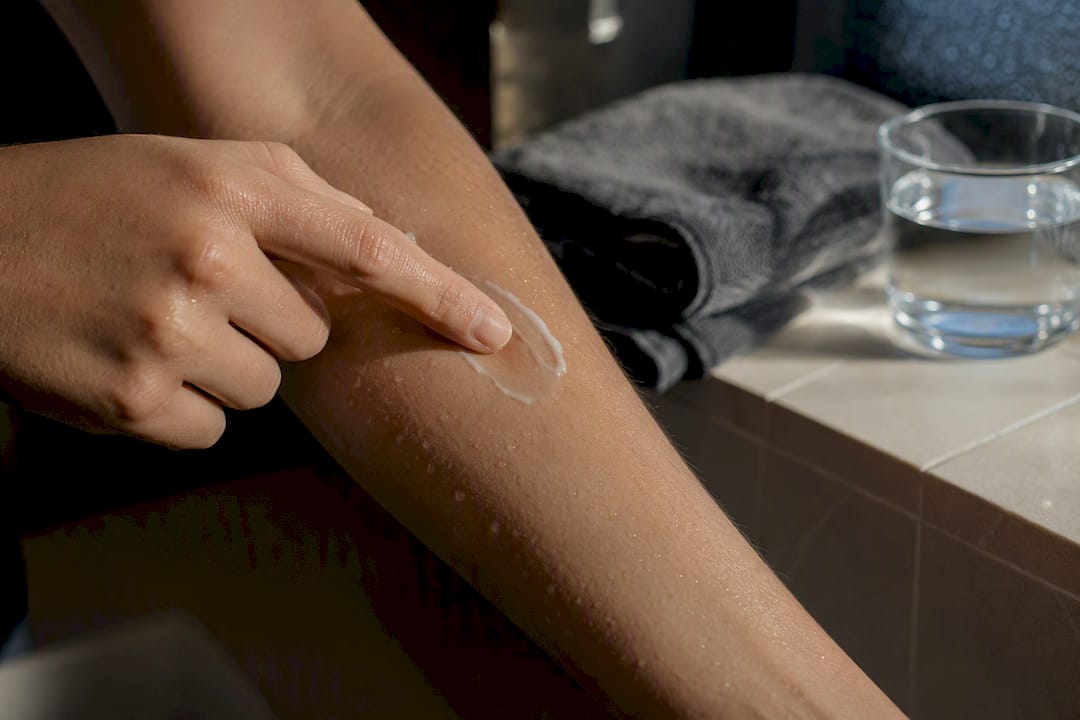
Daily application covers most maintenance needs. During seasonal dryness, cold snaps, or after extra sun exposure, twice-daily application, morning and night, helps skin recover faster without needing extra products.
How After Hours Body Butter fits into this routine
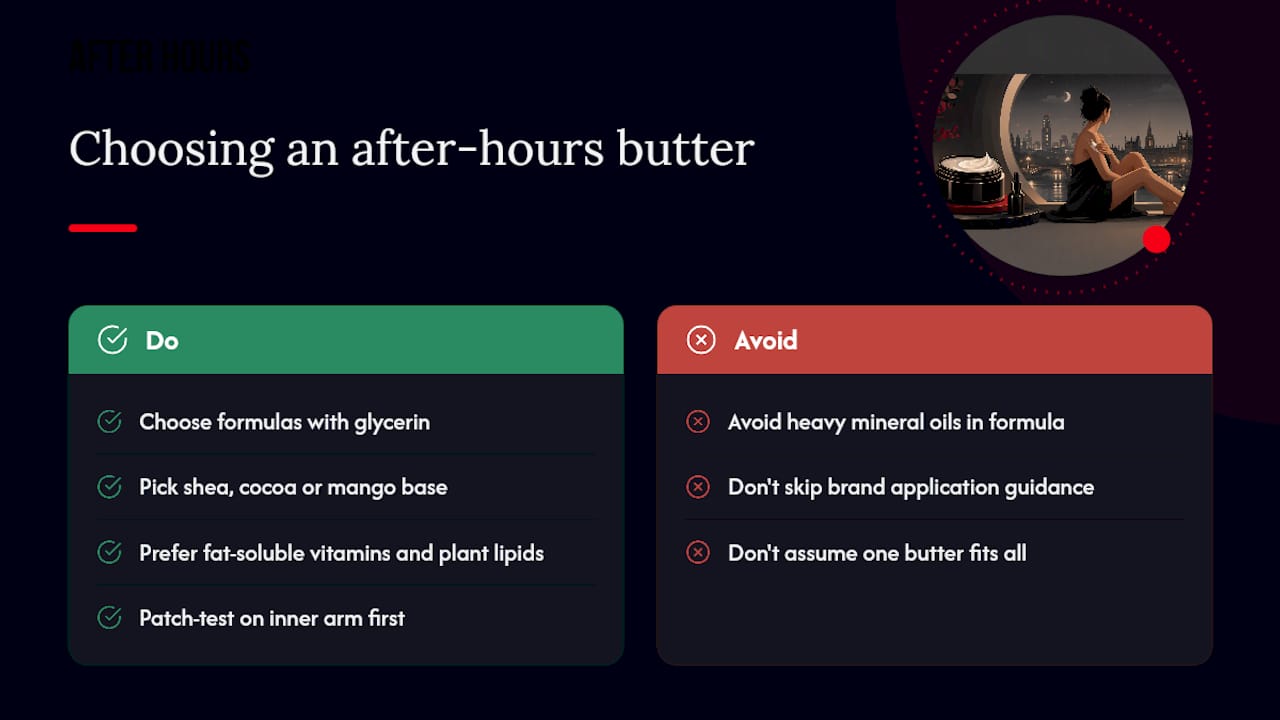
When choosing a butter to build a routine around, look for a few formulation traits: some glycerin content for humectant action, a base of shea, cocoa, or mango butter, and an absence of heavy mineral oils that sit on the surface without nourishing skin underneath. These traits determine whether you’ll need a separate lotion step or whether the butter alone will carry the hydration.
Some body butters are formulated around fat-soluble vitamins and plant lipids designed to work whether they are your only step or your final seal. The brand’s application guidance and science explainer walk through warming, portioning, and timing in more detail. As with any new product, patch test on your inner arm first, particularly if you have reactive or sensitive skin.
Keep the routine simple and adjust from there
Most people overcomplicate this. A single high-quality butter, used consistently on damp skin, covers the majority of everyday hydration needs. Add layers only when your skin actually asks for them, and see a dermatologist if flaking or irritation doesn’t improve after a few weeks of consistent care.
— Darnell
Try a routine built around one reliable step
Buying a separate serum, humectant lotion, and sealing oil adds up, both in cost and in the minutes you spend each morning working through a shelf of bottles. Some body butters are formulated to cut that routine down to one or two steps instead of five, using glycerin-rich, vegan ingredients that don’t rely on mineral oil to fake a seal.
If you’ve read this far wondering whether your skin actually needs the full stack or just a better single product, that’s worth testing directly. Browse the range on the After Hours Body Butter site, check the ingredient list against the formulation traits covered above, and patch test on your inner arm before applying it more widely. For anyone dealing with acne-prone or reactive skin, the brand’s acne-focused moisturiser guidance is worth a read before you choose which product to start with.
Sources
- Body butter vs lotion: what’s the difference? — Medical News Today
- The right way to layer your body care this winter — Vogue
FAQ
Is body butter actually good for your skin?
Yes. Its anhydrous, occlusive formulation locks in moisture more effectively than water-based lotions, particularly for dry or eczema-prone skin.
What is the best body butter to use for layering or on its own?
Look for one with glycerin, plant-based butters like shea or cocoa, and no heavy mineral oils. After Hours Body Butter is formulated with these traits in mind, working as either a sealing step or a standalone product.
Do you put body butter on before or after lotion?
Body butter always goes after lotion, not before. Applying it first blocks water-based products from absorbing into skin at all.
Is it okay to layer lotions?
Layering multiple lotions offers little benefit, since they share similar water-based formulations. It’s more effective to layer a lightweight serum or lotion first, then seal with a heavier occlusive like body butter.